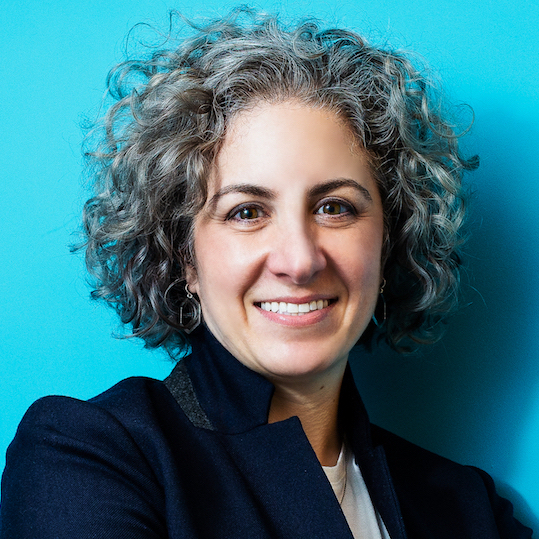
Episode 52 · November 14, 2022
Clients coming to you for your expertise, with Emily Weisgrau
With Emily Weisgrau
Listen and subscribe
In this episode
Emily Weisgrau does fundraising communications for nonprofits, and she started her business a few months before the pandemic. She'd spent 25 years at the top of her field and had never once done anything anybody would call thought leadership. This is what changed when she did, including the year half her new clients came off LinkedIn and she didn't write a single proposal. She also volunteers something at the end that I hadn't planned to bring up.
What you'll take away
- Half her new clients last year came from LinkedIn, and nearly all of them were lurkers. People she'd connected with months earlier and couldn't place, who turned out to have been reading the whole time.
- She doesn't write proposals any more. By the time somebody reaches out they know her well enough that it's a conversation, and she's stopped answering RFPs entirely.
- Twenty-five years at the top of her field, and she'd never done thought leadership. She'd presented at conferences. She'd never written a post. At some point she asked herself why it shouldn't be her.
- You can only talk to one audience on a profile. Rewriting hers is where the narrowing started, and letting some of it go was hard. The narrower she got the easier the clients came, because she was standing somewhere with almost nobody else in it.
- Saying no got easier once she'd said yes to the wrong things. Overworked, stressed, annoyed at a client she'd taken because she felt she should. Her hard part now is saying no to work she wants.
In this conversation
The full transcript, in sections. Open any one to read it.
Back after a rough couple of weeks
0:02
And the more I do that, the more I focus, the more I'm creating a space for myself where I feel like an expert, and that feels really good, but it's also genuine. You know, I feel like I can own that now, like I am an expert in my field, and people hire me for that expertise, and that's what I wanted when I started the business.
Welcome to the smart gets paid podcast with me. Leah Neaderthal, I help women land higher paying clients in their independent consulting businesses, but I've never been a salesperson. My background is in corporate marketing, and when I started my first consulting business, I learned pretty quickly that it's about 1000 times harder to sell your own stuff than it is to sell someone else's. So I taught myself how to do it, and I created the sales approach that I now share with my clients so they can feel more comfortable in the sales process. Get more of the right clients and get paid way more for every client contract. So whether your client contracts are $5,000 $100,000 or more. If you want to work with more of the clients you love, do more of the work you love, and get paid more than you ever thought you could, then you're in the right place. Let's do it together. Thanks for tuning in, and don't forget to rate, review and share. Hey there. Thanks for joining me in this episode. I hope that wherever you are, wherever you are listening to this, I hope you're having a good week, making some good progress in your business, and taking some time for you. So this episode is a little bit delayed, because, as you heard a couple weeks ago, I was really, really sick. I caught the virus or whatever that my kids have had, that everybody has my wife had it, and it was a rough couple weeks over here. But thank you so much to everybody who reached out, who sent their well wishes. And as you can hear, I feel better, and very much back to myself. So I'm so excited to be here with you in this episode. So let's get into it. Yeah, in this episode, I'm so excited to chat with Emily weisgrow, one of my clients. Emily is a communications consultant for nonprofits, so she started her business a little bit before the pandemic. And in this episode, we're going to talk about how to go from somebody who is, you know, really smart and capable and confident in doing the work and to be able to use that you know, use your smarts, use your capability and your confidence in the work, and actually use that expertise to bring clients to you. A lot of people would call that thought leadership, and actually I would call that thought leadership, but it's kind of a funny thing about thought leadership is that most of the women I talk to think that thought leadership is something that other people do, like they sort of assume that they don't have thought leadership, right? And I see this among women especially, but I'm sure it's a complex that exists in everyone, but it's just this thought that, like other people have thought leadership, not me, but as I share with my clients, as we work on how to leverage LinkedIn to get referrals and word of mouth clients, etc. If you have an expertise and you have an opinion, then you have thought leadership. But for the purposes of this conversation, knowing that most women feel uncomfortable calling their stuff thought leadership, we'll just call this expertise content. But the story of getting comfortable with that, getting comfortable with your expertise and using that on LinkedIn to leverage LinkedIn for clients. That's the story that Emily is going to share with you today. We have such a great conversation, and Emily has so much wisdom to share, and I can't wait for you to hear it. And also, as a bonus, if you listen towards the end, she has a big reveal, so be sure to listen for that. So thanks so much to Emily for joining me in this conversation. I know you're going to love it. Take a listen, and at the end, I'll come back and share a lesson that you can apply to your business, and then hopefully someday soon, you'll partner with us to help you build your consulting business, and you'll come back on the podcast and share your story. Enjoy. Do you have an actual sales process? I'm talking about not a general sense of what you should be doing, but a real process where you know exactly what step comes next, who to follow up with, and when, and you can see at a glance where every potential client stands, if the answer is no, or if yours feels clunky, or you're reinventing the wheel every single time I made something for you. It's called roadmap to clients. It's a free 20 minute video course, and in it you'll map out your customized sales process, step by step, from the very first contact with a potential client all the way to a signed proposal. It's the same foundational process we use with every Academy member, and it's completely free. Go to smart gets paid.com/roadmap to get started. All right, Emily, thank you so much for joining me. I'm so happy to have you here. Thanks, Lee, it's great to be with you. Yeah. So tell us who you are. Tell us about your business.
Aspen roots, and what the business does
4:58
So I run a business called. Weiss would strategies limited. And Weiss would is a mashup of Weiss, which is the German word for white, and wood, which is trees. And I think about white trees, like aspen trees, which have this interconnected Grove and root system underground that all that keeps all of the trees healthy and thriving. And that's essentially what I do for nonprofit organizations, and I do that in a very specific way. I specialize in fundraising communications that help deepen donor relationships and raise more money for nonprofits, all through publications, websites, video, any type of communication channel that's awesome.
How long have you been doing that?
Gosh, it's been two and a half
years now. So you must have started right before the pandemic. I did September
2019, yeah. And I had a moment where I thought, oh my god, what have I done? I'm going to have to go back in house and get, you know, another job. And that was part of the impetus for why I ended up working with you, actually, was so I wouldn't have to do that.
Yeah, yeah. Well, because those first what was it must have been six months, right? Or six or seven months. I mean, those are really critical in a business. And, I mean, what were those first six months like, and what were the next six months like? Well, I was really lucky,
The first clients, and then the phone stopped
6:14
because when I left my last job, I converted my employer to a client, so that gave me that sort of anger client that I needed to launch, and then I put the word out to friends and family about what I was doing, and I got a couple more clients that way. And then I got, like, one word of mouth client, and so that, you know, the the client list got full enough for that time. But I also knew that that was not a strategy I could sustain. I didn't want to just rely on word of mouth. And then when the pandemic hit and the phone just stopped ringing, I thought, I really have to have a plan.
Yeah. I mean, I think a lot of people experience that, right? And everybody's first clients are exactly the same clients that you got, and that's exactly the same clients you should be getting in that phase of your business, right past employers, people who knew you from before, but you know you do. Even if a pandemic hadn't happened, you would have, like everybody, hits a point where either you start to recognize that this will not last forever and you want to do something about it, or you don't recognize that and it still doesn't last forever, and then you're a little, you're caught a little flat footed, right? So it's good that you had just had this in your mind to say, All right, I need to do something about this. So, but talk to me about what was going on in the business before, you know, right before that, you had this moment of, okay, I need to do something. But what was, what were things looking like? I mean, how See, this is terrible. I I'm, like, not an interviewer, I'm just a talker. You know what was going on in your business?
Yeah. So, because I had just started, I cast my net very wide. I was willing to do just about anything within the realm of communications that someone was willing to pay me for so I was working with for profits and nonprofits, and I was doing branding and media relations, and I was doing fundraising and all kinds of things and and I really thought initially I was going to create a communications agency, and over time, I realized I didn't want to do that, and I needed to kind of focus on where the clients were, who I liked working with, the work I enjoyed doing, where the money was. So I was in a little bit of a flux of figuring out how to get from doing everything for everyone, which was not really satisfying, to doing the right things for the right people at the right time in the right way and that. So I was in, yeah, it was a state of trying to figure out where I was headed, and what my real unique value proposition was, yeah, identity.
Was there anything that you were it was easy for you to cut right? Like, I don't want to do this anymore. I have done it. I can do it. But, like anything that was like, All right, I'm done with that.
Yeah. So I think anything related to branding, I really like branding work, but it wasn't, there's so many people that do branding, I just felt like I didn't have anything special to offer in that area. Media Relations. I also didn't most of the stuff for for profits, started to feel like it wasn't my lane, and I had spent my whole career in the nonprofit sector. My husband started a law firm. About a year before I started my business, I was doing some work for his firm in marketing, and that was fun, because we could work together. But I realized I didn't really want to just do it for anybody, and that the nonprofit world was really my comfort zone. It's where my connections were. I had studied nonprofit management in graduate school. Why I thought I could do more than that? I don't know. It didn't. It just didn't really
work for me. Yeah, but you know, that's again, it's like, in those first several months, like do all the things, you know, I think that a lot. Of people, I think it's easy to go in starting your business feeling like you should do one thing or one service. But in, you know, when you have your own business, you you you never know what might surprise you, right, or what you really gravitate towards. But on the other side, I think you it's really helpful to do all the things, because you can really clearly say, you know, listen to yourself, listen to your, you know, your heart or your body or whatever, and be like, nope. This is not this is not it. I remember when I first started my my consulting business, and, you know, working with small businesses, I was like, I think after my third CRM implementation, I was like, Nope, I'm done with that. I have done it. I can do it, but, like, somebody else is better at it. I don't need to be. I don't need to be doing this. So when you had identified, okay, the nonprofit world is really where your heart is. What was your next step?
Well, I I did what I tend to do, which is research. I, you know, I am, I love to do research. I thought, well, I have this problem. I need to figure it out. What am I going to do? You know, I want to have more clients. I want to have bigger, more prestigious clients. I want to create a name for myself in this field in a way that I hadn't, you know, working in house, and, you know, I had all these grand aspirations. I'm a high achiever, and I just, you know, I wanted to, like, win at everything.
Making a name for herself
11:31
Yeah. I mean, I know you're pretty much work exclude I work exclusively with high achievers. So the high achiever, high researcher in me, sees the high achiever, researcher in you. Let me just pause for a sec, because I think this you mentioned something that I think is worth highlighting. You wanted to make a name for yourself in a way that you hadn't when you worked in house. Can you speak to that a little bit? Because that's something that I see quite a bit with the women I work with. Talk to me about what that was like.
Yeah. I mean, I think I knew that. I knew my stuff pretty well. I was been working for at that point for almost 25 years. You know, I was at the top of my game when I left my last job, there was really nowhere for me to go and remain a specialist in development communications. I could have gone to like a VP of Communications level, but that would have been a generalist role, and I didn't want to do that, and I didn't want to manage a whole team, but I wanted to keep doing what I was really good at, and and do it for, you know, clients that I loved and and I thought maybe I'll write a book. Maybe I can go on the speaking circuit. I just knew that I had something to share with the world, or the nonprofit world, at least, and I wanted a little bit of recognition for it in a way that I think when you work in house, you don't always get just because of the nature of the way organizations work and teams work. But once I was my own boss and my own business, I thought, oh, I can actually use this to my advantage.
Yeah, was that a natural thing for you? You know, I speak to a lot of women who come from corporate who, you know, do what we all do, which is, we work really hard, we put our heads down, we get promoted, and, you know, we're sort of recognized for the work that we do. And then they find it difficult when they start their business to, you know, they might have the realization that you have, like, I have something to say, I probably should and could put it out there and be seen for this, but it feels very uncomfortable. So for you, is this something that felt natural to you, or was it a little bit of like I don't know, let's call it a growth experience.
It did in certain realms. So I had done I presented at conferences, for example, in the past that was a place where I felt comfortable speaking about what I know or things I had worked on, but I had not done any real sort of thought leadership in terms of like LinkedIn or publishing a newsletter, writing articles, so I hadn't explored that world fully. And I thought there was opportunity
Twenty-five years in, and no thought leadership
14:00
there crazy though, like, I'm just observing, you know, somebody who you'd been in the business for 25 years. You had achieved the highest level you could and still remained, you know, in your your your unique lane of expertise. You had spoken on stage, right virtual or, or, you know, in real life stage. And yet, I just heard you say I'd never really done thought leadership. Isn't that bizarre. I mean, I just, I'm observing it like because, because I hear it from, it's definitely a thought that I've had in my life. But also I hear it from a lot of women, like, what is that about, how? What is that about? Where we thought leadership belongs to other people. I don't know. Does that? Does that resonate with you? Does?
It does. And then at some point I thought, Well, why can't like, why should it be me? Like, I actually know what I'm doing. I have something to say. I have a really unique perspective about it. And, you know, what do I have to lose?
Yeah, yeah. All right, so you're in the first six months of your business, you're hitting a pandemic. Even though you had some clients, right? You, you would also sort of come to this place where you're like, I have something to say. I can't not say it, or I know I need to say it. Let me. Let me just pause for a sec. Was there any sort of, like, did you lose any clients? I'm just curious, like, at the beginning of the pandemic? No, I didn't. Did it? Oh, wow, that's great.
I think I actually got more clients as a result of the pandemic, because organizations were in a hiring freeze and they needed to
look outside for interesting.
I actually lost a couple of clients after the pandemic slowed down because they started to hire staff.
Oh, interesting. That's fascinating. It's crazy, like the hiring stuff is affecting people in so many ways, all right, so you had this sense that it was time to do something right? How did you decide what you wanted that something to be?
She was a lurker
15:49
Well, I did my research and started to, you know, look for different opportunities of how to, you know, business development opportunities, speaking opportunities. And I am a member of a group on Facebook called the nonprofit consultants virtual network, which is a wonderful resource, and your name kept popping up. And that's cool, yeah, I was like, Who is this person that I keep reading about? So I did my research on you, and to use your language, you know, I was a lurker, so I started following you on LinkedIn, and I looked at your website, and I signed up for one of your webinars on how to use LinkedIn for business development. Because I always thought LinkedIn was a great social media platform that appealed to me, but I really knew that I didn't know how to use it properly, but I had a sense that it was a good place for me because it wasn't like the other platforms, and so everything just kind of clicked into place. And I, you know, I liked everything that you had to say, and I appreciated, you know, the transparency that you bring to the table. And you know, you're just like, This is who I am. You can work with me or not. And like, it was just very refreshing. And everything you were saying about how to get clients in a way that's not about sales in a traditional sense, spoke to this notion of thought leadership and how to present yourself in a way that just feels comfortable so you were lurking.
Yeah, I'm sorry, what were you saying? Oh, no, I knew I had
to make some kind of investment in myself at this point that it wasn't just going to be like reading all the books, which, you know, you did that for all of us. Yeah, but it
takes a long ass time. It took me, like, four years.
So I just thought, Okay, I think I feel comfortable enough to spend the money on this, and I'm going to learn it, and I'm going to do the work. And I took pack your pipeline as an accelerator class in June of 2020, right, in the early days of the pandemic, and it did a lot for me.
Leah, a lot. Yeah. Well, let's talk about that. But first I want to you know, it's funny to hear you say that you were lurking. I mean, this is, this is what everybody does. This is what our clients do all the time. If, if you're hearing us, use this phrase for the first time, this this term lurkers. It's people who are in just read only mode, right? They're they're seeing your stuff on LinkedIn or on Facebook or wherever your social media channel is. They will never engage, they will never like and never comment. But they are reading right? So like, you know, Emily, you and I know that if you get 1000 views on a LinkedIn post, and you only get 10 likes or comments, that means that there are 990 people out there who saw your post and did nothing, right? Those are the lurkers, and those people are following along, and they are in some type of educational relationship with you, even though you can't see them. So All right, so while I was over here posting on LinkedIn, doing my thing, you were lurking. Was there anything in particular that spoke to you? I mean, you mentioned the transparency, but I'm just curious. Was there anything that spoke to you and said, All right, now is the time I need to do this.
I think it was when I signed up for your webinar, and it was, you know, kind of a one hour session. And you talked about, there was a, remember, we had to, you know, you had us get out our pens and pencils, and, like, we everybody, like, drew the triangle. And it had, like, the levels of moving up the like, how to deal with LinkedIn, right? It was like, level up your profile. Treat your profile as a landing page. Like, do the right? It's like, oh, this makes so much sense. And I loved this sort of interactive nature of it. And I just thought this, like, I'm a very process oriented person. I like systems, I like roles, and like you were delivering that. It was like, I wanted to be your friend, and I wanted to learn from you. And here we are look at this, and now here we are, two years later. And you know, it's it. It just was a very, I don't know some it was a gut feeling. I mean, I just had to trust my gut, really, because I I was taking a leap of faith. I had never done any real business development work before. I hadn't spent money at all. On hiring a coach to teach me what to do. I was always someone who could figure stuff out on my own or just like, you know, and just didn't tell anyone that, like I was figuring it out on my own, and or I would, you know, ask someone privately. I didn't want anyone to know what I didn't know, and so I had to just kind of accept, like, this is something I need to learn. I'm a lifelong learner this. Just treat it like a continuing education class. That's what I did. I'm so glad.
Yeah, well, I think what's interesting about what you're saying here is what I'm hearing you say is it's a skill that I knew I had to learn. Not that like your business wasn't in in dire straits, right? It's not that like you, you didn't wait till the last minute, or you, you hadn't lost all your clients. You know, we just talked about earlier how you kept all your clients. You even got some clients. But so it's not about like, when it's kind of like therapy, right? If you, if you're listening to this, and you've ever gone to therapy like you don't have going you don't only go to therapy when things are really terrible. You go to therapy so things don't get terrible, right, right? So, so I love your approach to this. It's like, I know myself. I know this is something I need to learn how to do, and I'm going to take the steps to do it. What did you feel like showing up on LinkedIn, using the system? What did you think it would be like before you started it? You know,
I don't know that I had any real expectations about it, other than maybe having some good conversations about topics that were important to me professionally. I guess that was probably the thing I expected most, was just this sort of conversational aspect of, you know, hopefully getting some engagement. But it actually turned out to be more than that, yeah. What is it?
I mean, tell me a little bit about what it is for you. Now. It's really
a professional network. I mean, the the key for me was that that having that discipline to reach out to people every day, to make new connections and to build that audience for what I was posting, and I was surprised by the number, first of all, the number of people that connected with me, and the number of people who even said, Hey, do you want to have a 15 minute call and just chat? You know, because I did it in a way that wasn't salesy, which you taught me. And so it was purely professional networking, and it was just this. So now I have, you know, I work by myself in my office at home, and I don't have co workers in the way that I used to, but I feel like I haven't lost that sense of collegiality and camaraderie with people in my field now because I have them on LinkedIn.
Yeah, that's so important. That's so important. So, you know, LinkedIn, we don't just do it for LinkedIn sake, right? Of course, you have to get visible or what have you, but it's all about what it the results it brings to your business. So what are some of those results? I mean, what results have you seen from the work that you've done?
Half her new clients, off LinkedIn
22:50
So, broadly speaking, last year, 50% of my new clients came from LinkedIn. I mean, that's huge like and they were almost entirely lurkers, people who came out of the woodwork like, I couldn't even remember who they were half the time. You know, we had connected months ago, and they would say, I've been following you on LinkedIn. I really like everything you're writing. I could really use your help. And what was really cool about it is I didn't even have to send a proposal to any of these people. I don't do proposals. It's it's, we have a conversation. They already know me well enough that by the time they reach out, like, I know what questions to ask them, they're asking me some and, you know, hopefully we can close that deal pretty quickly. So it was just this remarkable thing I and I kept saying to my husband, I was like, it's, it works. I'm so glad I took back your pipeline. It actually works, like it was just this constant delight every time I would get contacted by, you know, prospective client, and it was just, I'd also build my confidence, because I realized that, like I could do this, that I was meeting the right people, that I was saying the right things. So it was incredibly fun and and just, you know, it made me feel like I had really leveled up
my whole game. Yeah. Oh, that's awesome. Let's just dive into a couple of those. So 50% of people coming from LinkedIn, that's just net new people from within LinkedIn. But you know, some of the things we hear, and I don't know if you heard this as well, is the people who didn't necessarily find you on LinkedIn absolutely had LinkedIn as part of their research process, right? You and I aren't the only ones that go through extensive research, of course, but no, I mean that every client goes through an education process. And you know, you can bet that LinkedIn was part of that. Did anybody refer
to that at all? Yeah. Yeah. And, you know, I'll, I'll just pivot for a second. The other thing that was really helpful is that it wasn't just LinkedIn, it was the whole sales process. So lead magnets sending out emails, you know, so all of those helped to get eyeballs on my LinkedIn page or on my website. But I see it all integrated because. Is, it is all connected. You can't just reach out to people on LinkedIn, you can't just post stuff. You can't just do one of these things. It all is, it's a holistic process, and everything needs to work smoothly together. So whether it was someone responding to an email I sent out, or they stumbled upon my website, yes, everyone ended up on LinkedIn and read my posts, and that was, it just gave me a lot of credibility. Yeah, I
love how you're saying that, you know, by the time they got on the phone with you, the sale, I mean, unbeknownst to you, was pretty far along, yeah, right, because they've been following along. You know, we talk about that as it turns you into the obvious choice, right?
Rewriting the profile, and narrowing
25:38
And another thing that really helped in that regard was when I had to completely rewrite my profile as part of the class. At that point, I was still kind of trying to be all things to all people. Was doing for profit, nonprofit. And I remember you said, you know, you can really only talk to one audience on LinkedIn. And I that was part of the process for me of starting to niche down, niche down. And I really it was hard to let go of some things, but it was absolutely the right thing to do. And so the more I got focused and the more I specialized, the easier it was to get clients, because I was creating a space for myself that there was very little competition in. So I think that helped enormously that sort of, well, I don't want to call it pressure that you applied, but the encouragement you gave me to, like, say, this is the thing that I do.
Yeah, let's go with encouragement. I actually remember that. I remember because we would do these live profile reviews, and you know, if if you had completed that week's you know, assignment, then you could apply to or, you know, you could sign up for a review. And of course, you know, you being the total overachiever that you are, had done it right, had done the work. And I remember looking at yours, and I do remember that conversation. I just remember, you know, my my advice to you, and it sounds like it's really paid off. What other things did you learn in this process that really contributed to where you are today? I would say there's two
other things. One is positioning myself as a painkiller and not a vitamin. That you know, mindset shift is very helpful, and it's something I've said to a number of other consultants since learning it myself. When people ask me kind of about my own success, and I say, you know, well, are you just selling services, or are you actually solving problems? And that, like, understanding how that resonates with potential clients, was incredibly valuable.
Yeah. And how have you seen the difference?
Oh yeah, yeah. I mean, I've reframed my website to talk about, you know, that kind of stuff, and I list in my LinkedIn profile and on my website, you know, maybe you're experiencing this thing, or maybe you've faced this challenge, like I understand the problems, because I've been in my clients shoes. I was a fundraiser myself for many years, and so I just it, but being able to say to them, I see you, I know what you're going through, here's how I can actually help is, you know, it creates a compassionate space, I think, where you know you're not just selling a thing. You're saying, like, let's work on this together to make it better.
Yes, exactly yes. What else? What's sort of stuck with you the most and helped you get to where you are today.
Learning to say no, and what it cost first
28:28
I think learning how to say no to projects and clients that aren't right for me has been very helpful. You know this? You know, in addition to being a researcher and a high achiever, like, we're pleasers, right? Like, I mean, I'll speak for myself, I guess I'm a pleaser, so it's hard.
And you also, you guys can't hear this, but I'm also sitting here smiling. So, you know, I, I'm with you on this, yeah, and so I
to actually turn work down that didn't feel like a good fit. Took some practice, but ultimately was. Now I'm much more confident at it, because what I made the mistake the hard way. I learned it the hard way, where I was taking clients and projects that I didn't think were great fits for me, but I felt like I should, so I did, and then I would end up really like, either overworked, stressed out, annoyed at the client, and I just thought, I don't actually need to do this to myself, like I'm not starving for work, you know, I am making enough money to be to have some free time at you know, I just needed to have some work life balance, and I had to make some hard choices. But it became very clarifying once I had said no to the wrong or said yes to the wrong people that I needed to say no to them in the future. The harder part is saying no to things I actually do want to do, and the struggle that I have most these days is about growth, because the work is coming in. I know how to do business development now, thanks to you, but I don't really. Want to create an empire. I don't want to have a staff that I'm responsible for. I just like doing the work. And I, you know, I think people hire me. So now I'm at a point where I actually have to say no. Sometimes, even though I would like to say yes, just because I don't have the time, or I have to say yes, but I can't for six months. And then sometimes they go find someone else because they can't wait. So that's, you know, sort of disappointing sometimes. But I don't really, I haven't come up with a better solution.
Yeah? Well, you really upgraded your problems? Yeah, exactly, good problems to have. Yeah. Well, and of course, this is, you know, where we think about charging more, increasing your profitability, decreasing the hours spent, all of that stuff, right? But, but you have to get to a place where you can do that, right? And I think what's interesting about, you know, you're talking about turning work down. To turn work down, you have to have work coming to you, you know. So, you know. So turning work down is a huge step. How did you feel like you could say no? I mean, there are people who say yes all the time to work that they know is not the right work that they want to be doing, or the right client, or they can't pay enough, or whatever, but it's still so hard to say no. So what? What allowed you to
say no? I think because I just I had said yes to everything before, and I got to a point where I really was unhappy and stressed out, and I could not do that to myself for the long term. So it was kind of a choice of either keep working at a pace that I really didn't want to, or say no. And of course, the raising prices is part of that equation too, and I have done that, and I actually need to do it again, because I don't think I did it enough, because I'm still saying no to a lot. So that's, that's another hurdle I have to work on this year. But yeah, the saying no, it just got easier over time. And I just thought, well, this, this is for my own well, being like, I have to prioritize my mental health and my physical health and, you know, spending time with family and friends, yeah, of
course, of course. You know you talked about, I love that. You mentioned that the sales LinkedIn is not just for LinkedIn. LinkedIn is for sales, right? Like LinkedIn is and we don't sell on LinkedIn, right? That's, I think, the misnomer here. It's like, you don't, you're not selling on LinkedIn. You're almost pre selling. The sale happens when somebody gets on the phone with you, right? The sales process begins, but they are so connected. What did you think selling was going to be like before you started this process? Like, what did you assume it would be?
I thought I was going to have to write lengthy proposals to everybody, and that I was going to spend hours of my time writing these, you know, detailed and sort of heartfelt and strategic documents that were going to like, really make me stand out from others, and persuade clients to work with me. And like I was going to have to really work hard to convince them of my value and that they needed me, and I didn't. I did a little bit of that in the beginning, I was like, this is a huge waste of my time. I mean, I now occasionally get sent RFPs and I will not respond to them. I just won't spend time on proposals.
Yeah. I mean, I proposals are for a lot of people, still a really important part of the process, right? Depending on the type of client you're working with, or company, or what have you, proposals are often a necessary step. But RFPs, though, I have a whole I have a whole section inside that's like, basically just don't do RFPs. Like, you should not have to do RFPs. You should not do them if you're listening to this and you're trying to get some RFPs, because you think it's easier to get clients because they're actively looking for somebody, just know that my recommendation is, skip it, don't do it well. So and instead of that, you have this process where people come to your door, they are pre sold, and they already know that you're the one they want to work with. So how has all of that changed your business? But I also want to hear, you know, how has it changed you as a business owner?
Yeah, I mean, it's, it's a great feeling, really. I mean, I've gotten a number of clients that I just feel so proud to work with. I mean, all of them, really, but I mean, these are large national nonprofits that have, you know, name recognition, that make again, make me feel like I've achieved, I've leveled up in a way that I wanted to, personally and professionally. I love the work that I do. The more I narrow, and I still am continuing to narrow my focus in work. So, you know, the world of fundraising, communications is pretty big, but like now, I don't really do annual giving very much. I'm almost entirely focused on major gifts and campaigns. And the more I do that, the more I focus, the more I'm creating a space for myself where I feel like an expert, and that feels really good, but it's also genuine. You know, I. Feel like I can own that now, like I am an expert in my field, and people hire me for that expertise, and that's what I wanted when I started the business.
Yeah, I love that. I love hearing that just real quick. You know, I do. I work with a lot of women who their clients are nonprofits, and there is a sense in this industry that nonprofits won't spend money, they won't pay higher prices. What do you make of that? What do you
think about that? I think it's an easy way to allow yourself to not succeed. You know, it gives it's like saying it's almost like the, what the Fox and the Grapes, right? Like the sour grapes that, you know, well, they're not going to pay it, so therefore I'm not going to get that. You know, it's a little bit of an excuse. There certainly are nonprofits that have small budgets, but if you if they have a problem and they need you to solve it, they'll find the money. They absolutely will. And I have found that I have never had a problem with budget with nonprofits.
Yeah, yeah. Well, I mean, if somebody follows along and knows that you're the right one, you know, then you're not having to convince them to spend money with you, right, right? They've already decided. Well, so what would you say to somebody who's in the position that you were back then, you know, first year of her business, in that moment where you're you just recognize that this what you've you know, what you've done so far to get clients may not take you where you want to go. What would you say to somebody who's in a woman who's in that moment right now? What advice would you give her?
What she'd tell someone in her first year
36:36
You know, I always like to ask questions when people are struggling, and so I would ask things like, who is your ideal client? What problems do you solve for them? What work do you love to do? Do those things align with the other answers you just gave me? And if, if it doesn't feel like there's an alignment, you know, then we need, you need to figure out, like, how to go and you know, what your goals are and how to get there. And one of those ways might be working with someone like you, or it might be reading some books, you know, so everyone has to figure out what's right for them in terms of their business growth and how they're going to evolve. But I think asking, you know, asking some key questions is really important early on and but I also think giving yourself permission not to have all of the answers right away is important too. Because when I started, I thought I was going to be one thing, and now two and a half years later, I'm a different thing, and I'm much happier for it. But it was an evolution. I needed to give myself the time to let
that play out. Yeah. I mean, just to put it in research terms, you need more data, right, right? You need more data. And I think that that evolution of, like, what happens at the end of your first year, 18 months where you start to, you know, evaluate, basically, the answers to the questions that you just asked. Who do I want to work with? What value do I want to provide? What, how do I want to spend my time, etc. Like, what don't I want to do anymore? You You need the people and the clients to bump that up against, right? I love this. I don't know if you've ever read grit, that book, grit, it's, it's excellent book. But you know, in the book grit, the author talks about how you can't find your passion by thinking about it. You have to find your passion by going out and doing it, right? I think in the sales world or in a, you know, running your own consulting business world, you have to find your, you know, what brings you joy in this business? By going out and talking to clients, by working with clients. You can't figure it out just by sitting there and thinking about it Exactly.
That's exactly right. And and I worked with startups for a while, and I realized I don't want to work with startups. And other consultants love working with startups. And, you know, yeah, you have to just, you have to test, just like, in mind, you have to test your messages, you have to test what
you like, yeah. And it's not that, you know, of course, because another thing we do is we beat ourselves up, right? I think a lot of people go through that process and they think, Well, I must have done something wrong. I wasted all this time, you know, working with startups which I find that I didn't like, or I did this other thing, or I made this part of the website, or what have you. I think that, you know, if you can see it as just data, then there's no judgment, right? And I truly believe that nothing's wasted. No experience in running a consulting business is wasted. So I'm just curious, so what's the thing that you're proudest of?
Oh, oh, okay, here's the good one. I don't know if this is the top one, but it comes to mind. First I did some work for the Jane Goodall Institute, and Jane herself read it and really liked it. I got feedback from my client who works I didn't get to meet her personally, but the person in the communications office at JGI said, Jane really loved this, and that is high praise.
So I love that, I love that, I hope that you have some type of. Some way to capture these things. I always tell my clients to start like a nice things folder. Just call it nice things or take screenshots. Okay, good, yeah, I love that. Oh, that's how you know you are in the right place, doing the right thing, exactly, well. So Emily, where can people find you? Where can they learn about you? Where can they work with you?
So I encourage everyone to visit my website. Weisswood.com that's W, E, I s, w, O, O, D, and of course, you can find me on LinkedIn. I'm not posting as frequently as I used to these days because I'm busy with my clients, but I am there from time to time, and I love meeting new people on LinkedIn. So I encourage everyone to connect. And yeah, I That's it. That's I'm online on LinkedIn, and on my website.
She outs herself as the client from episode eight
40:44
I love it, great. So we got to the end, and I was sort of checking in with her to see how she thought it went. And then this happened. Awesome. How do you are you? Are you okay with that? Was there anything that you wanted to say that you didn't say,
You know what? I don't know if this matters or not, but I was, you know, one of your early podcast people from one of our calls, right? And I was, you didn't name me, but I was the one about the, like, the don't, oh, you're
now, right, telling me, like, I don't know this, right? Remember me, of course, of course, I remember that. Do you want me to
do, like, a follow up on, like,
well, I didn't want to, you know, it's funny. I didn't want to bring it up, because I didn't hear you. I didn't hear you, hear you. Open it, you know, open the door to that. But, yeah, let's talk about that. If you're okay,
you're up for it. I mean, I can, I can, like, out myself as the person who was in that podcast. So I was featured in one of your early podcasts. I'll out myself now. The podcast about, you know, the fear of sending too much email to people, and I was so worried that, you know, having gotten lots of salesy emails, you know, in my old job, that, like, I didn't want to be that person. And you encouraged me to send more email, because people don't really read their email. And so if I send four a year, maybe one gets read. And I realized, oh yeah, the data, right? You got to work with the numbers. And so I actually increased my email to twice a month. And now, you know, I people give me compliments on my emails all the time. They're they write back to them and they say, like, this was really thoughtful. And here's what I think, and you know, it's part of that same conversation that I see on LinkedIn, and it also gives me more content for my blog on the website, and a lot of the stuff I put in those emails are just LinkedIn posts that I've expanded on. So it's all about repurposing your content. And it turned out that I don't send too much email, and maybe I could even still afford to send more.
Yeah, well, I think what we're talking about here is taking up space. You know, I remember that that was a big part of the conversation that we had, was, Is it okay to take up space in somebody else's inbox? And I see that as such a just a microcosm of taking up space in in somebody else's world, or somebody else's feed, or somebody else's brain space. And when you do it in a way like you've done it with really thoughtful content that's, you know, thought provoking and educational and provides value. People might not read it, but they certainly might. They're certainly not gonna be mad at you, right? And and what's surprising is the number of people who actually do follow along, and it's part of that education process that people are going on, that you may or may not even be able to see, right? But it is
happening exactly, and if someone doesn't want to read it, they can click Delete, and if they do, they will, so why not give them the opportunity Exactly?
Thank you for outing yourself, awesome. Thank you so much for hanging out. Thanks for sharing your journey, and I'm excited to see where you take it.
Thank you so much. It's just such a pleasure working with you, and I'm glad you stayed in touch. And thank you for everything.
My take: from everything for everyone to focused
43:44
I love that conversation. There's so much that we can talk about and expand on. But first I want to thank Emily for kind of outing herself as the client that's featured in one of my early podcast episodes. You can go check that out. It's episode eight called Am I sending too much email? So after this, go check out that episode if you haven't already listened to it. So as always, you guys always hear me say this, there are a lot of ways we can take this episode and a lot of lessons that I can pull out. And actually, I feel like if you go back and listen to it again, you'll probably hear a new lesson or a new theme emerge that might be different than what popped out for you the first time. So just reading my notes here, you know themes that come out for me are going from doing everything for everyone to getting focused and profitable, making a name for yourself in a way that you didn't or would never have in corporate the fact that in an economic downturn, her business didn't suffer. It actually boomed because her clients weren't able to hire full time staff. And we see that happening now across you know, all industries. Another theme just in my notes, is this idea of saying no for your own well being. So. Many women that I talk to are saying yes to clients who aren't the right clients for them. Maybe they're too small, maybe they require too much hand holding, and they're not getting paid for that level of, I don't know, annoyance, hand holding, whatever it is, right? There are a lot of reasons why people are saying yes to work when you can say no for your own well being. But even though this episode is about, you know, using your expertise or thought leadership or whatever to build your business, I want to sort of take it one step later. What happens after that? After clients either find you for your expertise content or they read it as part of their learning process when they're learning about you. So it's kind of the role isn't for lead gen, it's for nurturing. But what happens after that? Because nearly every woman I talk to when I ask them, you know, how do you want the sales process to feel they say they want it to feel organic. They want it to feel natural. They want clients coming to them, and they don't want to feel like they're convincing anyone, or they have to convince anyone, and it's totally possible for that to be your sales process. And that is exactly what happens when you show up with expertise content and use that on LinkedIn or whatever channel is right for your clients. If you're selling to businesses or organizations, it's probably LinkedIn, but wherever your clients spend time online and are reading along and sort of learning about you, because you heard Emily say that the people who read her stuff on LinkedIn, who start to follow along, they know her approach well enough, and they know that she's capable, so that by the time they come to her, you don't have to sell anything. It's not a matter of, should I work with you? It's, How should I work with you? Because the clients are essentially pre sold, and that's the real benefit of showing up consistently with expertise content, so that the sales process becomes a lot easier, a lot more seamless, a lot more organic and natural, which is what we want, and especially when you look at it through the lens of where we are now, we're kind of in a similar place to where Emily was early in her business in an economic downturn. And I hear a lot of women using that as an excuse for why their potential clients aren't saying yes, and it's almost like this mindset of my business has to suffer right now because of this downturn, right? But the truth is that it's a great time for consultants for exactly the reason that Emily mentioned, because clients aren't adding headcount, right? They still need the same amount of help with fewer resources, and that's the kind of help that you can provide. But they're not just going to hire any service provider. They're going to hire the service provider where they know your approach, they know that you're capable. They've been reading along. They have been learning about you. They're going to hire people who they know your approach. They trust that you can do the work. You've given them something to follow along with you for, right? Like some type of educational expertise content that lets them start learning about you. That's how you take the theory right of like expertise content and bring it into the practice of today, in the environment that we're all living in, and using that to build your business. So if you've wanted to get corporate or business clients, or if you want to get bigger clients or a different type of client, then showing up with Thought Leadership. This is the marketing opportunity right now. This is the biz dev opportunity to show up with really great expertise content that nurtures and converts So you heard Emily talk about the pack your pipeline system that she used, and the signed system that we use to take leads and turn them into clients. And actually both of those programs are retired as standalone programs, but the content and the systems that are part of that are part of my program called the academy, along with tons of other new strategies and coaching to help you be successful you use it. So even though those programs are retired as standalone programs, the systems that we share are available for you to plug into today. So the good news that Emily shared is that it's easier than you think, to get started and be successful showing up like this so that you can get clients coming to you for your expertise.
Hey, everything we're talking about in this episode is part of the system. Women like you are learning in the academy. In the Academy, we help women consultants install the two systems every B to B consultant needs a marketing system to consistently attract the right clients and a sales system to lead a sales process to a yes and get paid more for every contract. So even if you've only gotten clients through referrals or word of mouth in the academy, you'll learn how to attract and sign clients outside. Your network, how to lead a sales process with confidence, and how to get paid for your value, not your time, and there's no cold calling or cold emailing involved, no changing your services or making a course, and you won't use any pushy sales tactics. That's just not our vibe. So if you like what you've heard here, the academy may be your right next step to learn how you can get these two systems in your consulting business and make progress faster and with fewer roadblocks. Head to smart gets paid.com/academy and apply, and we can chat about next steps. All right. See you over there. Transcribed by https://otter.ai
Two ways I can help you
When you're ready to break through to the next revenue level in your consulting business, here are two ways I can help you.
1Join The Academy
For women consultants who've been in business 2+ years and are making $120k+. Build the two systems every consulting business needs to get more of the right clients, get paid more, and build a sustainable business:
- A marketing system to bring the right clients to you and fill your pipeline
- A sales system to help clients say yes and get you paid more
If you're ready to make your business and revenue more stable, secure, and sustainable, visit the Academy page to learn more and apply.
2Get Roadmap to Clients
Map out a simple sales process for your consulting business in less than an hour. Take potential clients smoothly from first contact to a signed proposal, so you can stop reinventing the wheel with every opportunity.
Get the free video course.