Episode 142 · May 24, 2026
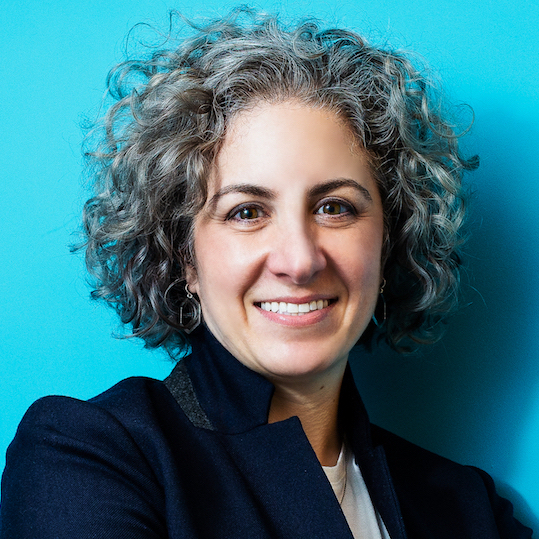
How Katy Goldstein ended the “feast or famine” cycle for good
With Katy Goldstein
Listen and subscribe
In this episode
Katy Goldstein rode the feast or famine cycle for almost six years. Then her biggest client did a reorg and ended the contract early, six weeks before she gave birth to her second child, and she decided the next six years weren't going to look like the last six. Today she says no to more clients than she says yes to. We talk about why she stopped believing in anchor clients, how partnering with another Academy member changed her win rate, and the phrase she now lives by.
What you'll take away
- Feast or famine can run on a yearly clock, not a monthly one. Six good months can hide six thin ones, and while you're inside the feast everything looks stable.
- Anchor clients drag. Katy used to believe one or two big clients were what kept her steady. One reorg ended a contract early and took the plan with it.
- Saying no is a lagging indicator. You can say it once you've got enough work ahead that the next client isn't keeping the lights on. Nobody gets there by deciding to say no.
- Two consultants can charge more than one. She and another Academy member started proposing together, the value was obvious to the client, and their win rate has run near 80 percent.
- More steps in your sales process is clarity, not friction. A call to walk through the proposal. A conversation with the person who wasn't in the first meeting. Both tell her whether it's a fit before anyone signs anything.
In this conversation
The full transcript, in sections. Open any one to read it.
"It doesn't have to be this way": meet Katy Goldstein
0:02
You're worth more than you think you are, and it doesn't have to be this way. Consulting actually doesn't have to be in the abundance or scarcity cycles. You can actually live in a place where things feel a little more consistent and constant
welcome to Smart Gets Paid with me, Leah Neaderthal. I help women run more profitable consulting businesses, getting more of the clients you want and getting paid way more for your work without sacrificing your time. But I've never been a salesperson. My background is in corporate marketing, and when I started my own consulting business, I learned pretty quickly that it's about 1000 times harder to sell your own stuff than it is to sell someone else's. So, I taught myself how to do it. I turned it into a methodology, and now I teach that proven methodology to my clients. So, whether your consulting contracts are $10,000 $100,000 or more, if you want more clients you love, more work you love, and they get paid more than you ever thought possible. Then you're in the right place. Let's do it together. Thanks for tuning in. And don't forget to rate, review, and share. Hey there, Leah here. And thanks for tuning in. I hope wherever you're listening to this, wherever you are right now, I hope you're having a great week, making some good progress in your business, and taking some time for you. So, if you're running a consulting business, you've probably heard of the feast or famine cycle. All right, feast or famine, right? It's where you can find yourself in two completely opposite places, either having a lot of work and a lot of revenue, but working way too much. That's the feast side, where it feels like you're slammed, or the opposite, having not enough clients and not enough revenue, and in some cases, what feels like too much free time. That's the famine side, and that feast or famine cycle, it can happen for any number of reasons. Maybe a few clients say yes at the same time, now you're super busy, and then maybe those end, and then you don't have that much going on, because you hadn't really been doing business development the whole time while you were working with those other clients, but it's this roller coaster you can find yourself on, and maybe you've believed the way most consultants do that this is just how consulting goes, but my guest today is here to show you that it doesn't have to be like that. I'm talking to Katie Goldstein. She's a PR consultant who works with early stage B2B tech companies, and just over a year ago she was a little fed up. She'd been riding the feast or famine cycle for almost six years. Her biggest client had done a reorg and ended their contract early, and she was six weeks away from giving birth to her second child, and she didn't want the next six years to look like the previous six years. So, fast forward to today, she has a real pipeline, she's saying no to more clients than she's saying yes to, and she's not scared of leaving a client anymore, because she expects it now. I mean, in this economy, especially, that's kind of how things go, but she's prepared because she has a pipeline and she has a cohesive business development strategy. And in this episode, you're gonna learn how she did it, so you're gonna hear why Katie stopped believing in anchor clients, you're gonna hear why feast or famine in consulting can be sneakier than most people realize. You're going to hear how she partnered with another academy member on bigger deals and what that did to her win rate, and you'll hear the phrase that she lives by that I want you to take with you, no matter where you are in your business. So take a listen to my conversation with Katie Goldstein, and at the end I'll come back and share a lesson that you can apply to your business, and then hopefully someday soon you'll partner with us to help you build your consulting business, and you'll come back on the podcast and share your story. Enjoy, Katie. Thank you for being here. Thanks so much for having me. I'm so excited for this. Why don't we begin at the beginning and tell the good people who you are and what you do.
Sure, my name is Katie Goldstein. I am a PR consultant. I work primarily with early stage b tech companies and helping them become more visible to the customers, investors, and key talent that they care about.
I love it. And then, how long have you been running your business?
Almost six years, I'm actually approaching my six year anniversary in a couple weeks.
Oh, happy early anniversary.
Yes. Thank you, thank you. It's been a journey, but an awesome one.
Yeah,
what were
you doing before this? I had worked at a series of different PR agencies, and you know, in that work I, you know, worked at the earliest stage of startups all the way up to publicly traded companies, and I kind of witnessed every growth stage permutation in between that. I think what I really, you know, learned in that work, though, is you know I didn't really have like a lot of voice choice and agency over the types of clients I was working with, and I was often sort of like at the helm of like broader higher-ups who were. Taking on business that was a fit wasn't a fit for just all different types of reasons, and I would always have to like deal with the aftermath of those decisions, and so initially I left the agency world well before, you know, consulting in my field was even popular, and I just was doing it as like an interim step, you know, I thought I was going to go in house somewhere, and I even turned down an in-house offer, because I was just like, I just don't really know what I'm going to do yet. And I started doing consulting, and you know, three, four months into, I was like, oh, I actually really like this, I think this might be like a career, and then sure enough, that's when I had like old clients start to come and approach me with sort of new business, and I was sort of really getting my, my business sort of off the ground in that like three to six month period after I started.
Yeah, totally. Well, and you're saying you didn't have much voice choice or agency, and I sort of love that phrase about the type of work you were doing before, and I think that also is so just indicative of like having like starting your career in PR, which is like not really known for, I don't know, treating its people that great in those first years, you know? You really are, you just grind, you just grind.
Never hanging on to the bitter end with a client
6:16
Yes, it's so true. The first few years of your career, such a grind. Now I can look, I'm so grateful for that experience now, because it just, I learned so much, you know, I learned so much about different types of clients, and just how to get really scrappy and creative, and those have all been skills I've been able to take into my business and do really awesome client work. I've also learned things that I knew I didn't want to take with me, and a lot of that had to do with much more of the client relations and the type of new business. One of my biggest rules from the beginning was I'm never going to hang on to the bitter end with a client, I'm always going to have positive endings with my clients, and I have this, this belief, and this comes from somebody else that shared with me once, which was, you know, relationships are really defined by how they end, and so I really took that seriously. So, you know, I've had clients where, you know, we start working together, we just realize, okay, you know, they don't really have the storytelling ingredients, they're not really in a place for their business where PR makes sense for them right now. So I'm going to tell them that, and I'm gonna tell them, here's why I think we should pause, and you should maybe go in a different direction. I've worked with clients where it was clear that they didn't really need somebody like me, they needed a crisis agency, actually. So, I help direct them in that place. I've had clients to where it's like I worked on them for like three years straight, and was just feeling a little bit stale on it, and I was like, I think you need to bring in somebody new to this program who can kind of breathe fresh life into it, and all those decisions. I have incredibly positive relationships with every client I've ever worked with, and that's just enabled me to sort of expand my network so much. And I think that's also speaks to just the beauty of being a consultant, and really a team of one is like I get to make all those decisions. Agencies don't really have that luxury as much, because they have a whole team of people they have to keep on staff. Losing revenue is a massive deal for them. So, there's a lot more to manage from an overhead perspective. So, I understand, you know, I can look back and how and understand, you know, why agencies do have to make the decisions that they have to make, but you know, for me, this is just why consulting is such a better fit, and I've never been so fulfilled personally and professionally doing
it. Oh, I love that. Well, I want to get into that in a little bit, but let's start at sort of the beginning of how you and I started to work together. What was going on in the business when we started working together? I mean, you reached out to us for a reason, you know, what was the reason.
A reorg, a contract cut short, and six weeks from giving birth
8:43
Absolutely, I was in this big transition period in every way, really. You know, I had been in working with my business, that was kind of about my five year mark. You know, I'd been working with all these clients that were really great, but I didn't feel always as much like personal passion behind some of them, and I was also in a state where, like, a lot of these, you know, client relationships that I worked really hard on, all sudden contracts were ending early for forces that were just entirely outside of my control, you know, market contraction, going through reorgs, and just things were changing at the same time, I was six weeks away from giving birth to my second child, too, so it was just a lot of transition, and I really believe in, like, signs from the universe, like I truly now could look back at this and be like, oh, that was meant to happen, I was clearing out the old to bring in the new, and I think fundamentally also I was just so sick of the feast and famine cycles that I was going through every 12 months with my business, where I never felt like, even though I've always been able to, you know, do really well financially from the business, I've never really felt like it was as stable as, like, a W-2 income, because you're constantly like, you get in these cycles of, like, you have too much business or you don't have enough, like, it can't ever. Or be like sort of a constant sort of slow drip in between, and I was just really tired of getting in those cycles, and so I approached you, because I was like, how do I, how do we get out of this, and is that even possible to get out of this?
Yeah. Oh my gosh, okay. So much to sort of unpack here, and I love that I wrote down, like, as you were talking, I was like, contractions, it's like, oh, speaking of contractions, you were about to like have your baby, and so, yeah, I love that you were like, time to really take on, in addition to a new child, like another thing, you know, to make this transition or this transformation in your business,
totally, that's that's so me, that's so me, by the way, just like do things big, take on like a lot of risk at once.
Yeah, okay. Listeners, welcome to Katie's therapy session. I love what you said about this feast or famine cycle every 12 months, because I think that is an interesting reframe on the feast or famine cycle. You know, I think that when we hear that phrase, oftentimes we might think about it from month to month, right? And that is very real, right? You can have good months and bad months, or whatever, but you know, real stability is even looking longer term, right? To have feast or famine over the course of a year still can create a lot of uncertainty. You know, it's like you can think and feel that like things are going great for like six or eight months, but if you can't sustain that, right, then you're still in this face for famine cycle, just over a longer term, right.
Why she stopped believing in anchor clients
11:25
Totally, I always used to believe in this theory of like you got to have anchor clients, like you have to have one or two anchor clients that you know keep things stable, and then you can kind of like add and like change things around, sort of around that, and like now I think of the term anchor, and it's like it's literally something that like drags you down, and so I've just completely just changed that thinking entirely. I think the other thing was like it's sort of related to this, is that I wasn't really investing in myself as a business. I think it took me those first five years just to like start to kind of find my own product market fit for my business, like I thought of myself as a freelancer. I just sort of like bounce, like project to project. The clients are in control, they come to me when they need the business. I have to just be opportunistic around those needs, but I never thought of myself as like a business. I never really understood what pipeline was like. I would have a client that you know, maybe a prospect that I would talk to, and they'd be like, "Oh, you know, we're not ready now, maybe another time, and there's like, "Okay, see ya, and probably never follow up with that. Now I actually like have a pipeline, know how to bring people down, you know, through the funnel, and I also know how much needs to be in there at any given time, so I can't.. there's like actual science behind this, so that was all really sort of changed my mindset around, okay, you can actually create stability in these like six month cycles, like I can get ahead of those drought times versus just like waiting for the drought to happen by like again being dragged down. I think I was, I think I was a little bit letting myself getting dragged down by some of my anchor clients, frankly.
Yeah, yeah, I think sort of in general we know why one would want to get out of this feast or famine cycle and create more stability, but like, what were you hoping that it would do for you beyond just the business?
I think I just wanted more personal, like feelings of security, especially like at home, so my husband has always been, you know, a W-2 employee, and we lean on him for health insurance for our family and things like that, but for me it was always like I was always able to make good money, but it always felt fickle, like it was like, oh, well, like any of these clients could like drop down in a whole like any given day, or like what happened to me last year, like one of my biggest clients could just decide they're doing a massive reorg, you know, across the entire organization, and I just sort of like at the whim of that. I always felt just at the whim of my client. So I think at home, just like knowing like my income was like a really felt really stable versus being anything that was kind of fickle was just really important to me. And I think in the last 12 months I've really seen that change.
Yeah, yeah. Well, let's get into that. Bring us up to speed, and then let's talk about what helped you get there.
Saying no more often than she says yes
14:08
Sure. Well, I think the biggest change is I'm saying no more often, clients, and I'm saying yes, and that's an incredible thing. Actually, it's a very privileged position to be in, you know. For one, it's certainly because I have some really awesome clients right now, where, like, I'm not in a position where I need to take on more business, I just want to take on more of the really awesome clients that are just going to help grow my business. I think the other thing about that is I become so dialed in on my ICP, like I couldn't look back, like I've even been approached by clients that would have been so awesome, you know, a year ago, and I would have said yes without hesitation, and I've been saying no to those types of clients because they just don't work for me anymore. So I've gotten very, very clear on my ICP, and that sort of criteria. Gotten more specific over time. I think I started with just like, oh, founder-led early stage B2B businesses, and then it was like, yes, that, and I really want them to have strong, you know, connection to the current media market, and I want them to have clear validators around them to, you know, tell their story to the press, and so, as I've been bringing more of those in, I think, I think, you know, sometimes saying no to the clients that aren't the right fit has allowed me to say yes to the ones that really are, and it's, you know, taken me in directions I honestly would have only dreamed of before I started this program. So that's a big change for me. I think the other change is just I actually have a pipeline now. I have a pipeline, I know how to bring people down it, my whole goal of like making this feel like a more secure place of income for our family has totally transformed, and there's a million other things I can speak to about just like the changes that I've seen, but you know, maybe I'll just start there.
Yeah, well, those are some really big ones I'm already thinking of, like little threads we can pull here, but you know, knowing how to build a pipeline, manage a pipeline, right, is the first step towards that stability, right, and getting out of that feast or famine cycle, so that you're not just like sitting there sort of on the back foot when these droughts might have happened before, right, but I also think that's such an important connection to what you said at the beginning about like saying no, right? Like being able to say no. It's not just that you are saying no, it's that you're able to say no, right? Because, like, being able to say no in our work, at least, is like a lagging indicator for a lot of other good things. You know,
it's one
thing to be like, you know, say no to clients that don't work, or whatever, but if you have nothing else going on, you don't have the luxury of doing that, you know? If you aren't busy with clients, if you aren't covering and exceeding your expenses and making real money, right? You can't say no. If you don't have anything in your pipeline and you don't know how to get more in your pipeline, you can't say no, right? So it really is this like it's a lagging, really really positive indicator, and I don't know what does it feel like, because I know that we've had some conversations in, you know, our community about sometimes that you were considering saying no and wasn't sure what to do, or whatever, but like, what does it feel like to actually just say no?
It's pretty empowering, I have to say, and the more I say no, the easier it becomes to say yes when it's the right things, and I think, like, more than anything, I just feel like I'm like heart, mind, and soul, like aligned in my business, like I'm validating myself on a deep personal level every time I say no to something that's not really my ICP, and I open the doors for the things that are right now I'm in a position where you know I can more easily do that, you know, even just six months ago, there were times when I was approached by things that, like, would have been great again, you know, in that, like, year period before, but weren't quite the right fit, but it was also still waiting to hear back from a couple ones that, like, I wasn't 100% sure about yet, so it did involve, like, a little bit of risk in there, but I believe that you get back what you put out into the universe, and I think ultimately, just like being super, super focused on my ICP has just enabled me to be down this path that makes me feel super empowered at the end of the day.
Yeah, there's a phrase that I learned from another business owner colleague of mine, she said the universe cooperates with a made-up mind, and in our work, we're more about like systems and whatever, and it's not like manifest your own clients, right? But I do believe that there is some truth to that, you know, and saying no to the wrong clients, or even the wrong right now, now that you know more and have you know clearer idea of who's best for you, saying no to those is saying yes to, I guess, the universe, right? And so I don't know this phrase, like the universe cooperates with the made-up mind, like always sticks with me, and I think it's very relevant here,
"Not waiting around for him to call"
18:46
totally. And I, you know, I equate so much with like the client prospecting processes, like it's it's a little like dating, right? And so I used to put a lot of my like when I would find a client that seemed like really awesome work, and I put sort of all my eggs in that basket, like, oh, that I submitted a proposal, like, for sure, you know, they're gonna get back to me and say yes, but I don't know why I would just sort of like assume the errors for sort of maybe hope for that outcome, but like now I just live by the like not waiting around for him to call theory, like
yes,
like I, you know, if I've like submitted the proposal and I've done the work and I did like it's, it's in the pipeline, but it's done, and now it's time to figure out. Okay, like, what else am I gonna go look at to keep filling, you know, this pipeline? Because you can't put all your eggs in one basket, and you can't wait around for him to call.
That's right, we know that's right. You know what else is different right now from when you started.
Partnering with another Academy member, and what it did to her win rate
19:41
I'm so fundamentally excited about what I'm doing. I mean, I'm working on clients that you know really I could have only dreamed of, and I feel just personally excited about the work that I'm doing with them. Like, I'm working with really great people, really great companies, like that's exciting. I'm also like. Being challenged, like I keep putting myself in new situations with new experiences, so I think that's really exciting. I think the other thing that changes I actually started partnering with another fellow Academy member, which is fabulous, and her and I started co-partnering together on clients, and we bring together even more value as a duo to the clients that we work on, so that's been super fun. I've never sort of expanded my business in that way before, but it's been fun having almost like a co-worker, a colleague, a partner to, you know, talk about this stuff with.
Yeah, well, with two, you can think bigger, you can do bigger, you can take on bigger, right? That's totally exciting,
and, and I'll say, too, with the clients, the value is so clear to them. So, we've been able to, you know, even charge more because there's two of us, you know, you're getting two senior folks who are doing all your strategy and execution for you, and so clients really see the value of that, and we have a, you know, pretty good win rate from the proposals that we've submitted as a duo together,
yeah. Do you know offhand what the win rate is?
It was 100% for a while. I'm not even.. I'm not even lying. It was 100% for a while. I think it maybe is closer to like 80% but it's pretty high.
Yeah,
we've found a lot of success with that.
That's great. The more swings you take, you're not going to hit a home run every time, right? So, you know, but still, that's really incredible.
Totally
more on how Katie ended the feast or famine cycle for good after this. Let's talk about some things that were the biggest game changers for you, and sort of getting you to this place. You know, you know, you mentioned getting clear in your ICP. What else made the biggest difference for you that you learned?
Value-based everything, and what clients don't care about
21:47
I would say it's like value-based everything. I know we talk a lot about value-based scope and pricing, you know, all that kind of stuff, but it's taken me a long time to really understand what value really means and what's the real value I'm providing to my clients, too? At the end of the day, here's a good example: is I used to think of the way I would price in terms of allocations of my time. I never did hourly rates, but I would do a flat retainer and say, oh, for the next flat retainer, that's roughly, you know, 10 hours a week, or let's say, of my time, and very quickly realized, like, my clients truly do not care if I deliver something, and it took me 10 minutes or 10 hours to deliver something. They just want a high-quality product at the end of the day, and I need to think about what's the value that I'm actually really delivering to them. How does it take work off their plate, what I'm doing? How does it, you know, enable them to focus on, you know, more strategic initiatives within their organization, if they're working on a broader visibility program for their company. How does the work I'm doing help enhance their work that they're doing inside their companies? So, I think thinking in terms of that has just taught me so much about client empathy and how to really step in their shoes versus thinking a little bit more tactically, you know, and PR work, you know, somebody might understand what an op-ed is, but they're not necessarily going to understand the value of it. So, me saying I'll write op-eds for you doesn't really mean anything to them. You really have to step in their shoes, and I think another technique to that end, too, that I've learned is just letting my clients, giving them the space to just talk about what's on their plates, what's what's going on for them, like where are their biggest pain points right now. It's almost like you can see like a exhale moment for them, where it's like nobody's asked them that question, and you know they're just excited that they can talk to somebody who kind of is actually seeking to understand them a little bit better.
Oh, yeah, I mean, I think that what you're talking about, around first of all listening, right, and then translating that to value, and like how they'll be different, and all the things that we talk about, because we really do do like value-based everything, like if you were to like do a word cloud of like things I say, that's probably going to be in the middle, but it is kind of like a different way of listening, probably from how you had to do it, like at the agency, you know. It was like, like you said, a lot more tactical, sort of translating it into like, okay, here's what we'll do for you, but sort of translating that to like, okay, here's what it means for you, and here's how I can provide value, and here's what that value is, that I don't know if it's making sense to that track,
it totally tracks, yes, it totally tracks, because I think it's so easy to get in, like the tactical mindset about, you know, like the work in and of itself, what that's going to look like when we work together, I'm going to go pitch media, what does it really mean to pitch media, so just thinking a little more about my clients, and I'll say too that it's not just in the prospect conversations that this is happening. This is happening like when I'm actively doing the work with clients and helping understand what is the value to them, and also what are like what's on their mind, what are the problems that they're looking to solve, and leading them, leading them through that. Process, you know, I've always been good at leading clients when I'm actually working with them, but understanding how to like lead them through the sales process too has been sort of part of that work too, because ultimately that's what they want, they want to be led, otherwise, you know, you're just putting too much work on their plates.
Yeah, can you speak to that a bit, because we talk a lot about that in the academy, in our work together, leading the client, but for listeners, like, how would they understand that, and what are you know, can you think of some examples of that?
Leading the client: more steps, not fewer
25:24
Sure, you know, everything from backpack, and we talked about, you know, to make sure that you always have your next call scheduled, you know, when you end a conversation, just helping make it really clear, just for them in the prospecting process, just what the next steps are in the conversation, so you know, in that sort of initial conversation I have with clients, you know, assuming it's a fit, I almost always offer after that to, you know, send a proposal, so they get a better sense. And then when I send that proposal, I say, you know, let's plan to schedule our next call, so we can actually review that together. I'm putting more steps into the process, because before, frankly, it was just like, here's your proposal, just put it out into the ether, and like, keep my fingers crossed if something would come back. But the reality is, clients need follow up, they want to know how to manage you, how to talk to you, and so just understanding, you know, what the process looked like better on their end, but who the key decision makers were, and then me creating my own process, kind of in parallel to them, so they know you're already scheduling the call for them. It's easy for them, they don't have to worry about that. It's just really helpful in bringing them down the funnel. Ultimately,
yeah. No, and you're totally right about clients. Do need to be led, and I think that's not a posture that when you start your business, you're naturally in. You, you know, you think like the client's in charge of this process, but the client's also in charge of 800 other things, and they're not going to be in charge of this process, right? And so you really do have to like lead them, and some of the things that you're saying here are just spot on. It's interesting that you've put more steps in, because I think a lot of people would think if she's, you know, getting more clients or, you know, landing more deals, or whatever, like the it must be shorter or faster or easier, or whatever, and it likely is, but talk to me about having more steps, not less.
Totally, well, just remember that when I started the seed program, like, there was no sales process for me, was like, have a conversation, submit a proposal, hope for the best, right? So now that's changed. Now I actually have a process, and I base that process based on sort of what I'm hearing from the clients and you know decision makers internally, I think also frankly I learned I need more steps personally to just really make sure it's a good fit, it's really hard in the initial 30 minute conversation to really understand what are we working with entirely here, so if there is an opportunity, this is certainly not required, but if there is an opportunity to speak to the main principal, that's going to be the main spokesperson here, before we've decided to work together, I am going to leap at that opportunity, because it's going to reveal so much to me about, is this the right fit, is this the right time, so we can just all move together forward on the same page, ultimately, so it's not about adding more friction in the process, it's just about adding more clarity.
I think that's that's a good reframe, and I think you're right. The big mindset shift here is that you're both sort of making sure you're a fit for each other, right? This comes up a lot, you know, with a lot of my clients, because you might get an inquiry or whatever, you're so excited, you're like, great, we're doing this, or whatever, and you, you don't have an opportunity because there's no step involved to talk to anybody else, right? Like, one of my clients used to get inquiries from, like, their nonprofit, and, like, they didn't get inquiries from the ED, but they didn't realize until they almost were about to sign the contract that, like, the board was not involved, or vice versa, you know, and so now they built into their process like it's important for us to talk to the whatever party is not present, right, to make sure that we can be successful here, you know, and so when you think about like saying no to the wrong opportunities or saying yes to the right opportunities, you know, getting a better understanding, I'm guessing, of like what a right opportunity really feels like.
Yeah, I think that's exactly spot on. And just having, I think, more of those conversations when it makes sense in the process. I think just, again, like I said, just brings so much clarity.
Yeah. What else do you think has made the biggest difference for you from what you've learned?
"I loathed the idea of posting on LinkedIn"
29:20
Well, I was doing no marketing before, like I actually loathed the idea of hosting on LinkedIn, like everybody's doing something, like I immediately don't want to do it. I know so many people have that type of reaction.
Yeah, I mean, there's a reason, there's a reason I've never read Harry Potter, because you know, whenever Harry Potter came out, everyone was reading Harry Potter, and I was like, I don't, everyone's doing this, I'm not doing it. So I validate what you're talking about
exactly. And so I realized that marketing my business, if I'm treating this like real business, I need to market myself. And so I started posting on LinkedIn. And at first I was starting to, you know, focus a little more on the framework of, like, what are my clients' problems, and you know, how can I solve them, and then I was like, I need to kind of do away with that framework, because it's almost making me not want to post, and I had to just start posting, like, what are my own just takes that I'm having, what are my own hot takes about, you know, PR, and you know, the tech industry writ large, and so I just started posting that, and I noticed I was getting so much more feedback in a positive way from folks, and I would have a lot of folks in my network that would never even engage with my posts, but they're like, oh, I see you're posting on LinkedIn, there are a lot of lurkers out there, that is very, you talk about that a lot, and that is so true. And what I've seen is that the posting on LinkedIn, it has helped guests with some, like getting some leads into my funnel that were just sort of way, way outside of my network, but it's actually almost like killing multiple birds with one stone, because it's kind of a shoulder tapping effect, you know, it's kind of just keeping me relevant to my own network, which is a lot of PR folks, and most of my business comes in through referrals. So I'm just, I'm noticing that the posting is keeping me more top of mind for folks. So that has been, you know, really effective, and I don't think I've even really seen the full results of it, except still my profile and getting better at getting myself to post, and things like that, but that's definitely been a big game changer. Just realizing, oh, I have to market myself.
Yes, you have to market yourself. And I think what you've just shared is that you have something to say, you know, which, again, coming from the agency space, is like, nobody cares what a junior, mid-level, you know, agency person really has to say, but you have something to say. You know, it's interesting, because I'm having more of these conversations around, like showing up on LinkedIn, and you know, really getting visible and who that brings to you. And it's almost like I'm getting most of my clients from referrals - this is me doing air quotes, right? I'm getting most of my clients through referrals, so I need to start marketing to get other clients, not through referrals, and seeing those as like mutually exclusive, but one major goal of marketing is to get referrals from people in your world, right, who may not otherwise remember you at that moment, or know, you know what I'm saying, like, because you're not top of mind, and of course, it's also, I mean, part of our system is to sort of expand that circle. Don't want to get into the weeds here, but like, you know, there are other things we do here. You know, I talked to somebody who's like, I, you know, I've been sending my newsletter, and it's taking a long time, or whatever, every two weeks. I don't know if I should even be doing it, because I still get my clients through referrals. It's like, but who wouldn't have referred you if you weren't doing that, you know,
it's
like if you, if you think it's not working, like try turning it off, right, and seeing what happens.
It's so true. It's funny, so much of what I talk to, you know, my own founders about is like we have to bring things into the storytelling to validate the business, and I think of these things of newsletters, posting on LinkedIn, like these, are really important credibility markers and validators to show that you are really legit, you do know what you're talking about, and you have a differentiated strategic point of view that people care about. By the way, just showing that you're putting in the effort to doing something like a newsletter is also just goes a long way in people's minds, I think more than we realize, you know, about just the effort you might put in for them someday. So, I think you said a while back, or maybe it was during this module, of like, this is slow release, this is not fast acting, and I think that that's incredibly true, and I think it just takes a long time of, you know, getting that content out there to where you really start to see where the results come back, and also where your voice is resonating the most.
Fast-acting marketing and slow-release marketing
33:48
Yeah, yeah. And for everybody, I mean, what you're, what you just mentioned, the slow release and fast acting is like, I, I say it, you know, all the time, it's like, you know, I think of marketing as like it's kind of like medicine, right? It's some medicine is fast acting, some medicine is slow release, and some marketing is fast acting, and some marketing is slow release, and knowing the difference between those, you know, shows you what you need to do to make whatever happen that you need, right? So, like, for example, if you needed to make things happen quickly, you wouldn't pitch yourself to conferences, that's a very like slow release technique, right? LinkedIn is somewhere in the middle, you know. Usually, you bring some people out of the woodwork, and then you're planting seeds for clients and referrals and visibility over time, but it's a very helpful mechanic, you know, as you think about where to focus your time.
Yes, yeah, that's entirely true. And it's just, I think, there's also just something effective in the exercise of doing it that just helps hone your own voice and how you shape things, and even talk to clients to do things more in their language. I'll also say, too, you know, it's like sometimes it's also just hard, like the LinkedIn algorithms have constantly changing, like you don't know what's going to. Play up well, like I've been shocked by the posts that I have that have done incredibly well, and also shocked by the ones that I thought were incredibly awesome or controversial and didn't do that well. So the importance is just, I think, consistency, and I heard somebody once describe it as like running. When you're training for a marathon, you don't start by running a marathon distance, you start by, you know, running three miles, and then you run five miles, and you keep building from there. And I think that's a little bit of what, you know, LinkedIn is, is just like, you got to create the habit of doing
it. Absolutely, absolutely. And when you get into the habit, then how any one post does or doesn't do isn't a make or break, you know. It's like, if you post once a year, that post has to do really well, you know. But if you post three times a week, whatever, there's always next week, you know.
Totally pipeline,
it is
like pipeline, and the cumulative effect of those three posts is probably better than if you had waited for, you know, for the algorithm to take off, or whatever.
Yep, exactly.
All right, Katie, fill in the blank for me. I almost didn't work with you because,
because I wanted to make sure, like, it was legit. There's a lot of snake oil salesmen out there when it comes to, like, business coaches that claim they're going to get you clients and do all this stuff for your business, and like, there's a lot of people out there that are not really legit in doing that, or they're they're giving you outcomes that frankly aren't even realistic. And I very quickly realized this program was very legit, very much about the process and about partnership too. You're giving me tools, but then it was on me to have to use them, and I think I've also been given just a ton of tools to the process.
Yeah, I could go on and on about the industry. I don't think the industry has really earned a great reputation. So, it is important to sort of, I hate to use this phrase, because you're like so co-opted, but like, do your own research, you know, and really make sure it feels good. I'm glad it did for you.
Yep,
Katie, what would you say to someone who's in the position that you were, you know, back then or on this feast or famine cycle? What advice would you give her?
If I were to give myself advice, I would say you're worth more than you think you are, and it doesn't have to be this way, consulting actually doesn't have to be in the abundance or scarcity cycles. You can actually live in a place where things feel a little more consistent and constant. It's just a matter of applying the strategy in your business, just like you invest in your clients, you can invest in yourself as a business, and it will pay dividends.
Yeah, and in terms of it doesn't have to be this way. I think a lot of people don't know that it can be some other way, because I think probably our model of working before wasn't great. But if it doesn't have to be this way, say more about what it could be, or really what it is for you.
Yeah, yeah, I think it feels like a real business that's not fledgling any floor, that's not sort of like on the customable if one client leaves and like, how am I going to fill that immediately? I don't have those worries anymore. I have a lot of redundancies now built into the business through my pipeline, through just the clients I currently take on, where if something does slip through the cracks, and by the way, I now expect that to happen, because that's how things go. I'm not scared of that scenario. I have a lot of redundancies in place, and things to kind of replace that, you know, if that were to happen, or move things down the pipeline, if that were to happen. So, I think that's the, that's the biggest difference, is it's just a matter of, like, creating stability, both in terms of the immediate stuff that I'm working on right now, as well as the, you know, pipeline and perspective stuff that I might be working on, you know, in the near future.
That's so amazing to hear, and you've really put in the work, and I'm so glad that you really get to enjoy it. Katie, where can people find you?
People can find me, certainly on LinkedIn, you can also find me at my website, that's Katie Goldstein comms.com or you can also email me Katie K A T Y at Katie Goldstein comms.com
My take: saying no is a lagging indicator
39:12
Awesome, thank you so much for being here. Thank you. All right, I hope you loved our conversation as much as I did, and if something Katie said spoke to you, I hope you'll reach out and let her know, and if you're so inclined, I'd love for you to take your biggest takeaway and post about it on LinkedIn and tag Katie and me. There's nothing I love more than seeing that you're taking what you hear on the podcast and really integrating it, and I'd love to give you a signal boost on LinkedIn, so I always like to pull out one lesson that you can apply to your business, and there's a lot we could land on here, but the thing I want you to take away is that the feast or famine cycle in consulting can be sneakier than the version that a lot of entrepreneurs and business coaches talk about, because when most of us hear feast or famine, we. Picture it, month to month, you know, there's like the slammed months and then the dead quiet month, but in consulting, the cycle can run on a much longer clock. I mean, six months of feast and then six months of famine, or you could have a great year and then the next year's quieter than you expected, and you're sort of wondering when it's going to turn around, and while you're in the feast part, everything can feel fine. I mean, yeah, you're really busy, but you can feel like things are stable, and you can even feel like you've got it all figured out until things slow down, and then you realize that you've been in a feast that was hiding a famine the whole time, and so, whether the cycle you're in runs month to month or stretches out over a year, breaking it works the same way you build the systems upstream of it, and one of the clearest signals that those systems are actually working is that you can finally say no to clients that aren't the right fit, because, like I said, saying no is a lagging indicator of a profitable business across all three of our profitability dimensions, financial, professional, and emotional. Because when you can say no, it means everything upstream is working, means you know the pipeline is full enough, the marketing is humming. You don't need that next client to come in the door just to keep the lights on and listen. Saying no to clients isn't something you can just like flip a switch, and do I mean some business gurus will tell you to just, like, you know, say no, girl boss, or, you know, whatever, but that's fiction. You can't just say no because you want to, or because a guru told you to on Instagram. You can say no when you have the upstream systems dialed in, a marketing system to get clients coming to you on purpose, and a sales system to help them say yes, and I want to leave you with the phrase that Katie gave us, the one that she now lives by. She said, I just live by the quote, not waiting around for him to call theory. I love that. I mean, there are so many dating parallels in business development, and for Katie, it means that once she's submitted a proposal, and you know she's doing work, she doesn't just sit there refreshing her inbox, she does actual business development to create the next opportunity to fill your pipeline, because you can't put all your eggs in one basket, and you can't wait around for him or her to call. So, here's what I want you to do this week, if you're sitting there thinking, oh, you know, I should be saying no more, don't just go out and try to say no to a client this week. Work on what's upstream of that no instead. Pick the smallest gap in your business and just go close it. You know, reach out to three people with a shoulder tap email, post one thing on LinkedIn, send one follow up to that prospect that you let drop last month, do one thing that's a step towards the systems being dialed in, because that's the work that puts you in a position to be able to say no. All right, thanks so much for listening, and I'll see you next time. Transcribed by https://otter.ai
Two ways I can help you
When you're ready to break through to the next revenue level in your consulting business, here are two ways I can help you.
1Join The Academy
For women consultants who've been in business 2+ years and are making $120k+. Build the two systems every consulting business needs to get more of the right clients, get paid more, and build a sustainable business:
- A marketing system to bring the right clients to you and fill your pipeline
- A sales system to help clients say yes and get you paid more
If you're ready to make your business and revenue more stable, secure, and sustainable, visit the Academy page to learn more and apply.
2Get Roadmap to Clients
Map out a simple sales process for your consulting business in less than an hour. Take potential clients smoothly from first contact to a signed proposal, so you can stop reinventing the wheel with every opportunity.
Get the free video course.