Episode 145 · July 5, 2026
How Abby McAdams built a business full of the clients she actually wants
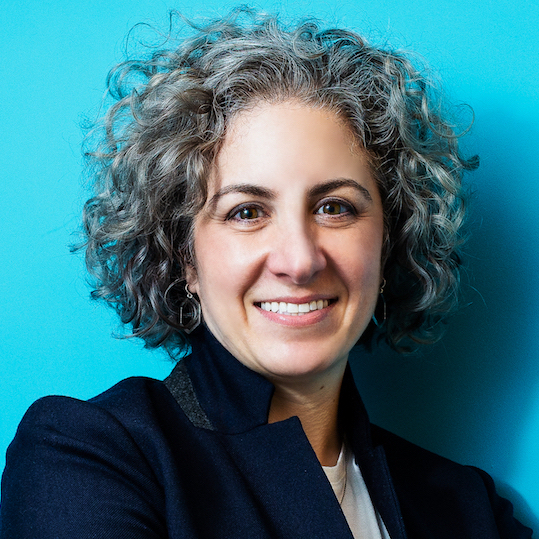
With Abby McAdams
Listen and subscribe
In this episode
When Abby McAdams and I started working together, health tech was about 30 percent of her business and the clients she loved best arrived by luck. Today it's 90 percent, and people she has never met come to her because they can see what she specializes in. She talks about why naming her ideal client felt so risky, what she did in the months after she said it out loud, and how she planned a year ahead so she could take the whole month of July off with her family.
What you'll take away
- The fear of narrowing is real, and it is not the truth. Abby thought locking into health tech would cut her client base in half and put the business she'd built for her family at risk. Health tech went from 30 percent of her work to 90.
- Nobody flips a switch. You change the ratio. 30/70, then 50/50, then 75/25. The signals you get along the way are what tell you to keep going.
- She said it out loud, in every place she could. New LinkedIn headline, a note to everyone who had ever referred her, and a post for every win in the space so there was proof sitting behind the claim.
- Specializing isn't about years, it's about validation. A handful of results in the space you want does more than a long track record in a space you don't.
- Betting on yourself isn't a one-time decision. Leaving the stable job was one bet. Raising her rates, planting the stake in health tech, and structuring a year of contracts so she could take July off were three more.
In this conversation
The full transcript, in sections. Open any one to read it.
A list of how I wanted to feel, and what it has to do with clients
0:02
So I think the fear before was I'm going to be missing out on potential business, or is there not going to be enough business for me in this specialty world where all of a sudden I'm going to be cutting my clientele in half, and then this business that I worked so hard to create and grow and use to support my family, is it just going to all kind of fall a part.
Welcome to Smart Gets Paid with me, Leah Neaderthal. I help women run more profitable consulting businesses, getting more of the clients you want and getting paid way more for your work without sacrificing your time. But I've never been a salesperson. My background is in corporate marketing, and when I started my own consulting business, I learned pretty quickly that it's about 1000 times harder to sell your own stuff than it is to sell someone else's. So, I taught myself how to do it. I turned it into a methodology, and now I teach that proven methodology to my clients. So, whether your consulting contracts are $10,000 $100,000 or more, if you want more clients you love, more work you love, and they get paid more than you ever thought possible. Then you're in the right place. Let's do it together. Thanks for tuning in, and don't forget to rate, review, and share. Hey there, Leah here, and thanks for tuning in. I hope wherever you're listening to this, wherever you are right now, I hope you're having a great week, making some good progress in your business and taking some time for you. So, back in my 20s, like most people, I dated around, you know, as one does. And eventually I started to think to myself, like, okay, you know, when am I going to meet the one, and what do I actually want in a partner? Like, what do I want in a wife? And I started making a list of what I wanted in a partner, you know, like a lot of people do, like my ideal partner in life, and I started looking for it with, you know, varying degrees of success, and then I stumbled upon this book about dating called Meeting Your Half Orange, and the premise of the book is this, that when most people make a list of what they want in a partner, they list the wrong things, you know, tall, funny, adventurous, good job, and the problem with that list is that there are 1000 ways to be funny, and only one of them is like really right for you, and there are 1000 types of, you know, adventurous, but only one of them is right for you, and on and on, and so the book says stop listing qualities, instead think about how you want to feel, and then write down how you want to feel, and then you know, believe that you will meet somebody who makes you feel that way, and then when you do meet the right person, you'll know it, because you'll feel how you want to feel, all right. So I did that. I actually like did it. I wrote down a list of how I wanted to feel, what they call your orange list. And not long after that, I met someone, and we were together for four years, and I mean, in terms of how I wanted to feel, like it was, it was close, you know, close enough that we got engaged, but a few weeks before the wedding, we called it off, and I knew that deep down I didn't feel the way I'd written down on that orange list, and as the dust settled, and I was in my mid 30s, I started to wonder, like, was any of this stuff even real? Like, would I ever find my person? But I kept up hope, and in late 2014 I went back to that list, and I wrote it all over again. More specifically, this time, and then in May 2015 I met and fell in love with the woman who made me feel the way I wanted to feel on that list, and the woman who would become my wife, and all these years later I actually dug up that orange list not long ago, and I read it again, and even now everything on that list I do feel that way every day. Now, why am I telling you this? Because I think we do something similar when we're building our consulting businesses. We think about our ideal clients, and we know that there's something that we're looking for, you know, maybe it's an industry, maybe it's a type of founder, maybe it's a moment in time that our clients are in, maybe it's something else entirely.
Meet Abby McAdams, health tech PR in Portland
4:20
And we're going to talk more about that later in the episode, but a lot of us either haven't fully allowed ourselves to name who we really want to work with, or maybe we have, but you just don't quite believe that you can actually build a business around them, you know, that the clients that we actually want can become the clients that we almost exclusively work with, and my guest today is here to show you that you can. I'm talking with Abby McAdams, who's the founder of ASM Communications, which is a health tech, PR, and communications consultancy based in Portland, Oregon. And when Abby and I first started working together, she knew she loved working with health tech companies, but getting the. His clients like getting them on purpose felt kind of out of reach. Fast forward to today, nearly every client she works with is a health tech company, and that shift didn't happen by accident. So, in this conversation, you'll hear Abby share why naming her ideal client felt scary at first, and what changed when she finally did it. You'll hear what she actually did, like practically and specifically, to go from taking whatever came her way to working almost exclusively with clients she loves. You'll hear what it felt like to almost walk away from her consulting business entirely, even when things looked fine from the outside, and you'll hear why the bet she made on herself wasn't a one-time thing. So take a listen to my conversation with Abby McAdams, and at the end I'll come back and share a lesson that you can apply in your business, and then hopefully someday soon you'll partner with us to help you build your consulting business, and you'll come back on the podcast and share your story. Enjoy, Abby. Thank you so much for being here. Thank you for having me. This is so much fun. Why don't we start at the beginning, and why don't you tell the listeners who you are and what you do?
Broadcast news, agency life, and going out on her own
6:07
So, I'm Abby McAdams. I am the founder of ASM Communications, which is a health tech comms consultancy, and I run my business out of Portland, Oregon, where I live, but I work with venture capital firms and health tech startups across the country.
Awesome. All right, so you're running this consultancy. What did you do before this? What did you do before you started your business?
So, I've worked in communications and PR for almost the entirety of my career. Before this, I worked in-house at a software company, so not health tech at all, worked in B2B comms at a company called App Dynamics, which was later acquired by Cisco, so had sort of the experience of sort of the small scrappy startup comms team, and then was part of the behemoth comms team that is Cisco, and before that worked at a variety of TR agencies in San Francisco and in Portland, where I'm originally from, my very first sort of like entry into the world of working with journalists and communications was actually as an assignment editor at the local ABC affiliate in Portland, Oregon. I started my career thinking I was going to work in broadcast, that's what my college major was, broadcast journalism, and it was a very different reality working in TV news than was glamorized in college, so it was a brief two year experience for me before I knew I had to get out of there.
Yeah, well, and it's interesting because now with the types of clients you work with, how you really have been on the journey that they would find themselves somewhere along that continuum, right, starting from the scrappy startup to being acquired, and you know that's one very well-worn like startup trope, right, or like startup journey, but I mean, I can't imagine that that doesn't help you with, you know, credibility and really understanding where your clients might be in that moment,
completely, completely, sort of having an understanding of even like working on the agency side for a long time, but then going in house and understanding what an exit looks like and what the options are for a startup. It definitely plays a role in how I'm guiding the companies that I work with, and a lot of the companies I work with are much earlier in their company journeys than App Dynamics was when I joined, and that they're sometimes maybe they've only existed for two years, and maybe they've only gotten a couple million dollars to their name, and they're just experimenting, they're going to even see if this company takes off, but it's been really fun to work with some companies for, you know, years on end now, where I've been able to see them from this like really scrappy seed stage company get their next round of funding, get super busy with you know lots of customer interest, and and watch their growth journey, and to be a part of that and helping tell the story to the audiences that are going to impact their future growth is the part that I like the most.
Yeah, and what is it about health tech in particular that really draws you?
It's so interesting, like health tech was never on my radar. Obviously, I worked in B2B comms, worked with enterprise companies up until starting my own shop, and through working with a couple of VC firms in supporting their portfolio companies. I got introduced to a couple of health tech companies, and what I found is that not that this doesn't exist in other industries, but the founders behind health tech companies just had incredible stories. Oftentimes I'm working with people who were previously like ER nurses or doctors themselves, who then found a way, like, hey, we got to fix this broken part of this industry, and you know, leaving their previous careers, or sometimes doing them simultaneously as a health tech founder, and still practicing medicine. I've had clients like that before, and just seeing their passion come through, and what they're building for, and seeing that there's true impact, whether. It's for making lives of patients easier, or the process of getting health insurance easier, or making sure that hospitals stay open and making sure they have the right financing, and understanding that whole piece. The impact just feels really huge, and on a personal level, exciting to me, I come from a family of, you know, I've got multiple doctors in my family, that was never going to be my path, but I find it really inspiring to sort of see the mission and the North Star of a lot of these health tech companies.
Yeah, that is kind of a cool way, especially, I mean, my dad's a doctor as well, and I think what you're doing is a very cool way to sort of continue that legacy in a different capacity, yeah. Well, so let's talk about, you know, in your business, like what was going on when we first started working together. I mean, I always ask, you know, you reach out to us for a reason, like what was the reason.
"It was working, and the clients I loved felt random"
10:54
So when we first started chatting, I think I'd had my business running for about two years, and it had been going, you know, just fine, in that you know I was still in business, still having, you know, clients, still working, but the piece that was missing for me was really being able to attract the kinds of clients that I loved working with the most. I knew that that was the part that really filled my cup, and it wasn't happening enough for me to get what I needed from the business on that sort of intellectual emotional level. Sure, like it was working, I was able to support my family, and I was able to grow the business, but being able to continue to work with consistently the kinds of companies that I loved the most felt few and far between, it almost felt random.
That was like the health tech companies, that's what you really wanted to be working with,
exactly. And when we started working together, I had an inkling that those were the kinds of companies that I really wanted to invest my time in, but it took going through those initial sort of stages of the academy to really like secure that in my brain, and also to build the confidence that it is okay to lock into a specialty in this business, which I was really scared of, and it took quite a bit of time and work to be able to get to the point where I was okay putting a stake in the ground and saying, like, this is my focus, and you know, do I have other clients that fall outside of the health tech world? Yes, like it's not a "hey, I'll never entertain a conversation, but being able to like really be known for something specific has made a huge difference in attracting the right kinds of clients and being able to build those relationships.
Yeah, well, so before, because you had been working with some health tech companies, and I mean, if you had to guess, like, what was the percentage of health tech before, and what would you say it is now?
I would say when we first started working together, it was probably like maybe like 30 40% of the business was health tech companies, and now I mean it's 90,
yeah,
so big difference, that's
amazing, that's huge, yeah. Well, and talk to me about, because you said something important, it was, I had to learn it was okay to lock into a specialty, because I mean, I hear this all the time, and we have these conversations in the academy about feeling that hesitance to like really put a stake in the ground, right, or lock in, or however you want to put it. Talk to me about what that felt like. What was the fear before?
What she was afraid of before she picked a specialty
13:31
Yeah, so I think the fear before was I'm going to be missing out on potential business. If by being known for health tech comms and PR, am I going to be losing out on our opportunities that I might need? Are there not going to be enough business for me in this specialty world where all of a sudden I'm going to be cutting my clientele in half, and then this business that I worked so hard to create and grow and use to support my family, is it just going to all kind of fall apart? And the answer to that was no, it's not short answer, short answer no, but a scary thing when that had not been how I'd operated, you know, until that point where I was sort of taking for the most part whatever came my way that seemed like, you know, a semi good fit in terms of what they needed, what they were looking for.
Yeah, well, and being on the sort of before side and the after side, like, explain what does it feel like to have that perfect fit, you know? Because, like, sometimes I feel like people get like a medium fit, and they, they feel like, okay, well, this is probably fine, but you know when it feels right, you know. So, can you explain, like, share a little bit about how that might feel different now.
What a right-fit client feels like on the other side
14:44
So, overall, for the business, I feel like this sort of renewed sense of excitement for what I'm doing each day, whereas before, like, truthfully, I was thinking, like, do I want to keep consulting, should I consider going back in house, would I go back to an agency. Is this, you know, going to be my thing forever? And until I really took the time to sort of do that self-exploration and figure out, like, what is it that fills my cup that makes me excited about this work. Once I sort of figured out that that was largely working with health tech companies and health tech founders, that's when things started to sort of unlock again, and I now feel like I'm working with the kinds of companies and founders that are exciting, that I feel conviction in, that like I truly want to help succeed, and that's the difference when you are on the calm side of things and you're essentially selling another company's story to reporters when you have the conviction in yourself and you're actually excited by what they're doing, it makes that process so much easier, because you really do want people to know about it and write about it, and it's something that comes across in written language and in phone conversations with reporters, and you know all those levers that are important when it comes to PR,
yeah, and I find that it's so it just feels effortless. I mean, not that the work that you're doing is, is effortless, and it does take work to build relationships with reporters, and you know all of that, but like even when in my journey, as I've gotten more clear on my clients, and you know, I've talked about this, like at length on the podcast, like it feels effortless, and like it gives you back energy, whereas I feel like I mean, because I just heard you say your business was actually doing great, you'd been in it for a couple of years, and yet you still thought maybe I should like go back in house, right, because I don't think people really understand the impact of having like not exactly the right fit clients or the clients that you sort of make work, not that there's anything wrong with the client, or you're still doing your best work for them, or whatever, but it does take something from you, you know,
completely. I find like the companies that I work with now are companies that I'm telling my friends and family about, like people who do not work in this industry, you know, people who don't work in comms, and, like, oh my gosh, I have to tell you about this company I'm working with, and how cool they are, like that is not something that was necessarily happening all the time, not because they weren't cool, and not because they weren't doing important things, but it just wasn't as exciting to me.
Yeah. Oh, absolutely. I mean, if you're going to spend, you know, your time, your energy working away from, you know, the people and things that are also in your life, like it has to give you back something more than money,
totally.
Three kinds of profit, not one
17:33
But it also does need to give you money, of course. You know, it's why we talk about the 3x profitability, right? And yes, there's financial profitability? Yes, this is professional profitability. Absolutely, doing the work you love with clients who truly are like your best fit clients, right? And then there's an emotional component, right, of what it gives you back emotionally, you know,
completely. It's so true. And I think when I started my consultancy, I was mostly focused on the financial profitability, it was like, okay, I'm gonna start this thing, and the whole point is to have more time with my family and be able to make enough money to support us. And, obviously, as the business has grown, I've learned that it can be more than that, isn't just a, you know, paycheck factory, like, and that won't be sustainable for me personally, like, yeah, and I don't really know anyone else where it would be, you know, it's great to be able to, you know, choose your own rates and make the, you know, living that suits your lifestyle and that you want, but at the same time, there's so much more to work than just, you know, what ends up in your bank account, yeah, absolutely, more from my conversation with Abby McAdams after this.
Well, so going from maybe 30% of your ideal clients to now 90% of your ideal clients, it couldn't have been something where you just sort of snapped your finger and started saying no to everything, and then the universe provided. I mean, what were some of the things you had to maybe understand or do that got you where you are in this with your ideal clients?
What she did to go from 30 percent to 90
19:10
Yeah, so the first thing I had to do, and again, it was, it was a bit of a step of, you know, continuing to bet on myself, was say goodbye to some of those clients that weren't a fit to make room for the ones that are so that was one of the things I did was you know ended some relationships with clients that just did not fit that perfect client model and weren't in the health tech space and that it had sort of run its course and then just externally starting to say out loud not only like in conversations with people, but on LinkedIn, like, I specialize in health tech comms, so it was like, you know, a whole new presence on my LinkedIn page, and the kind of content that I was sharing, but then I would just go around to, you know, a number of, you know, contacts of mine, my network people that had preferred business to me in the past, and say, like, oh, hey, you just want. To let you know right now, like I'm really specializing in health tech comms. I love it. Here's the kinds of companies I've worked on, and the results of that work. Please send those kinds of companies my way if they're looking for comm support, and continuing to say that and share the kinds of, you know, stories and content that makes sense and resonate with those companies has been a big shift, and so now I have people coming to me inbound that I've never met before, and saying, "Oh, I see you specialize in health tech, we should talk like that. Has been a big signal to me that that work has really started to resonate.
Yeah, oh absolutely, because you do have to sort of relaunch in a way,
totally.
What did it feel like to like change your LinkedIn headline and actually sort of put that out there?
It felt exciting. I mean, once I got past that, like, oh no, am I going to be cutting myself out of potential business that I'll regret later? It felt exciting because I felt ready for people to know that, and I felt like pretty quickly there was a shift in the kinds of clients and projects that were coming my way, so then that just gave me, you know, additional fuel and renewed excitement to continue to sort of double down and put my stake in the ground in this space, whereas I think if it would have been slower or if perhaps taken a longer time, like you know, if I was still kind of getting the kind of work set my way that wasn't the right fit, I maybe would have had some self-doubt that was that the right choice. I just need to take the business as it comes and say yes to things that maybe aren't the right thing. So I feel lucky in the sense that it did work pretty quickly, and I was also, and still am, committed to making sure people know the kinds of work that I like to take on, that I mean, like, not only is it work that I like to take on, but it's work that I now have, you know, years of a track record of doing quite well, and so not only is it just like this is this person's preference, but oh no, there's proof here that this person knows what they're doing and could be the right fit for someone else in this space.
Yeah, you said something interesting, this track record, because of course now you have a couple years of doing it this way, or whatever. I guess now you have like at least a year of sort of doing it, being more vocal about what you actually do and who you actually work with, but I do hear when I talk to women about this, they might say, "Well, I don't have that much experience. I couldn't do this because, you know, I want to work with this group, but I only have a few examples. Like, what would you say to somebody who is sort of talking themselves out of it in that way?
"I don't have enough experience to specialize"
22:35
I would say that it's a lot less about, like, years of experience, but more so, like, what have you done that feels like really good validation for, you know, what you're specializing in? I think, like, you know, depending on your industry and the kinds of clients you're looking for, I think the days of needing to be in one place, sitting in one seat for decades, like, that is not necessarily the resume that people are looking for, it's you know, that that excitement piece, that like, you know, this is a space I have experience in, and I love it, and I love doing this work, like, let me be a partner to you, that's important to people, they want to know that they have someone on their team that is just as passionate about what they're building as they are, you know, that's a huge piece of the startup world, for sure.
Yeah, I love that. It's not about, you know, all of your credentials, it's about validating it, it's about relevance. So, the things that helped you in this journey were starting to talk about it, really putting it out there, reaching out to people, talking about it on LinkedIn. Are there any other game changers that really helped this process?
I mean, I would say, like, sharing the wins, so not only, like, on LinkedIn was I sort of changing my sort of painkiller statement on LinkedIn, but also every time I racked up an important win in that space, whether it was with a health tech trade publication or, you know, a reporter covering health tech in a national publication, sharing that and talking about, like, you know, making it clear, like, that this was my client and this was my work, and signaling, like, I can also do this work for you was also important, and a little uncomfortable at first, because I think for many of us the sort of tuning of your own born feels odd and uncomfortable at first, but it does make a difference when people can see sort of the proof points that you are familiar with a space, and so getting comfortable with that part and just making it part of my regular LinkedIn content process is something that's become much more comfortable. It's also something that many other consultants do, so it's also like I'm not, you know, alone in the world of showcasing the best of my portfolio.
Yeah, I think it's, it's especially hard when you come from comms or PR to go from a career. Of letting other people shine and being in the background and all of that to really talking about your own work. I think it's one of the hardest mental and behavioral shifts when you start your own business, and it takes a few years at least to sort of get comfortable with it. I always talk about how there's a lot of things to learn, but there's a lot to unlearn, and that's one of the things that we have to sort of unlearn. First of all, showing up right, and then talking about successes that you have been a part of. It's important to clients, and it's important for visibility, and it's not easy. You can't just sort of flip the switch
completely.
So now you're at, you know, about 90% of your ideal clients, and I just want to call that out a little bit, because that means that 10% roughly, are other clients, right? You know, and one thing I like to talk about is that, like I said, we don't flip a switch, right, like I'm gonna get all my ideal clients tomorrow, or I'm gonna only say no to everybody else immediately, but you're changing the ratio, you know, yes, like it starts at, you said about 30% right? 3070, at one point is probably 5050 at one point is maybe 7525 and now it's 9010 and it might go up and down from there, but I think what you're illustrating here is that you were getting enough signals that it was working right, it doesn't work overnight, but it does work
exactly. Yeah, it takes time. I mean, I think this process started just over a year ago and is continuing to evolve, but seeing those signals along the way that this is working and knowing that, like, that's also my message to myself to keep going and keep pushing on this, you know, that was all positive reinforcement for me.
Yeah, absolutely. What are the results, besides the client base, have you seen from our work together? What sort of changed for the better?
Make it so: a month off in July, planned a year out
26:49
So, I would say, like, the sort of academy mantra that I've made my own is make it so, and like the first time I heard that referenced, I think in the sort of early days of my, you know, time with the Academy, just like such a light bulb, and such a reminder of, like, that was, you know, the whole point of starting my own shop was to be able to dictate where my work went and how it interacted with my, my life, and, you know, what I wanted my life to look like as a whole, and so not only does that mean like charging what I want to charge and what feels fair, and you know, taking on the kind of clients that really light me up, but also creating a work schedule that supports my life and my family. I've got two little kids at home, and I have a flexible enough calendar where I can go and volunteer in my daughter's classroom, or I can be home on, you know, a sick day, and it's not a big deal, and it's not a huge stress. So that's also been huge to be able to make work work for my life, and about a year ago I sort of set this intention, like I was like, okay, next summer I want to take a significant amount of time off, I want to be able to sort of step away from work after a long stint of not taking time away and travel with my family, and that's what I'm going to be doing this July, and it was like a year long planning and structuring contracts that they ended in time and making sure I knew it was coming next, but I'm taking the entire month of July off and I'm traveling with my kids and my husband and spending some time at home, and it's not lost on me that that is like a rare thing, and people who aren't, you know, consultants and you know have different kinds of jobs that I tell I'm taking this much time off, or just like stunned and wild, like, how can you do that? Like, I want to do that, and they can. It is, if I can do it, anyone can do that. It just takes like some intentional planning, and, and really being clear with myself, like, yeah, I want to take some, some chunky time off in the summer to spend with my kids when they're off of school.
Yeah, I love that so much. You know that you were intentional, you presumably have earned the money in 11 months that need for 12 months. That alone is amazing. And if I could say, you know, on the last growth plus call that we were on, you were already thinking about, okay. Well, what do I need to have lined up when I'm back, so that I can make contracts happen and make new relationships happen, and you know, so you're not caught flat-footed, and you have those tools now, and you're already thinking about it. So, I love everything about that.
Yeah, yeah, it's very exciting. It'll be really fun.
Abby, finish the sentence for me. I almost didn't work with you, or I almost didn't, you know, join the program because
I was scared of how much time it would take to invest in myself.
Say more.
I think I looked at sort of all the elements of the academy and thought like I'm. This seems amazing. I know I need this, but like, do I have time for this? Like, this seems like a big commitment. Is it worth it? Like, I've been trucking along okay this far, I can probably keep it going. So, I think more than anything, it was just fear of, you know, will it be worth it for myself, and will I have the time?
Yeah. And did you have the time? Did you make the time? Yes,
I made the time. Had the time. No, I never have the time. There's no extra time, I feel like, in my life, but I absolutely made the time, and the more I got into it, the more I realized that it was like not only so important for me and my goals for my business, but it was really fun, and so that also makes a difference when you're deciding where you put your time,
yeah, totally. Well, it's funny. Yes, nobody has any other time. You, our kids are roughly the same ages, and yeah, there is no time, but that's why we talk about, like, you have to steal the time, right? You're gonna steal it from somewhere, because nobody's gonna give it to you, certainly not your, your kids and their commitments and their responsibilities and your family and other things in your life, so I am very glad that you made the time.
Yes, I am too. I
made a note as we were talking earlier, you mentioned betting on yourself. Talk to me about that. You said I forgot exactly how you said it, but it was like it's just part of like how I bet on myself. Can you speak to that a bit?
Betting on yourself is not a one-time thing
31:24
Yeah, I mean, I think originally when I decided to leave like really stable full-time job with stock options and benefits, like leaving all of that to start my own thing was a huge risk, but it was a bet I was willing to make on myself because I believed in myself, and I have the conviction that I knew what I wanted to do as the next step in my career, and at the time I thought, like, this is the big bet, like this is the bet I'm making on myself, and it will either succeed or fail, but what I didn't realize is that in this journey of owning your own business and being a consultant, you are making continued bets on yourself all the time, so that's, you know, a decision to, you know, raise my rates, like that's a bet on myself. A decision to sort of put my stake in the ground as a health tech specialist, that's a bet on myself. The decision to plan my contracts out a year in advance, so I can take a month away, and then know that I'll have work to come back to, that's another bet on myself, and it's part of your relationship, like truly, like with your, with your own self, when you own your own shop, and you work, you know, solo, largely you have to continue to like have the conviction and know you can do it, and it's something I tell other consultants when they come to me, and they say, like, 'Oh, I'm thinking about, you know, leaving the stable thing or leaving my agency and starting my own consultancy. Like, that is the biggest thing that I tell them, is like, you just have to, like, believe you can do it, because then you'll have the drive to, you know, pull all the levers and search for all the places, because it's a hustle, it's not easy, you don't just say I'm a consultant now, and it takes care of itself, so like having those conversations with myself regularly about, like, okay, what are we focused on right now, like what do I need to make it happen, because I know I can do it, that's all been part of the journey, and I know it will continue to be.
I love what you said about betting on yourself is not just a one-time thing, it's, it's continual, and I think if you look at it through the lens of making bets on yourself or betting on yourself, like, you find that most of the bets pan out, you know. I think you have more positive reinforcement that, like, it's working out, I can do this. I mean, if you think about, also, I think about a lot about, like, what in this day and age, you know, can we control? Right, there's a lot we can't control, but I can always control myself, right? And I want to bet on what's going to be the highest rate of success, right? Highest likelihood of success, and I can be more in control of that than I can of anything else.
Exactly, exactly. Yeah, it's so true.
It's really interesting, you know, about this confidence, because sometimes, you know, I talk to women who are considering the academy, and when people are sort of on the fence, it's not because they don't trust me, it's because they don't trust themselves, right, to do the work, or they don't trust that it will work for them, or they're convinced that it could work for other people and not for them, you know, and so I think this message is really important about, you know, betting on yourself, because you're your best bet,
completely, completely, and if you've already decided, like, I want to try consulting, or maybe you've decided, like, I'm, you know, you're a year in, when they, you know, someone comes to you to have that conversation. A lot of people don't realize they've already made that initial bet on themselves, so, like, why not keep going? Like, when you decide to try something different and start your own business, like, that's a bet, like, even if it's a shaky bet, even if. You're nervous about it, even if you're not sure if it's going to work, like you're still making that decision. It's a choice, and you just have to kind of keep choosing yourself.
I love that, Abby. What would you say to anyone who's in the position that you were back then, when you wanted more of these clients, these health tech companies that you really cared about? What advice would you give them?
I would say, like, if you have an inkling that there is part of your business that you haven't fully tapped into that you think would really light you up and make you feel more fulfilled, like, don't be afraid to double down on that, even if it feels like you're narrowing things, you're not, and like push past the fear and see what happens.
I love that you can always change, you can always go and always do whatever, but giving it a good college try will always be more effective, you know, and more successful than holding back because you're afraid.
Yes, exactly.
Amazing, Abby, where can people find you?
You can find me on LinkedIn at Abby McAdams or my website, asm.com
Awesome. Thank you so much for being here.
Thank you.
My take: write the orange list, then name your markers
36:15
All right, what an awesome conversation, right? I love Abby and her story so much, and if something that she said resonated with you, I'd love it if you posted about it on LinkedIn and tagged Abby and me. I know we'd both love to know what landed for you. So, let's talk about it, because I mean, we could pull so many things from that conversation. You know, we could talk about betting on yourself, which is an amazing lesson. We could talk about what it looks like to build a business around your life. We could talk about taking a month off, but I don't want to skip over the thing that sets all of that in motion, because none of that, not the 90% ideal clients, not the inbound leads from people she's never met, not the month off in July with her family, like none of it happens without the one thing that she was scared to do, but she did it anyway. She really got clear on who she wanted to work with, and she said it out loud, and she went for it. And I know what you might be thinking, because it's exactly what Abby thought. You know, if I narrow down, I'm going to lose business. There won't be enough of my ideal client, or, you know, this thing that I've worked so hard to build is going to fall apart, and I want to say this as directly as I can. Your ideal clients exist, there are enough of them, and that fear of, you know, what's going to happen if you narrow in is not the truth, it's just the fear. And look, I mean, if you've only ever gotten clients through referrals or word of mouth? Like, I get why this feels scary. If it's always been, you know, happenstance that clients come your way, then of course you'd wonder whether you can actually control who shows up, but you can, and Abby is the proof. I mean, she had that exact fear, and she did it anyway. She paired that clarity with a marketing system that gets her in front of her ideal clients, and now you know nearly every client she works with is somebody who absolutely lights her up, and somebody she's really excited to tell her friends and family about, and she feels just genuine conviction about helping, and she built that, and you can build it too. So, here's what I want to leave you with. Remember, at the top of this episode, when I talked about the orange list, right, figuring out not just who you want, but how you want to feel. I want you to try that with your clients, like how do you want to feel when you're working with your ideal client. Start there, you know, write it down, get specific, because as we all know, when you work with your ideal clients, it just feels different. And then go one level deeper, because you know, industry, for example, is one way to identify your ideal client, and for Abby, it was an important way, and there are more, you know, criteria that we didn't really have time to talk about here, but it's usually not the whole picture. Think about what we talk about in the academy around the markers of an ideal client. What would you want to see to tell you that you're talking to, or you have a potential opportunity with an ideal client? Like, what else has to be true about a client for you to do your best work. What maybe has to be in place for them to get the best results, and what would tell you early on that this probably isn't the right fit. Those markers are how you go from having a concept of your ideal client to feeling like you know exactly who you're looking for. And if you want to go deeper on this, go back and listen to episode 65 It's called how I figured out my niche, and it walks through how I went through this process myself in my business. It's a good one. So, take these two steps, and you'll be two steps closer to finding, working with, and building a business around your ideal client. Thanks so much for listening, and I'll see you next time. Transcribed by https://otter.ai
Two ways I can help you
When you're ready to break through to the next revenue level in your consulting business, here are two ways I can help you.
1Join The Academy
For women consultants who've been in business 2+ years and are making $120k+. Build the two systems every consulting business needs to get more of the right clients, get paid more, and build a sustainable business:
- A marketing system to bring the right clients to you and fill your pipeline
- A sales system to help clients say yes and get you paid more
If you're ready to make your business and revenue more stable, secure, and sustainable, visit the Academy page to learn more and apply.
2Get Roadmap to Clients
Map out a simple sales process for your consulting business in less than an hour. Take potential clients smoothly from first contact to a signed proposal, so you can stop reinventing the wheel with every opportunity.
Get the free video course.