Episode 153 · October 25, 2026
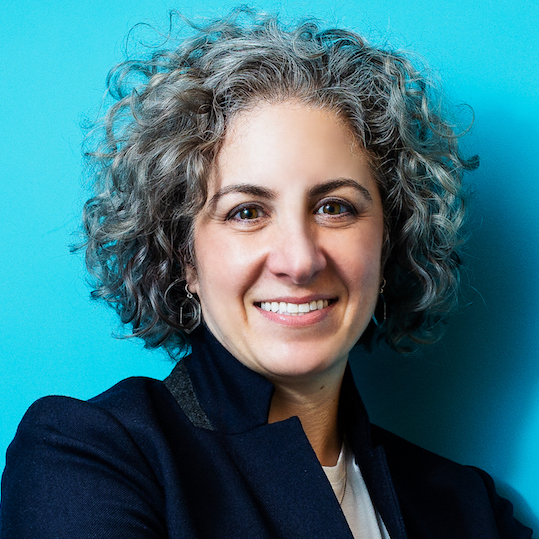
Get paid for your experience instead of your labor, with Jeanne Meyer
With Jeanne Meyer
Listen and subscribe
In this episode
Jeanne Meyer spent three decades leading corporate communications, at companies like Martha Stewart Living Omnimedia, Toys R Us and EMI Music, before she started her own consulting business about 10 years ago. When she came to me she was eight years in, still selling herself as a Swiss Army knife and getting paid for her labor. In this conversation you'll hear why she stopped saying "we," how she started getting paid for the referrals she used to give away, and the on-call subscription that brought in four clients in its first month. Then I'll give you a two-list exercise to start getting clear on the value of your own work.
What you'll take away
- Stop selling yourself as a Swiss Army knife. Jeanne used to present herself as a full-service agency and say "we." Plenty of people said yes, and then she had to pull in contractors for work she didn't want to do, and carry the risk when a client's budget disappeared. Now she's a sole advisor, unapologetically, and she says exactly what she does: she builds, protects and fixes reputations when the stakes are really high.
- Get paid for the doors you open. Jeanne gets asked all the time which agency a company should hire. She used to answer for free. Now she has referral agreements, usually 10% of a successful new introduction that turns into business, so she can say no to work she doesn't want and still send the client somewhere good.
- Give clients a way to have you on call. Clients kept telling Jeanne they wished they could have her on speed dial. So she built a subscription: a client buys credits, starting at six, and they agree up front in writing how each one gets used. Credits aren't hours by another name. In the first month she offered it, four clients signed up that she'd otherwise have lost or never won.
- Your proposal can offer more than one way to work together. Jeanne's proposals now lay out three: a project with a clear end, an on-call subscription, and an ongoing monthly retainer for big companies with procurement rules to follow. Every situation is different, and the client picks the one that fits.
- Put some skin in the game. Jeanne knew most of what she needed and wasn't applying it to herself, the shoemaker's children problem. She says if you pay even 10 bucks for an event, you'll get on the subway and go. Making a real investment in her own business is what got her to follow through.
In this conversation
The full transcript, in sections. Open any one to read it.
The woman with the hammer, and knowing where to tap
0:24
I thought, you know what? I literally am a Swiss Army knife, and people are going to love that. I can do everything, and so I am going to be a full-service human. I will front myself as leading an agency of people. I will use the word "we." I will make myself look bigger than I am, and I did that for a while, and then it got me in trouble.
Welcome to Smart Gets Paid with me, Leah Neaderthal. I help women run more profitable consulting businesses, getting more of the clients you want and getting paid way more for your work without sacrificing your time. But I've never been a salesperson. My background is in corporate marketing, and when I started my own consulting business, I learned pretty quickly that it's about 1000 times harder to sell your own stuff than it is to sell someone else's.
So I taught myself how to do it. I turned it into a methodology, and now I teach that proven methodology to my clients. So whether your consulting contracts are $10,000, $100,000, or more, if you want more clients you love, more work you love, and to get paid more than you ever thought possible, then you're in the right place.
Let's do it together. Thanks for tuning in, and don't forget to rate, review, and share. Hey there, Leah here, and thanks for tuning in. I hope wherever you're listening to this, wherever you are right now, I hope you're having a great week, making some good progress in your business, and taking some time for you.
So, there's a well-known story, legend, anecdote, or whatever out there that you might have heard. A ship is out at sea, and the engine dies. The crew tries everything to fix it. Nobody can get it running, and so the captain brings in a man who's been fixing engines for 40 years.
Actually, hold on, I'm just reading. I'm just reading my notes here. The story that I've always heard is like the captain brings in a man. I'm just going to switch this up, okay? So the captain brings in a woman who's been fixing engines for 40 years. All right, she spends a long time looking it over top to bottom, and then she reaches into her bag, pulls out a small hammer, and taps something once, and the engine roars back to life.
So a week later, as the story goes, the captain gets her bill right $10,000, and the captain's like, "What? You hardly did anything. Send us an itemized bill," and the woman says, "Tapping with the hammer was free. Knowing where to tap is $10,000." And I love that story.
I mean, listen, it might have never happened, right? Like I actually looked up where that story came from, and there are so many versions that go back over 100 years with different machines and different mechanics and whatever, but listen, the point is what's important. Being an expert in something isn't about getting paid for what you do; it's about getting paid for your experience, and that's what the man, or now the woman with the hammer, did.
And it's important because it's something that a lot of women consultants and fractionals think about and struggle with. You know, how do you get paid for your experience? You spend 10, 20, 30 years, even you know, learning where to tap, so to speak, and then when you get into your business, you have to figure out pricing that's based on like the number of taps, right, or the hours, or deliverables, or even the months of work, right.
So, how do you run a consulting business where you're paid for your experience instead of your labor, for your judgment, and for knowing where to tap? And that's what we're talking about today with my client Jeanne Meyer. Jeanne is a corporate communications consultant. She says she builds, protects, and fixes reputations when the stakes are really high, and she's been running her business for about 10 years.
And before that, she led corporate communications at companies like Martha Stewart Living Omnimedia, Toys R Us, EMI Music, and she spent three decades being the person people call when something's on fire, and in our conversation, you're going to hear how she transitioned her business from getting paid for her work to getting paid for her experience.
So you're going to hear, for example, why she stopped saying "we" when she described her business. You'll hear what her clients kept asking for and what she built to actually be able to give it to them.
You're going to hear what happened in the first month she offered this new service, and you're going to hear why saying no got a lot easier along the way. So take a listen to my conversation with Jeanne Meyer, and at the end, I'll come back and share a lesson that you can apply in your business.
And then, hopefully, someday soon, you'll partner with us to help us build your consulting business, and you'll come back on the podcast and share your story. Enjoy. Jeanne, I'm so glad you're here. Thanks for being here.
I am excited to be here too.
Building, protecting and fixing reputations
4:51
Jeanne, why don't we start at the beginning? Tell the good people who you are and what you do.
I'm Jeanne Meyer. I'm a corporate communications consultant, and as I like to say, I build, protect, and I fix reputations when the stakes are really high and you just need it handled. And that is language that I used from what I learned in the Academy.
Oh, I love it! I love it. The stakes are high. I just love that phrase. It's like you know that when we talk about Painkillers, we want to have like a rehearsable moment, right? A rehearsable feeling, and I think anybody who hears that, who's your ideal client, would like sort of have that micro moment of emotion at that. So I love that phrase. So, and how long have you been running your business?
I have been a consultant, a solopreneur primarily for a decade. Prior, I mean, I would describe myself as a recovering corporate communications leader. I led Corpcom at public companies with global footprints, like Martha Stewart Living Omnimedia, Toys R Us, EMI Music.
I worked for Al Gore when he had current TV, and that was a thrilling, fun thing. And I was also a worked at a pretty high level with lots of media, entertainment, and retail companies as a senior executive at some communications agencies, crisis management, all the things, full stakeholder communication, not just media relations.
Why communications leaders burn out
6:22
Yeah, and you and I share that background. I came from agencies also, and that's a whole, a whole thing. I'm so interested in this phrase. You're you're recovering when you come out of corporate communications or or you know communications as a field. What would you say we are recovering from?
24/7. It is a high burnout profession. I'm sure there's an academic study that would back me up on that. When you lead communication at a, in particular, a publicly traded company with a global footprint, especially a company that has both assets in the physical world and the digital world.
You are an always-on crisis management expert. Even if you're just launching a new fun product for moms, or you're putting out a cool new album for an artist, that artist might have to go into rehab three weeks before the street date, and that has happened to me.
Oh wow!
And that's not a you know I wasn't doing artist publicity, but something like that is going to affect a stock price, and so it is just an always on Sunday mornings, nights, and weekends. At a party I had for my wedding, I got a call from the New York Times, and I remember ducking out of the tent, going behind the portalet, and an outdoor party, and taking the call.
I mean, it's a little crazy. So when I left Martha Stewart, I had an opportunity to take a buyout, which I did, and it gave me a little breathing room and a time to reflect. And I kind of knew immediately that I was done. I was done. I was.
I told recruiters I was off the market. I had a craving to start a very tactile business, like a coffee shop, and I kept getting calls from people who needed not just to pick my brain, but to bring me in as a consultant. And I was resistant at first, and we were having a child, and you know, I started to love it because it.
I saw where consulting could take me as a lifestyle choice that would be much more family friendly.
I love it, and that was you know 9, 10 years ago. Yeah, all of this we made that switch. It's so interesting. I just wrote down. I'm, you know, you see me making notes over here. But you had this craving to run a tactile business like a coffee shop.
I have had that exact. I think that is a a real sign. It is a symptom of burnout. A few years ago, you know, five plus years ago, at this point, I was super burned out in the business and whatever. And you know what I was craving? I was like, I want to run a laundromat.
I want to run a laundromat. I don't want anything that's attached to like my brand or my face or my story or anything. And so it's just so interesting. I've I've had conversations like that with a lot of people, and it's like it's not. I mean, do I have a passion for laundromats?
Do you have a passion for coffee shops? You know, perhaps maybe you like a coffee shop, but I think it's more just like a real symptom of burnout.
A bike storage business, and finding out she's an advisor
9:32
Yeah, I mean, I had, I actually did something that acted on that impulse. I wanted to be a founder of something tactile. I have been in a support role, you know, as a leader for a while, and I actually did something in the area where you and I both love, which is cycling.
And I was a partner in a high-performance cycling training facility that also had bike storage. So I had this big idea that New York City, before Citi Bike, people. Really needed a place to put their bike because many buildings wouldn't let you take it inside, and if you had your nice bougie bike, you didn't want it to get stolen.
And every bike will get stolen in New York City if you don't, you know, take the precautions. So I did with partners, and I knew going into it that it would be a mini MBA, and that my investment was not because I thought I would make it rich, but I just wanted to learn, and I did.
And we stayed open for a couple years, and it also taught me that we didn't have
the right kind of operating agreement going into it. The founder wasn't taking my advice, and you know there was a lot of other things. And I also learned that I think that my superpower is as an advisor. That was the real learning. I am not a founder. I am a consigliere supporter advisor. That is where I shine. Those are good lessons.
That's such an amazing lesson, and it's so funny. My wife and I literally had this conversation about bike storage because I have a bike. As you know, we both love cycling. I have a bike that has never seen a lock. You know, like it's just you would never, ever, ever lock it up anywhere.
And now there's a bunch of empty storefronts and you know whatnot. I'm like, we should turn these into bike stores. Anyway, it hasn't happened, but I see the business case for sure. But I think knowing that your your superpower is as an advisor is, I think that's such an important observation and to know about yourself because I feel like as a consultant, maybe you feel this or have experienced this or have heard this.
I think that you know a lot of people want to get into like being an advisor as their service, right? As the way they interact with clients, but they feel like they have to be doing the things, you know. Like people won't hire me just to sort of tell them what to do.
I'm I'm saying that sort of snarkily, ironically, right? But I don't know. Did you have that sort of mental push pull as you were building your consulting practice?
Definitely, yeah.
Why she joined the Academy eight years in
12:00
I mean, people talk about imposter syndrome. I didn't have that. I really not had that in a very, very long time. But I did want to see myself as a founder of something, and I realized it was more of a vanity desire than a real desire. Because at the end of the day, I am a entrepreneur.
I also have come to learn that I shine as an entrepreneur, as opposed to being inside a big corporation. So those are some big light bulbs for me.
Yeah, totally. Well, so bring me back to you know a year, year and a half ago when we first met. What was going on in the business that you had run for eight plus years at that point, you know, you came to me, you know, to this market-space universe, I guess, for a reason. Like, what were the reasons?
I love a framework and a forcing mechanism. So I'm eight years in on top of a three-decade career, right? So I know a bunch of stuff, but I don't apply it. I knew I wasn't applying it to myself, and I wanted a reason to bet on myself. And I saw this is a great way to do that.
I also knew that I I'm a lifelong learner. I knew I had a lot to learn, so that was the primary reason. I really, of course, heard you speak and liked a lot of what you said, and I liked the fact that you were focusing on women consultants. So that won me over.
Yeah, because we met at the board event where I spoke about Painkillers.
Yep,
and it's interesting this forcing mechanism. Talk to me more about that because I think that is something that I mean, I personally experience about I needing a forcing mechanism. But as somebody from the outside hearing this, thinking, "Oh my gosh, she's so accomplished," you know, why would she need you know any outside help on like I don't know getting things done, taking her business where it wants to go, etc.
I mean, what would you say to somebody who's maybe even has that feeling for herself. Why should I need any help?
Yeah, I mean, Leah, what I really sycophant would say is that they just fell in love with you and adored everything you said and signed up on the line, and that is certainly a factor. There are there are choices of programs. There's so many free things and everything's gated and it feels kind of spammy and scummy, and the Academy did not feel like that.
I appreciated the description of coursework, and look, when we want to engage in something, I think there's also academic data somewhere that would bear this out. If you have some skin in the game, you're more likely to participate and get benefit from it. So, how many events have you randomly signed up to that are free that you just blow off?
But if you paid 10 bucks, even if it's 10 bucks, you're going to get on a subway and an Uber and go across town to do that thing. You're, you know. So, I knew that if I made the investment in a program that felt right for me, that I would be more likely to see the gains from it.
I know myself. I know a lot of things, and it was really time for me to put them into action for myself. So very much a shoemaker's children problem. I'm happy to advise others. I'm great at it. That's what I do for a living. But when it comes to me, I put myself last, and this is an opportunity for me to put myself at the top of the list.
I love that. Yes. Well, and also you and I have spoken about how you are a multiple Iron Woman. You've done multiple Ironman races.
Yeah.
And I've like dabbled, you know, relative to your sort of experience in that. But I mean, I think about that. Like, yeah, do I know how to swim? Do I know how to bike? Do I know how to run? Sure, but like training for an Ironman is you follow a plan.
You often get a coach. You know, there's there's rigor, and you know, I think a business is an endurance race of its own.
1,000%. Don't do it alone. Get a coach, but follow a training plan. And the ability to check a box every day and follow a regimen was also just great for my frame of mind. Most of these I was doing while I was in corporate life, and it was also a really wonderful way to de-stress.
And I knew most of the time, if I'd done my workout in the morning, I would show up knowing that I had done the hardest thing I was going to do all day. So that was great. And I realized this about myself. You know, I love a framework.
I love rigor. Without it, I am an ADHD adult, you know, human, and you know, I know myself. Self awareness is a huge mark of a leader, and it's a prized trait of many CEOs. When I work with them, it's something that comes out of their mouth all the time.
It's an attribute they look for. Are they self aware? Does this person know who they are? Not everyone has to be garrulous and chatty and witty. You can be a quiet leader. You can be a total introvert and rock the world. But self awareness is where it starts.
Yeah, absolutely. But beyond you know just like loving a framework, loving rigor, discipline. You know, holding yourself accountable. I mean, was there a way you wanted your business to be different at that point?
How being a Swiss Army knife got her in trouble
17:24
Yeah, for sure. Well, very quickly, I think many consultants follow a very similar path as the one I did. You're drawn into it reluctantly or by accident. I like to call myself an accidental fractional, which is obviously a popular term, and I did that for several years through having a child, and you know, on the other end of it.
And I was then sort of curious about maybe getting back into a corporate job. The benefits are very attractive, especially when you start a family. And I would go out and do some interviews, and I didn't know how to position myself in the world. Should I plant the flag and say this is my consulting business, or do I position myself as a red hot candidate for another corporate communications position?
I was in this limbo for a good three, four years, and then I had an epiphany, and it was pretty gradual. Where okay, so I understand who I am now. My superpower is advisory, and I'm in this to win it. I'm in the consulting business with no shame.
Let's plant the flag. Let's go for it. So, like so many, I was maybe slightly ahead of the game, and we're seeing a huge pattern of people leaving corporate America and doing this. I thought, you know what? I literally am a Swiss Army knife, and people are going to love that.
I can do everything, and so I am going to be a full-service human. I will front myself as leading an agency of people. I will use the word "we." I will make myself look bigger than I am, and I did that for a while, and then it got me in trouble because I had a lot of people say yes to it, and I would have to activate people willy-nilly to get stuff done.
And a lot of it was work that I just personally did not want to do. I also had to take on the risk of tying up consultants who I wanted on my side, and it sometimes didn't pay off. I remember engaging somebody for six months. I didn't want them do anything but work for me because I had a full slate.
And then one by one, all of that business went pear-shaped. A CEO got fired. Somebody else had layoffs. All of this business that I had lined up somebody and had a contract went away. So I thought, okay, you know what? You are one person. Swiss Army knife is not going to cut it.
You hear about niching down, and I came into you as one big goal that I had was: I know I have to niche down. I don't really love the idea, but I know I can do it. I just need some advice and some help. So that is one thing that you help me solve is how I can show up in the market in a way that's going to make it very clear the advantage I bring, why you want to hire me, and so the Painkiller statement is sort of the manifestation of that.
But there's a lot of work that goes behind it and a lot of self-discovery. Yeah. So absolutely, I'm sole advisor unapologetically, and yes, I can activate people. I have lots of referral agreements with other agencies, which is a great passive income stream when it works out for you.
I can also activate these agencies. I'm asked so often, who should we hire as an agency? It is quite time consuming, and I have a great network, so this is how I monetize that. And I'm very clear about it. Oh, I work with these 10 agencies, and also there's three or four that I don't work with, but I think you should take a look at.
And I realize too that I'm really want to do more pure advisory, giving that magic golden advice, being that sounding board, course correcting, stepping in, and bottling up the seasoning judgment and pattern recognition that 30 years of being in the business will give you, and figuring out how to put a value on that.
When you know, I was afraid that I think your phrase is I was negotiating against myself, that people just want a publicist who's going to get them in the paper, but actually that's not true.
Saying no, and getting paid for referrals
21:27
There are many, many clients who realize that they need a different kind of help, and that was one I was prepared to do. So that's what I leaned into: being an advisor who's really going to come in and help you build things, protect things, and fix things as it relates to your reputation. So the Painkiller statement exercise was gold.
Yeah. So you wanted to be seen as an advisor, or sort of market yourself as an advisor, get clear on your real area of expertise. That's what you were hoping to get to where have you gotten?
I am getting there, and the way I've gotten there is a through the Painkiller statement, and by saying no to a lot of things and increasing my advisory network. I have a big passion, especially for women consultants, to not get the ick factor when it comes to asking to be paid for referring business that is lucrative, you know that's what investment banking is.
That's a gazillion, billion, trillion dollar business, and it is about door opening and handshakes. Why should I give that away for free? Now, sometimes I do. Let's face it. I give a lot of value away for free. I'm a helper, but this gave me structure. I have a referral agreement.
The typical arrangement is 10% for a successful net new introduction that translates into business. That has allowed me to adopt an abundance mindset. I can say no because I can open the door and say, "But here are four agencies that can help you. And if you would like me to be attached as an advisor in this project, that can work out.
I work well with these guys," right? So that's one. Two is I realized that I was no longer super interested in being retained to do the kind of work that an agency would be doing normally. A lot of execution, and I just didn't have the bandwidth or the desire to do it.
I found myself subcontracting a lot of it out, and it was just not super great. Now I still do that, but less and less. And so again, I say no to a lot of that business. And now the other big pot of gold from the Academy is figuring out how to package up my services in a way that was much more value-based.
You know, there is kind of a street price for communications and PR, and you know what really hasn't changed all that much in decades. I mean, there if it's not kept up with inflation, that's for sure. And I just didn't want to continue engaging in it. It's not going to be the best arrangement for either party, and I just had to do a lot of soul searching on how to get there, because there have been instances where I have been engaged to do crisis management, and I was able to solve what could have been a billion dollar problem in 15 minutes. You know, that's not something like a quarter of an hourly fee that is value based.
Pricing her advice by the project, the retainer and the credit
24:43
Yeah, more from my conversation with Jeanne Meyer after this. Well, and I think that's just a perfect segue into sort of this getting into advisory work, right? And less of the execution, more of the advisory, because when you are. Advisor, people just want sort of your advice, right?
Your your brain, your experience, or what have you. But how do you price that? How do you scope it? And you came up with a really awesome way to do that. You know, using some of the tools you had learned here. Can you speak to the way that you're approaching this?
Yeah. Well, one of the things I loved about the value based pricing module of the Academy is value-based product names, productizing services in a way where you're signaling
the value you're providing, and it never occurred to me to do that. You know there are many, many, many, and a growing number of corporate communications consultants who've been around the block. Literally, everyone sounds the same. It's like so generic as to be crazy. And I wanted to stand apart.
And I know there are some clients. I have some who want to retain me and tie me up for a year. And we've been going for years. And I love working that way. That arrangement works. It's very important to have that kind of arrangement for big enterprises that have purchasing and procurement standards to follow.
So that is the arrangement that works for those kinds of clients. A monthly retainer that goes over multiple months against a scope of work that doesn't really change. So I still offer that. I now offer more project-based pricing because very often someone will ask me just to come in and help future-proof the business with a crisis plan and training for their team.
That to me is something that can be time-bound, and it's not something I want to put hours against, so I call that project based, and I don't have a rate card because I really do evaluate the pricing of each project very, very individually. And as a sole advisor, I can do that.
You know, I'm not selling SaaS software, rinse and repeat. I am very bespoke. But here's where the fun starts. I realized that so many people would say, "Gosh, I wish I could just have you on call, like on speed dial, but it's just we can't afford you, or blah blah blah."
And I thought, yeah, you know, that's right, because I have had so many occasions where I've given five minutes of advice and saved somebody's bacon. So I decided to come up with a subscription, an on-call advice on speed dial subscription, whereby you can enlist me on a credit basis.
And what that means is, starting with six credits, I do have a you know a minimum. You can buy six credits, and we can agree on how those will be applied. At least initially, we want to do a weekly phone call or a monthly phone call. But you're also subscribing to have me around for unspecified needs in the future.
Like you know stuff's going to happen, and you'd really love to call me. You don't know what it is. How many of us have that level of visibility into our business, not that much, and so this allows a client to enlist me, and I'm going to do a deep dive and really get to know their business.
That's an investment, and this will allow them to continue to let that pay off because I will have learned their business, their execs, their voice, their tone, their issues, their problems. Institutional knowledge is locked in, and now they just have me on call if they need me. And you know, I'm sharpening the offer just to make sure I'm putting up some guardrails because you know I'm not always going to be available on the weekends.
But believe me, if someone texts me on a Saturday night, I very often, and I'm able to, I will be responsive as hell. And sometimes I'll say, you know, if I feel like this is going to be a problem, I will bake that into the agreement. But for the most part, when I offered this two months ago, I saw so many client heads nodding.
One client was going to have to wrap things up with me because of budget, and when I presented them with this option, they signed up for 36 credits. Another was a piece of business I probably wouldn't have gotten because they really needed an agency, but they fell in love with me as an advisor, and they were just trying to make that work.
They put most of their budget towards the agency, and they still figured out a way to have me around to be that fairy godmother. So it immediately helped convert four clients in a one-month period. These are clients that I would have had to say goodbye to or would not have gotten.
And there are many proposals out there with this, and it's the one that people are most intrigued by and find really fascinating. So it's a little early days, but so far so good. I'm digging it, and I think it just perfectly captures the value that I am offering.
And again, I don't think I would have gotten to this point were it not for the value-based pricing exercise, which was worth every penny of the investment of time and money that I've put into the Academy.
Oh my gosh, I love to hear this on all levels. So I love how this gives you and your clients a way to work together. In how do you sort of scope the unscopeable, right? How do you scope the unspecified and the unforeseen? And when you're operating at the level that you're operating at inside these companies and with these leaders, they can't predict the future, and they might not know when they'll need you or how they'll need you, but they know they will.
Yeah. And I love how you're doing this, and just to sort of because I know what people are thinking, you know, credits are not the same thing as hours. So this is not like hourly pricing by a different name. And just to give a ballpark, these are like you know high four to five figure engagements, right?
Yeah. For this, you know, this is not like having something inexpensive. I'm using air quotes. Having something inexpensive so people say yes. I mean, this is still extremely high value. It is profitable, and it's no joke. And so, getting four of these in that first month of testing it is huge.
It's a credit. Aha! You know, it's a credit to sort of how you're thinking about your business and really keeping yourself in that expert advisor position.
A dashboard for every client
31:20
And one of the things that I recognized that I needed to do for myself, and I thought it would be a benefit to my clients, was I built dashboards for every client. I built it with a little vibe coding, and I'm very proud of it. And it's now that it's there, it's actually just very you know rinse and repeat.
But what it does is it allows me to set up a dashboard for every client. It allows them to log in at any point and see where they stand. With I usually do this over four payments, so shows their status of their payments. But more importantly, it shows how we've used credits.
Now this is where I'm sharpening it because I tell them, let's get a general scope up front and an understanding that an hour call is going to be a credit. You will also need to call me on the fly, and I will say during that call or after that's a half a credit.
And if I'm asked to come in and media train 10 executives in two different cities. That's all the credit. So I'm going to burn through all the credits, and we may need to top that off. So it's very subjective, and I have to get it agreed to and applied in advance in writing, and then I put it in the dashboard so that after it's happened, so that they understand what each credit was used for, and clients love it.
Yeah. Well, and I can also see that you know if a project comes up or a need comes up that's beyond the scope of the credits or can stand alone as its own thing, there's nothing that says you can't scope that separately.
Oh yeah, that could just clearly it's a clearly defined thing.
But you're there in the room instead of having them go elsewhere for that.
Yeah, I mean my proposals usually have now something that says there are three ways you can work with me. You know, project, on-call subscription, ongoing retainer, because every situation is different. Yeah, yeah. So so far so good, and it helps keep me on track, and I love it.
I love it. I've had you know several of these you know bat calls this week, and it just gives me joy to be able to give them the benefit of what I do.
That's great. That's so great. I love everything about that. Jeanne, fill in the blank for me. I almost didn't join the program because
I knew going into it that a fair amount of the curriculum was stuff I teach other people and like have a fairly good grip on. That's probably why, but I knew the rest of it was good enough reason to make that investment.
Yeah, well, and with somebody as long a career as you've had and distinguish the careers you've had. Like, I and I say to everybody, when you're thinking about joining the program, there will be things that you have done before. You know, I work with women in a messy middle.
Like, you wouldn't be at this point if you hadn't done it. And there may be a new way to look at something, or there may be something you need to hear a different way. And so, yeah, I think it builds on everything that's good. You know, nothing that's good we throw out, right? It builds on the experience that you already have.
Yeah, I mean, you may have heard this analogy, but you know, I prize fitness, right? And I know how to exercise, but I will hire trainers to keep me honest. I know a lot about nutrition, and sometimes I will call up a nutritionist friend of mine and say, "All right, we need to get back on track.
Let's do a program." I don't see this as being that much different. So even when you are super knowledgeable about something, it really does help to make an investment in making sure you're being held accountable, so the accountability factor and the camaraderie of being in a group of people who are in a similar spot is a huge part of the value.
Yeah, and it makes it really fun.
One of the things I continue to appreciate about the Academy is the frameworks and the ability to invest in programs that will help you get through things you don't particularly love and enjoy. There is an administrative factor in being a consultant, and having a really good marketing machine for your own self is critical.
And talk about shoemakers, children. I build marketing flywheels and content flywheels for clients all the time, and I just found myself not doing it for myself. I loved that every now and then the Academy offers boot camps that allow you to sort of take a deeper dive into a particular task or subject, and you offered one on CRMs on customer relationship managers, and this is where I needed to eat my own dog food, and I knew it, and it was a big hairy beast.
So I signed up for that. It was a month. It was fun because it was part of a cohort. I felt like I wasn't alone, and I didn't feel as much shame in not having a really good CRM system, and it was very practical. It gave me all kinds of ways to unify my data of my network and use it in a more effective way.
So I really, really appreciated that. Otherwise, you know, my funnel was pretty leaky. I had so many people who I'd had conversations with, you know, six months prior, who said, "Well, this isn't really the right time, but we'd love to engage you later." And I knew that they needed to be added to my email list or my Substack or connect with them on LinkedIn, but I just wasn't systematically doing it.
And the CRM bootcamp really helped solve it. My funnel is not as leaky as it used to be.
Her advice if you're where she was
37:06
Oh, that's so great because I think everybody has that, you know, like people who are like it's not the right time, or you know, you meet and there's just no need, or or you want to stay connected or top of mind or what have you. But yeah, I mean, I love putting a word to that because I think this phrase "leaky funnel," I think people would just assume, or just think this is the way it goes, or it's fine.
They'll come back to me when they need me, or or what have you. But I think it is a part of having a marketing and business development discipline, and to first have discipline, you have to be organized, right? And so that's where the CRM comes in.
Yep, this is true.
Jeanne, what would you say to a woman who's in the position you were right before we started working together? You know, wanted to sort of figure out how to position herself in the way that works for her, be seen as an expert. What advice would you give her?
A goal is just a wish until you make a plan. I love that phrase, and I think that if you really want to make a profound change in your business or yourself, you do need to make an investment. You need to have skin in the game. If you're like most human beings, and I, I am definitely one of those.
So potentially think about getting a coach or entering into a program. I personally, I've had coaching. I saw the Academy as being more attractive because part of what I wanted to do was see how other consultants were also conducting their business in different verticals. I wanted to learn from other types of consultants.
So look around for a program. The other thing is, you know, again, so write down your intention, make an investment, and get ready to climb what a friend of ours from the board says: get ready to climb cringe mountain. Get ready to embrace the cringe. If you feel like a shoemaker's child, now is the time to buy the shoes, right?
You've got to make that bet on yourself. Something can be cringy, but it's time to flip the script and apply the lessons that you know to yourself.
Ah, I love that. I'm curious, also. I don't ask this to everybody, but what advice would you give to communications professionals, people who come out of communications and start their own thing?
I would advise communications professionals, and I do actually. I'm a fairy godmother to many, but for folks who are setting up shop as a consultant, I hear the same complaint. Gee, I sound so commoditized. I have 20 years' experience, and you know whatever. This is where I think it would be important to go on a journey of self-awareness and do some stakeholder interviews to find out what your superpower is, and really lean in on that as part of your Painkiller.
You will probably need to identify your ideal customer persona, your ICP, in order to go to market. Because if you just market yourself as a Swiss Army knife, you are probably going to just blend into a sea of sameness. So take a look inside, and the way you're going to find out a lot about yourself is to also go back and ask coworkers, previous clients, people that you know, what is it about me that you liked most, or how did I provide value?
And you can also ask them for other constructive feedback along the way. But you will find out a lot about yourself, and that can help inform your Painkiller statement. But don't try to position yourself as a Swiss Army knife. Second, if you do see an opportunity for you to be full service and start an agency, that's a very different ball game.
That requires a business plan and a scale plan, and you know you might need to go get some friends and family. I mean, you can start that kind of business from your kitchen table, but if you have a plan to scale up, it probably will require some investment in some infrastructure and some W-2 employees.
So you should map that out too. And it's okay if you're not sure for a little while. You're going to have that. And I love something that you say, Leah, which is along this way. You know, you're going to have paying clients. You might say yes to things you would normally not want to do because it's data, right?
It'll help inform what you really want to do. So you don't have to immediately say no to things that aren't checking every box because you will learn a lot from that. So get to know yourself. Ask others. Say yes to more than you think you might, and know like where you really in your hearts, like your north star, what it's telling you you want to be in five years. And if it's an agency owner, that's very different than being a consultant.
Yeah, I think getting clear on that is really important, and you may not know for a couple years. But again, it's all it's all data. It's all data. Well, thank you for that, Jeanne. Where can people find you?
They can find me on LinkedIn. is great, Jeanne P. Meyer. You will see me wearing my glasses, and well, you can't see that visual, so never mind.
Picture somebody wearing, you know, sort of lowering their glasses in a horn-rimmed glasses, long red hair. Even though my hair, I cut it short. Now it's now curly. But I'm very active on LinkedIn, and I share a lot of what I know on LinkedIn. It gives me joy.
And you can find me on my website, where you'll find details about my advisory on call and an executive visibility program that I do as well at authentic-intel.co.
Awesome, Jeanne! Thank you so much for being here. I really appreciate it.
Yeah, thank you.
The lesson: get paid for your experience
42:59
All right, I loved that conversation with Jeanne, and if there's anything that you heard that really spoke to you, be sure to post about it and tag Jeanne and me. We'd love to see what really resonated. So I always like to pull out one lesson that you can apply in your business.
And actually, before we do that, I just want to sort of bubble up this whole conversation. You know, the reason I do this podcast and I invite my clients to share their stories and how they've transformed their businesses is because I want to show you what's possible in your business.
You know, one thing about running a B2B consulting or fractional business is that there are a lot of women doing this and being really successful with it, but you'd never know because they're quiet. And so you know the results that they see and their success. It's not like out there part of their marketing, and so you'd really never know.
And you know, like a lot of things in media and that we see, it's like if you can't see it, you can't be it, right? Or you just might not know that it's possible. And so when women business owners are sort of thinking, well, can I actually make more money without having to hustle?
You know, can I build a business only working with my ideal clients, and can I set up my business to take a month off and travel with my family? Like the answer is yes, and I want to show you that yes, all of those are possible, and so much more, right?
And by the way, all of those are things we've talked about in recent episodes, and so this episode is one of those as well because it's one I hear a lot. You know, can I actually just get paid for my experience? And you know, the answer is yes.
You know, Jeanne gets paid for her experience. She went from getting paid for her labor, the hours, deliverables, you know, sort of execution, right to getting paid for her experience, she's paid for knowing what to do when the stakes are high because she's seen it before. And I gotta say, Jeanne isn't the only one who's running her business like this.
There are so many women in the Academy who have come in wanting to get out of the execution, and they're able to transition their business so that they start to get paid for their brain, and I think that's the transformation that a lot of us are looking for.
You know, especially when you've reached a senior level in your career. I think there is something I don't know. There's something about having 10, 20, or more right years of experience, and then you start your business and you find yourself being back in the weeds, like doing the execution, you want to get paid for your brain, your advice, your judgment, right?
If we think about the story from earlier, you want to get paid for knowing where to tap. And so, how do you get there? Jeanne pointed out two things that we teach in the Academy. First is the Painkiller statement, being exceptionally clear about the value you provide and who you provide it to, and the second is value-based scope and pricing.
Putting services together that deliver value in the way you want to work, and pricing it for value, not the value of your work, but the value to the client. And I think that's sort of the big misunderstanding in you know when people say like, oh, I do value-based pricing, and it's kind of just like a flat rate, you don't put a number on the value of your work.
You put a number on the value to the client. That's something we talk about a lot in the Academy. So here's what I want you to do this week, and it's on that first one, the Painkiller statement. If you've been feeling like when you talk about your work, you're just not clear enough about the value you provide, or you find yourself sort of rambling, or you're just not sure that you're talking about your work in the most compelling way possible. I want you to take a few minutes and make two lists.
This week: make two lists
46:30
In the first list, write all the good things that happen for your client when they work for you. So, like, what can they do that they couldn't do before? And you know this isn't about your services, and this is not about what you do. This is about what they can do, or the results that they see.
Okay, that's the first list. In the second list, write down the negative things that might be happening for your client, or that they're at risk for that you help them avoid. Okay, like what negative things are they on track to hit, or might they be on track to hit if they don't take action that you and your work will save them from or help them avoid?
Okay, these two lists. This is the start of understanding the outcomes of your work beyond what you actually do, right? And the outcomes are the start of creating your Painkiller statement. Okay, I can't wait to hear what this exercise really sort of brings to light for you, and I'd love to hear about it again.
Post about it on LinkedIn, tag me. I'd love to hear what sort of insights come up for you. So I want to just say thank you again to Jeanne Meyer for joining me for our conversation. And if you know somebody who would appreciate hearing this episode, I hope you'll send it to her. Thanks so much for listening, and I'll see you next time.
Two ways I can help you
When you're ready to break through to the next revenue level in your consulting business, here are two ways I can help you.
1Join The Academy
For women consultants who've been in business 2+ years and are making $120k+. Build the two systems every consulting business needs to get more of the right clients, get paid more, and build a sustainable business:
- A marketing system to bring the right clients to you and fill your pipeline
- A sales system to help clients say yes and get you paid more
If you're ready to make your business and revenue more stable, secure, and sustainable, visit the Academy page to learn more and apply.
2Get Roadmap to Clients
Map out a simple sales process for your consulting business in less than an hour. Take potential clients smoothly from first contact to a signed proposal, so you can stop reinventing the wheel with every opportunity.
Get the free video course.