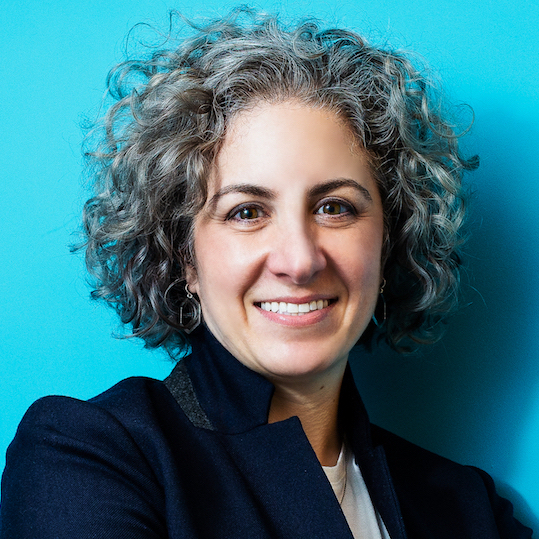
Episode 69 · July 23, 2023
The Gender Divide: How men & women grow consulting businesses differently, with Mandi Ellefson
With Mandi Ellefson
Listen and subscribe
In this episode
Mandi Ellefson runs Hands-Off CEO and helps consulting companies scale to the point where they can run without the founder. She and I agree about most of it, and she says several things I would put more carefully, which is part of why the conversation is worth hearing. We get into what scale means next to growth, why "if I grow, I'll get too busy" is both true and temporary, and where she sees men and women getting stuck in different places. She calls that last part controversial herself, and I remind everybody that they're generalizations while she's still saying them.
What you'll take away
- Growth and scale get swapped for each other, and Mandi's point is that they're different things. The word scale sells marketing services. Real scale is about whether you can serve the clients you win without your head exploding.
- "If I grow, I'll get too busy" is true, and it's a stage. Her argument is that people treat the busy part as a destination, when it's a transition like every other one in the business.
- Her most contested claim, and she raises the flag on it first. She says few women reach seven figures because they don't want it badly enough, and that saying you want a thing and being committed to it are two different states. I stop and remind listeners these are generalizations.
- Where she sees women getting stuck is self-worth and being disliked. A hesitancy to hold a team to account, because assertive women get read a particular way and everybody knows it.
- Most of the selling happens before the call. She says 80%, I usually say 90%. Either way the hardest sale is getting somebody on the phone at all.
In this conversation
The full transcript, in sections. Open any one to read it.
"Scaling a company is one of the hardest things to do"
0:02
A scaling of a company is one of the hardest things to do, but it's also so incredibly rewarding. You get to impact people in ways you just can't even imagine. And it's so much fun, very rewarding. And you know, you get to really, get to create the life of your dreams and be able to have some nice financial rewards that come with it.
Welcome to the smart gets paid podcast with me. Leah niedersall, I help women land higher paying clients in their independent consulting businesses, but I've never been a salesperson. My background is in corporate marketing, and when I started my first consulting business, I learned pretty quickly that it's about 1000 times harder to sell your own stuff than it is to sell someone else's. So I taught myself how to do it, and I created the sales approach that I now share with my clients so they can feel more comfortable in the sales process. Get more of the right clients and get paid way more for every client contract. So whether your client contracts are $5,000 $100,000 or more, if you want to work with more of the clients you love, do more of the work you love, and get paid more than you ever thought you could, then you're in the right place. Let's do it together. Thanks for tuning in, and don't forget to rate, review and share. Hey there, Leah here, and thanks for tuning in. I hope that wherever you're listening to this, wherever you are right now, you're having a great week, making some good progress in your business and taking some time for you. So back when my son was born, well, really, before my son was born, I spent a lot of time prepping my business for maternity leave. This won't really surprise anybody who knows me, but I was really worried and Ali stressed out about how the business would run without me, and would I really be able to step away? And so I spent a lot of time just preparing. I mean, pretty much the whole time I was pregnant, I wasn't just, you know, working on a baby. I was working on putting the pieces in place that would allow me to take maternity leave, and so I created systems for how things run. I created processes. I brought on new team members, all with the hope that I could take some time off with the baby and my business wouldn't just totally die. And thankfully, I was able to do that when I came back from maternity leave, I was really excited to see that, you know, my business had not died. It was still humming. And I came back to a full cohort of women consultants who were ready to start my program, and I saw for the first time what it looked like when the operations part of my business kept humming without me, so that I could just jump back in and do what I do in my zone of genius, which is the coaching part. And I realized what it meant to have parts of your business that were really hands off. And that's why I'm really excited to share my conversation with somebody who knows this intimately. Mandy Ellefson, founder of hands off, CEO, Mandy works with people and teams to scale their consulting agencies to a million dollars and beyond. Our approaches work really well together, because while I focus on the sales part of growing a business, she focuses on the systems, people and processes to allow founders to really scale well into the millions. So a while back, I invited her to come talk to members of the academy about how to grow your business while managing your bandwidth. And in our prep conversations to that session, I just realized that our approaches just complemented each other really well, and I was like, you've got to come join me on the podcast. So then, as we're having our conversations for the podcast, as you're going to hear it, went in a direction that I really never could have expected about how men and women grow their consulting businesses differently. I mean, since my work is with women, it was even cool for me to hear what she sees when she works with men. So in our conversation, you're going to hear how men and women grow their consulting businesses differently. You're going to hear where women tend to get tripped up and also what slows men down. You're going to hear us talk about what we think is wrong with the coaching industry, and you're going to hear some of Mandy's story and why shutting everything down led her to where she is today. So even if you're not someone who wants to grow a consulting agency, even if you're a solopreneur and want to stay a solopreneur, you're going to find so many nuggets in this episode. Take a listen, and at the end, I'll come back and share a lesson you can apply to your business. You MD. So you might have noticed that with the economy being as it is, things feel a little shaky. Referrals are slowing down, budgets are getting cut, and clients who you thought would say yes, are saying no or not right now. And here's the thing, in this economy, you can't run your business by waiting for referrals. Yes, clients just aren't going to swim into your net. You have to be intentional. That's why the best way to protect your business today and for the future is to have the two systems that every consulting business needs, a marketing system to bring the right clients to you and fill your pipeline, and a sales system to help clients say yes and get you paid more. But it's not just about getting clients, it's about security and stability and making your business sustainable no matter what's happening out there. Smart women are doing this right now, even in this economy, they're winning their biggest contracts, filling their pipelines, and their businesses are growing, which lets them do things like build up six months of family savings a lot sooner than they had planned, or go from having one to two months of revenue booked to having eight to 10 months of revenue booked, or getting to the place where you're able to pick and choose your clients and say no to the ones that aren't perfect. These are real results from women in the academy, because this is what we do inside the Academy. We help you build the marketing and sales systems that make your business and your revenue more stable, more secure and more sustainable. So if you've been in business for at least two years, if you made at least 120k last year, and if you want your business to feel secure, no matter what's happening in the economy, join us. Apply today. It's markets pay comm slash Academy. We get started on Monday, February 9, because you can't control the economy, but you can control what you do about it.
Mandy, I'm so excited to talk with you today. Thanks so much for being here. Pleasure is all mine. Thanks for having me so So tell the good people. Let's just dive in. Tell the good people what you do and who you work with.
What scale really means, and what the word gets used to sell
6:42
So I'm the founder of hands off CEO, and we've been around for a little over a decade. And what we do is we help consulting agencies. So consulting companies and agencies to be able to scale their brilliance, scale their expertise, and be able to create multi million dollar companies that can run without them.
I love that, and let's just dive into all the things right. Scale is such a heavy word, not heavy as in sad or depressing, but heavy as in, sort of loaded in this arena. How do you think of scaling?
Yeah, well, yes, it is a loaded term. And there's a number of reasons for that. We could go into it. One of them is that the term scale is used in is used incorrectly a lot of times, and growth and scale are tend to be swapped out a lot of times. And the reason why is because the word scale works really well to sell marketing services and so So, and I don't blame them for using that. You know, if you find some buzz words that are helping you make more sales, by all means, go for it, as long as you're doing it ethically.
So you're saying that we've been fed this word scale by people who want to sell things that they will, that they say will scale, but not scale in the way that really is actual scale.
They're usually talking about scaling marketing. They're usually talking about scaling leads and doing all that. But what happens is, as your company grows and matures, you start realizing the word scale means something quite different, and realize that there's no amount of leads and sales that will grow your company if you are at a if you have no capacity or ability to be able to serve clients at the same level and continue on without your head exploding. That's what solving that problem is. What scale is about, right?
The head exploding problem? Well, it's and
it's worse too, with consulting companies too, because you start the company because you have some some thing that you're good at, something you're brilliant at, maybe you learned in a corporate environment. Maybe you learned it, doing it. You're figuring out your own way, on your own, in another business or some other experience. That's that's kind of how I got into it, but, but it leads you down this path based on what you know and what you can do. But the problem is, is that is tied to your time, and there's and, and there's two different ways that you can approach that too, when it goes based on time, and let me know which direction you want to go with this, if you want to dive deeper into that, or go down this pathway. Yeah.
Well, I mean, and if you've, you know, you guys have been listening to this podcast for a while, if you've heard me say something similar, I mean, that's why Mandy's here, because when we connected a while back, or, I guess, reconnected A while back, everything that she was saying and everything that I say is so closely aligned. And so that's why I wanted to invite her here, specifically around this idea that she and I both see, which is the women that, like you said, have started a business based on your expertise, right? And it's around you and your mind and your time. The issue that we see so much so often, is this belief that that you and I are both sort of up against, which is, if I grow my business, I'm going to get too busy. If I grow my business, I'm going to get too busy. And so, you know, I have Mandy's actually coming into the. Academy to talk about how to keep growing and managing your bandwidth. But I want to just give a little bit of what you know of that here, because it's whether you, you know, can, can name that, or whether you just have it as like this little you know fear. It's something that's at play. And almost everyone that I work with, and Mandy, the people that you work with too.
"If I grow, I'll get too busy" is true, and it passes
10:24
Yeah, definitely, definitely, it is a fear, and it's real. And here's the thing is, is that it's true though, the belief that if I grow I'll get too busy, it does happen. It does happen. And that's the typical approach. And the reality is, is that, you know, in looking at this problem for over, over 10 years now, within the company that's now hands off CEO, plus me experiencing this in my last company, which is what actually caused me to start this company by accident. The reality is, is, as you're growing your company, and you hit up against the scale point, you are going to be getting too busy, and you will be working too much, and it's a growth transition, like any other transition that happens in your business. There's there these different levels. You think back about your last couple levels and what it took to get there, there's something that will take you to get to next. So you're not you don't have to be there too long. But one of the things that I that I see happen a lot, is that we expect that there should be no pain to be reaching our next level, but that's just not true. And we can be in that pain point in a very relatively short amount of time to be able to scale to the next place, and you don't have to be there forever. But what I have discovered is is that as humans, we are, we're driven by pain more than anything else. That's just the reality. So sitting in that pain is actually what allows us to shift as a human being, and the belief system that we have so that we can adopt the new ones that allow us to expand at a new level, and to be able to have a next level company that is not painful, that is fun, is it that enjoys the allows you to enjoy a lot of like next level work and be able to to support other people on your team and support your clients in new ways. But I think that there is just, I used to think that that was unavoidable. There was that you could avoid it in some way, but I'm not sure anymore. Just from all of the, you know, the hundreds of business owners we've worked with, I think that that the payment is required to make the shift to what you really want.
Yeah, I think you said two things. I just want to sort of pull out here. And they're so they're both so important. The first is that this build this belief that if I grow my business too much or too fast, then I am going to get too busy, right? The other thing that I think people don't understand is, or realize is that, or the it's, I guess the follow on belief is that I will be stuck there forever. That is an end point, right? And especially, you know, I work with a lot of women who have come out of corporate they've they've done the corporate thing, they've grown their careers. They've already been in the hustle. They've already worked way too hard. You know, nobody wants to get into this again. And so I think it's this fear that I will be overworked, and that will be my end point, right? And then the second thing is this idea that you, well, let's, let's pause there for a second. You know that that will be the, the end point. And that's why I think it's so important to talk about it doesn't have to be that way forever. I mean, right? The the overwork if, if you get to a point where your bandwidth is being pushed a little bit, it's data that is. It's more of an indicator of where you need to, what needs to be addressed, right? Not an indication that you've done something wrong, or you've This is as good as it's going to get. You can't go any further. I don't know. How do you think about that?
Yeah, I absolutely agree that it's feedback. It's sharing you with you, the feedback that you need to be able to make the shift. I completely agree with you, and I also think that it comes down to how, how long are you willing to sit in that before you reach out and get support from someone who really knows what they're doing? And there, there are some entrepreneurs that will, they'll put their head down, and they will just grind it out. Grind it out year after year after year. It's insane. I will say men do that more often than women do. Men and women do. Men and women do grow their companies quite differently, and there are advantages and disadvantages
to that. I think I'm gonna, I'm gonna put a pin in that. I want to spend so I want to,
Leverage, and where it tops out
14:29
but I just want to point that out, though, just as a side note for the the overwork and because what happens is we get into a stage where we were the value of what we do, the value of our output is based upon the amount of hours and the actual like hands on work that we do. That's what that's how a consulting company is. Usually started a solo consulting company, and that's how you drive it. And you're driving it based on billable hours. Now, within that. Construct in that frame of operating you can leverage. And what you can do is you can say, I'm going to leverage the amount of the amount of money that I can make for every hour that I work. And there are a number of ways to do that. You can increase your hourly rate, which I don't think that's the best way to do it. You can you can package your services in a better way, and I know that's something that you definitely help your clients with Leah, and that's leverage, and that actually does not take that actually is that form of growth. You can get to about 350, 500 maybe eight to 900 if I don't, I very rarely see someone get to a million this way. But that's not scale. That still is a job, and it's a high paying job, but it's not a business where you're building wealth for yourself, and it's a distinction, right?
You have, you've grown, but you haven't actually scaled as we are defining scale.
So by the way, that could be a good choice for some people, and I know that that they're an earlier stage in my own my own business career, that was a good choice for me, based on where my family situation was and the willingness to to put things into place, and like, my commitment to scaling the company. At that point, and for a long time, I beat myself up about like I should be scaling, especially considering this is what I'm teaching my clients. And it was like me pushing a boulder up the hill because I was I was telling myself that I needed to do these things that were actually not aligned with what fit for my life at that moment. And I felt guilty about that. But what happened is, is that there was a shift in in in the timing within my life, and then all of a sudden, now there was just this flow that opened up, and I was able to scale the company because the timing was right. And it was an, it was an alignment with my values and what fit for my life.
The seven-figure promise as a marketing hook
16:53
So, so these messages of, you know, you should be seven you should be having a seven figure business, or a multi seven figure business, and all these things that are like, sort of out there in the universe, right? And like the coach averse is it wasn't right, it wasn't right for you. I actually think I personally let me get on a little soapbox here. Maybe we'll cut this out, or whatever. I think that, like the promise of a seven figure business is, is an easy promise to make and a good it's a good marketing hook. It's a easy promise to make, because people love the idea of it, but a lot of people are making that promise to to people who are never they don't have the ability to get there, and what they're teaching them to get there will not get them there. But it's such a it's sexy. It's like, a sexy thing.
I totally get it. And I used to say, Mark, I've used that marketing before I get it. And the thing is, is it
works, but I think the difference is based on, you know, what you shared with me about your methodology, and you know, the ways that you think about, like, you know, how do you leverage the price so, you know, get more per value, but also, how do you manage the bandwidth so that you can, as a CEO, sort of step away or step aside? That's how you do it, right, right? There are a lot of like, people say, you know, offering that, that hook and the promise is, like, sell a $99 course or something. It's like
not even a consulting company that's a coaching company.
And, yeah, yeah. So anyway, go ahead, go ahead. Yeah.
Well, and here's the other thing too, is, is that those are the same ones that are talking about like this big, gigantic launch, we've got a billion dollar launch, or a $500,000 launch, and they don't tell you that it actually cost them $350,000 and then, and then the then, half of those were refunds. So basically, they might have actually lost money on that. They don't tell you those things, they don't tell you the amount of weeks that it took to put all those things into place, and how expensive it was and what a freaking nightmare it was. I mean, I hate launches, if you can't hear it from
Yeah, well, I recently, you know, last year I shifted. Last year, I shifted my whole business so that I had gone, I spent years launching like six or eight times a year, which is like the worst. And now the, you know, the program I run now the academy, is there's enrollment on a rolling basis, and it's like, I'm not convincing anybody, if you, if you see the value and want the value for yourself, like I'm here and it's made my life so much better to just, you know, do it, run my business that way and work with clients that way. I'm off the launch train.
Yeah, well, and I think for some people that that business model works right, but you're going to go try to take someone who isn't, isn't an exceptionally good digital marketer, and try to force them into this launching mode that creates all sorts of operational issues for your company, like it's it sells courses. Let's just say it sells courses. People are making money off of it. Maybe this is going off on a bit of a tangent, but don't you find that there's. So much better ways that are more sustainable to be able to generate good quality consulting leads, good quality consulting business that require none of that craziness. Just really simple, just having conversations with human beings.
Most of the selling happens before the call
20:14
Absolutely having great conversations, teaching people how to think about you and your value teaching people how you think about the work. And when I say teaching, I mean showing up in ways that potential clients could start to experience that, you know, I think that a lot of the women I work with, and you know, maybe some of your people as well, spend a lot of time being quietly awesome and and it's you can't get those, you know, great conversations going that way. You have to be out there doing something right, be visible, and start to provide value in a way that people, by the time they get on the phone with you, they already they they know that they're the obvious choice.
Yeah, I 100% agree with you on that. So 80% of the selling should be done before you get to the sales conversation. And absolutely, the hardest sale to make is actually getting somebody on the phone with you. Because, I mean, you have no problem getting people on the phone with you, but they're very low end prospects they're all they're going to do is just sit there and waste your time and use it as a free counseling session, which is just going to drain your time and your energy and make you think you suck at sales. So the so, yeah, providing that value early on makes such a big difference about being able to make that sale. The real sale is just getting someone on the phone, though. That's really the biggest thing, that's what I have found,
yeah, I mean, it's that, I think it's there's there's clearly, you know, there's more to the sales process, of course, right? You have to get approvals, and you have to be able to navigate your clients environment to actually get the Work Sold in. But, yeah, 80. You say 80% the stat I typically goes 90% but the point is, most of it, yeah, yeah, most of it, I would go with that too, right? Most of it happens before you get on the phone. And so if you're not doing something to provide value, to warm, you know, to let people go through that education process, they're going through it with somebody, why not? You? Right? And if you don't let them learn anything from you, then they can't learn anything about you. And so it's so critical to that is part of the sales process. It might be the part that, you know, it takes some work, but it's such an important part, critical part of the sales process. Yeah, I want to talk about something you said that is just so fascinating around how men and women scale differently because, of course, working with women, I only see one one side of that, but I'd love to know what have you seen and how men and women scale their businesses differently?
Okay, yeah, it might be controversial, and I might get a few hate messages. Maybe not.
How you know I'm saying something that people are listening to.
"I might get a few hate messages"
23:02
I'm just gonna say it how it is, based on, based on the data that I've collected over 10 years. Okay? And I work, I work with a lot of men and and when I say I, my, my, our team, but we work, we work with more men. And the reason why is because most of our clients are a million plus, not all of them. Some of them will be half a million and up. But I see a lot of trends for where men and women get stuck, and they get stuck in different places, is what I've discovered. And for some of these different things, and what is stopping them is different as well. And I also am experiencing this for the perspective of being a woman and and creating a seven figure company and going through all the different stages up to that point, so 2% of women business owners will reach seven figures, 2% not many, right? It was 3% before covid. It got knocked down to 2% again. Wow.
I'm sure you have so many theories and data on why that is.
I have, I have some data on why this is here's the number one reason. The reason why there are not more seven figure women business owners is that they do not want it bad enough say more about that. Yeah, and I know that's a controversial thing to say, but that's what I have come to discover. Because here's the thing, is saying you want something and actually being committed to it are two different things. Going into a coaching program or advising program, and even throwing money at that is different than emotionally getting involved in actually doing it and getting over the emotional hurdles to be able to do that. There are mindset things that come up. You gave an example of one of them, the belief that that I'll get too busy. But there are all these self worth issues that come up as you go through it. And the reality is, it is a big mental game. And as women, we are very sensitive to when things are out of alignment. And men, they are. Not as sensitive to when things are out of alignment, and what they will do is they will just continue to mow on through it like like. And part of the reason why is how men are wired, that you know, their providers, protectors in their family, they have it like their their self worth is driven based on how much money they can make for their family in a lot of way, whether, whether you agree with that or not, the reality is is, on a societal level, they've been conditioned that way. Like, look back 10s of 1000s of years in in evolutionary history, that is like how it's worked. And so when that's deeply ingrained, their their self worth is tied up in that and and their and their value of it so them reaching a certain level, it's it. I see them. I see them getting to a million easier. And the reason why is because they, they want it more. And I, and I think that it's because it's that it's that box that they can check off that gives them that like, Okay, I'm worthy now, and and they get seriously stuck at million. That's run into all sorts of other issues that women can slide right through faster.
So, okay, so men will power through to a million and then get stuck there. Where do you see if you can
share that's, that's a gross generalization. Oh, yeah, okay, let's but so
Where she sees women getting stuck
26:24
for all the listeners, these are, these are generalizations, you know, informed by experience and some data, but you know, your mileage may vary, right? So where do you see women getting stuck out more often?
Oh, I think women will get stuck a lot with self worth issues around feeling like they can be the boss, you know, like, I like feeling like an like a real hesitancy to hold their team to account on things because they don't want to, they don't want to be a bitch. Basically, let's just say it, that's what like they're I actually came on a podcast from Vanessa Shaw. Her podcast is called get rich without being a bitch, and serves the women audience and like, that's one thing that she talks about a lot because, and we talked about on her episode, because it's because that's such a huge issue. Of, like, if I do this, then this, and the reality is, is that strong, powerful women in our society are viewed at as not as attractive. Men don't. A lot of men don't find that as attractive. I know that me being very assertive. There were us, there was a smaller pool of men that when I was dating, because that would, that would appreciate that in me. That's fine, because I only needed one, right? But, and I've been married to him for 19 years now, but so there's like that inner fear that no one even knows, is there? People don't even recognize this is there, but that that's one piece. There's like this expectation that we need to be nice and that and be the nice nurturers. So there's this value conflict that happens internally. We some of our natural gifts can be leaning more towards the soft, nurturing side. So how do you be able to balance that with the requirements of running a company? How do you be able to grow a company in a way that actually is in alignment with your values? So I think that there's it's finding your leadership style so that you can show up in a way that you are of service, that you're carrying they and and also that you can hold people to account, on on the next level. And what I've discovered that it helps women make that shift, are big breakdowns where you realize never again, like where you have something and and people show up in a certain way, and you're and it causes such a breakdown for your clients, or it causes such a breakdown for yourself. You usually it's it's usually it's yourself and realizing that you have to jump in and take care of all these things because your team is not showing up in the way that you need them to. And it really comes down to how we're holding our team to account, the structures we put in place to hold our team to account. And I know I've had resistance to that for many years, because of internal things that, like, I would be this certain way or that, or really at a level of maybe even self worth, like, maybe even feeling like, who am I to show up this way and like, especially being, I mean, I started consulting in my 20s, so I was always good 1020, years younger than most of our clients and people that I employed as well.
Yeah, well, and we should say also that, you know, much like what you said about men and their drive to, you know, provide and all of that, but how conditioned it is. And many years, same thing with women, right? All of this is conditioned, you know, are if you are assertive, will you? Does that mean you are a bitch? No, but does it mean that other people won't see you that way? Because, you know, the society sort of conditions that thinking also, no and so. It's just, I think what I hear you saying is the degree to which you're willing to push against that, move through that, do what's necessary, despite that is sort of a key indicator for how successful you'll be growing and scaling,
yes, and just generally, how successful you can become in your business and your well, just in your life in general, right, just in your in your life, because, well, that we have internal programming that happens as we're growing up and in school and all that. And there are, there are, there are things that are put on upon us in families, in our whatever, whatever upbringing we've had. But also there is some that the most important thing to also realize is like on a deeply innate level of who we are, like we want to work with who we are, as and who we naturally are, and not work against it. So knowing who you are is very helpful for that, but also understanding too, that for you to be able to accomplish a new level in your business, you actually have to change, to become a different person.
Breakdowns as the thing that changes something
31:10
And I think that that's so important you know, to to remember and not also fight against, right? Because what you were saying just now about the breakdowns, right? We could see the breakdown as some sort of emotional failing, or a business failing because things are not working the way you want, or, you know, I should have held it together. Or we could also see them as a necessary step, because in the breakdown, something is really changing I love. I mean, it's what a gift really if, if what you've seen is that, you know, I love when you say, you know, the what really changes things is a breakdown. When you first said that, I was like, hahaha, that's so funny. You know, hashtag women having these breakdowns. But now that, you know, with some a little more explanation. I think that it what a gift, you know, what a gift to have these moments where something really changes inside. Yeah.
Well, and here's the other thing too, is, is like the massive gift of, of, of what I what I realize is most women need to have the, the alignment in place to be able to scale. It's absolutely a requirement for them. And like I was saying, men will be able to, they'll kind of be numb to it, and they'll see a lot of external symptoms showing up, and think that the symptom is the problem, but it's not. They won't even, they won't even know that it's an alignment issue, until it's creating such a breakdown in their life that they have to deal with that. And I actually think that I was really thick like that too, and that's what happened starting this business like the whole, my whole, my whole business and life was just kind of crumbling around me as I was just weeks away from giving birth to my second daughter, and my physical health was just completely shutting down because what how I was operating my business was not in alignment with what I needed, the time my family needed at the time, and I was experiencing a lot of physical symptoms like my I literally couldn't use my arms like they I had such a breakdown in my overuse issue with my arm I had, I had to go to an acupuncturist to help me, to support me with that. My God, this is weeks before giving birth to my daughter, and I had just moved across the country for my husband's MediCal program, and we could have used the extra money, let's just say, like, yeah, and I just had to shut everything down. And it was the right choice that I did at the time. I would shut everything down for it for then. But I know what this feels like to also have all these, these breakdowns come around you that are signs, things that are out of alignment. And it was, it was so such a great gift for me. It was really a hard thing at the moment, but it led me to what I'm doing now, and I love it, and we've been able to help a lot of people from that experience of me knowing what that what that feels like,
yeah, oh my gosh. Well, I mean, yes, what a painful, literally and emotionally and psychologically experience. But you had to get through it to become this different person who could create this different thing. You had said that once you people get past a million, there are different problems that men see and women see All right. So what happens after you get Yeah, so here's the
thing is, is once you get to that level as a woman, you tend to find that that alignment sooner, which is really good. And at and at this level, you still could be running into doing too much because you're not assigning, you're not assigning the the ownership is needed now all businesses, all business owners, have this at a million. I am,
I mean, I'm raising my hand over here right now, like any business owner, especially women at any level, is so much more comfortable just taking on for any number of reasons. And. It. I mean, I'm glad to know a It's not me and but, you know, it's but it sounds like it's something that really carries through, and it becomes a major problem.
It becomes a major problem because essentially, what you're doing at that level is, is that you've gotten to a certain point where you are. You have all of these people you have to manage. Oftentimes, you don't have a manager in place yet because, you know, maybe cash flow issues, not knowing what, what you had to have in place. You know, for a number of reasons, you don't have a manager in place yet, and you're ending up trying to still do a lot of the work, trying to manage people doing it. And it is, it's a lot so, so So as So, one of the things is, as all entrepreneurs can run into this, but men and women, I can see on polar extremes of this. And I think you can find everybody on either side of these things, but I just have seen them unequally weighted, let's just say where a lot of times women are running into trying to, like, being too nice. Like, I'm being nice, that I've men have this problem too. My brother had this, a huge problem with this of being too nice in his business, and he got embezzled like, $30,000 out of his company because, like this, this internal desire to be nice, and he's told, I have permission to share that, but, but that was an example of like, he needed to have that lesson in that like that Smackdown to for him to be able to learn the lessons, to be able to eventually take his company to a $30 million company, from zero to actually, he may have exited around 30, 30 million, but it actually got up to about 50, $60 million when they went to go sell it and exit it And in a matter of five years, that's an incredible amount of growth, but it required some of those, those initial lessons of the leadership, lessons of how to hold people to account, how to be able to inspire and and encourage people, which I think women are very good at, like that's one thing that is a massive asset of being able to be empathetic and communicate with people in a way that can really empower their their desire to do it for the poor because they want to right. Versus on the other side of the spectrum, you can find people, but I will, I find this. Men do this more often, but where they can have like, this very authoritarian type of like, this is how it's done. You got to move Go, go like, it's a very heavy masculine side that is not like, it's not very empowering, and it's not really a culture that I would ever want to work in. And I will say that that CEOs that want to work in that way and are not willing to change are not they're not people we can really make much of a difference for because internally, their belief is that they value their own contribution more than other people's contribution. So that belief gets, like, just spewed out onto their whole, their whole team in a very toxic environment.
Yeah, I can imagine, I mean, and what's crazy is that those are the management, slash leadership. If you want to call it that, stories that we see more in the media, we have more examples of that, right? A lot of us came from companies that ran like that and so and we don't want to go get anywhere near acting like that. Meanwhile, what I hear you saying is it's not really from what you've seen in the data or your experiences with your the women, the people that you help, it's you're not just about to become a bully boss, right? You're not to, you're not you're going to naturally flow into this more demanding leader, right? Because the what's more natural to a lot of women that I work with, and you work with is we can empower people. We can, you know, inspire people. So it's just, it's so fascinating how that starts to play out on a when it gets on a bigger stage of the company, right?
Well, and the other thing about is this is, too is that there's, there's a belief that you need to manage people. There's a belief that you did, I have to act that way in order to get results, and I'm not willing to act that way, so I'm not willing to grow my company because it's out of alignment with who I am. It's a value conflict and and that's that's a very logical conclusion to come to in a very like emotional level that you're not even aware that is happening behind the scenes, but like you're saying, it doesn't have to be that way, and what I have found that makes the biggest difference. I found this personally and experienced this myself on multiple levels. And this is not something you just fix one time and then it just like, like, it's all done. We never have to address this again. No, this is something you address on a weekly basis, right? When you're having, you know, a weekly meeting with with your team, and you're going over your strategic objectives for the quarter. That means you actually have to have a plan for the quarter, which means you have to have a plan for the year, which, and you know, have to have core values and a mission that you're, that you're you're managing against, right? So, but, but when people show up and they have. Done the things that they said that they were going do the week before. Now you can make you can manage an agreement that you and you said that you would have this done, and this is not done. That's a way to manage an agreement. Instead of like you didn't do this. There's some flaw, some character flaw, in you. So you don't have to manage the person. You can manage to an agreement that you have, and then it makes it a clear cut way to make decisions without having to be be as emotional about it.
Yeah, I love that well, and it's, but it's, as you said, not something you just start to do because you have to work backwards, right? If you have tasks, you also have to have goals. You have to have, you know, core values, all of these things in place. You just don't just hire a bunch of people and say, go do stuff well.
Getting clear on what you're building, and why
40:45
And that's the thing is that it can feel pretty heavy to put all this stuff in place. But, and this is why, making a really making being very clear about what you actually want to accomplish, whether this is a business that is to generate income for you and your family, and that's it. If that's the case, then you're just going to have support people, you're going to be in the middle, and you're just going to be maximizing what you can do in a given hour. Nothing wrong with that. That's leverage I was talking about. But if you want to scale a company, then there are some structures you need to have in place so that it's not really it's so that you have something to manage too. You have agreements in place, and it doesn't have to be perfect. It has to just like you, you just get something in place and start working with it, and then just kind of adding to it as you go. It doesn't have to be perfect. That's the thing that I wish I would have known earlier on, because my desire for having having certain things perfect and and dialed in was what kept me from putting some, some structures in place, things that like I would just like kick and scream against, because it's just, you know, as more of a creative person, I didn't really like having being feeling like I was tied down to that, but at the same time, that was actually what gave me the freedom that I really desired.
Yeah, yeah. So there are women listening to this who are saying to themselves, well, I don't want to have this. I don't want to for whatever reason. I don't want to have a million dollar business or above, right? And then there are women listening to this who say, I do want to have a million dollar business. So what advice would you give to to both of those groups, individually?
Yes, I would. So first of all, I don't want a million dollar business. So first of all, I would really get clear on, is that really true? And do do some journaling and check for like, if I have a million dollar business, it means that. And just put down all of the all the limiting beliefs that come up for that, and just check are each one of those things true? And it might be that I don't want one yet. It might be that, like, what if it was possible for you to have a million dollar business without those things? So that's one thing. The other reality is, too, is, is that just because you have a million dollar business doesn't necessarily making, like, obviously, this is really a basic thing to say you're not making a million dollars. And the reality is, is there are, there are plenty of companies that are making 250,000 a year with very, with a very, very lean headcount, that are making more money than people that are making, you know, $2 million
a year in gross sales, right? Very good to point out. Yeah.
So this is where it's important to get down to, what is your vision? What do you really why do you want to create that. Why is that important to you? What? And unless you have a big enough, compelling enough why, you will not be able to to overcome some of these, these, these hurdles, to be able to get to the next level, because it just won't be in alignment enough. And I know this because that was the reality before I had a seven figure company. I wasn't willing to I didn't I didn't have an expansive enough vision for that to be able to to align my actions and align my thinking and align my behavior with what would actually get me that the business that I wanted at that stage. The biggest thing is think bigger. Think a lot bigger, and surround yourself with people who are already thinking bigger, and just even if that means it might be really uncomfortable, you know, people, some of the women coming into your programs, they might be feeling like, wow, like I'm surrounded by all these people that are doing a lot better than than I am, and that could be a reason to not do it because it feels uncomfortable, but that's that will be what, what will accelerate them to the next
level, absolutely, and I'm such a big believer in, can you let it inspire you instead of, you know, let it make you feel like you're lacking in some way, right? Because I think that's a natural thing that a lot of you know, that a lot of people and women that I work with have, it's like, if somebody is doing well, they they compare and see themselves lacking versus wow, if she's right here, she's done it. I could do it too, yeah. But I think you're, you're absolutely right. I mean, think bigger, not saying that everybody should have. Million dollar business, because, like, as you were saying, it may not, it may not be right for you at this moment, but I, you know, I'm taking Think bigger as explore the beliefs that you have that tell you that you can't achieve. You know, fill in the blank here. Really shine a light on those, rewrite those so that you're not beholden to them, and then you can think bigger on on any measure that is important to you, money, family, life, what have you
Ending somewhere more encouraging
45:34
Yeah, absolutely, and just don't stay stuck in your story. Consciously choose the life that you have. I know we've talked a lot about in this interview, about just a lot of challenges, and it's been kind of heavy actually. So I want to actually leave with with some, some real encouragement here, because the reality is, is that when when you're aligned with this next level that you want, and when you have a great offer that is in demand that people want, you can actually create change very quickly in your company, that that if you find yourself working 50 plus hours per week, there are solutions to be able to get relief very quickly in a matter of weeks, like in a matter of just a couple of weeks. You know what? That's one of the first things that we do with our clients. So this find time now process and find them an extra 10 hours per week to focus working on their business. So I'm saying is that you can't you when you're in the right place on it and your head's in the right place, you can really make change very quickly. Scaling a company is one of the hardest things to do, but it's also so incredibly rewarding. You get to, you get to impact people in ways you just can't even imagine. And it's so much fun, very rewarding. And you know, you get to really, get to create the life of your dreams and be able to have some nice financial rewards that come with it.
I love that. And thank you for, you know, bringing us to a really positive place. So Mandy, where can people find you?
So you can go to my website, hands off CEO. We have great resources. There you can go to our hands off CEO podcast. I also have a book coming out here shortly that you can just get on our mailing list, and we'll let you know when that that comes out. Really excited about it, and it shares our whole model. So those are some places you can connect.
Well, congrats on your impending book launch. Thank you so much. Thanks so much for being here and sharing so much with
us. It's been my pleasure. Leah, thanks so much for having me.
My take
47:26
All right, I thought this conversation was just so cool and insightful and just a great perspective from someone who works across the entire consulting growth spectrum, from solopreneur all the way to large consulting companies and agencies. It was very cool. I mentioned earlier that Mandy came and spoke for our Academy members about how to grow your consulting business while managing your bandwidth. And in that conversation, she shared some incredible nuggets about how to actually do that so you can keep growing without getting too busy, without getting overworked, without getting back into that hustle culture. I think the coolest thing she shared was a step by step list of what types of people you should bring on to your team in which order, as you grow your business, like who should be your first hire, when's the right time to bring on somebody who's a subject matter expert and can take on some of the work that was gold. And so if you're in the academy, check out Mandy's session and the list that she shared in the academy portal under grow so huge. Thanks to Mandy for that. So there's a lot we can talk about here, but before I leave you with a lesson to apply to your business, I want to just call out one thing that Mandy said that I couldn't stop thinking about it since our conversation and I kind of had a reaction to it. Maybe you did too, but it's that phrase you said that when it comes to getting to a million dollar business or more, quote, men want it more. I had a reaction to just that idea that men want it more because they've been conditioned to be the provider, right? Just that phrase, like men want it more because if you say that men do what they do because of how they've been conditioned, then you also have to look at how women have been conditioned. Because women have been conditioned to put others first, to put their needs second, to be liked above everything else, to not really know our value or to devalue our contributions, you know, and going back hundreds of years, and still very much today. And if we're going back into history, I mean, women couldn't even have their own bank account in this country without their husband's signature until the late 70s. And of course, you know, today, women take on the lion's share of household labor, child care, emotional work, like, if you think about it, who is like dying to be the CEO of a multi million dollar business when you're also bogged down doing everything inside the home? So I don't think women have been conditioned that they can want it right, that they can want a million dollar business. That it's something that's even available to them, and so you can't really want something that no one ever told you was even available to you. So I do agree that how men and women have been conditioned totally impacts how many of each group would feel that growing a big business is something they want to do, and I guess an output of that is perhaps that more men want that, right? An output, but I don't think it's fair to say that fewer women want it without looking at why. So you just have to look at the inputs, not the outputs, if that makes sense. All right, I just, I had to get that out there. And so I wanted to leave you with a lesson that you can bring to your business. And out of everything that Mandy shared, the thing I want you to take away is this, think bigger, but I want to be clear on what I mean about thinking bigger, because not everyone may have the desire or the designs on having a seven figure business, and that's okay, but I did like what she said about thinking bigger, because I talk to a lot of women who, when I ask them what their financial goals are, they just want to match their old salary, or just like, get to 100k which, when you really think about it, after taxes and expenses and Everything, 100k really is not that much money, sadly, in today's money. And I talk to a lot of women, I have this conversation with a lot of women, and when we talk about how much money they want to make in their business, or how much they want to take home or bring into their household, a lot of times it's hard for them to even say a number, and definitely hard to say a big number. And a lot of that is because they don't think it's possible to have a goal or have a big goal, or even achieve a big goal without having to sacrifice your time, take time away from your family and get back into that hustle culture. But I say to them, okay, so assuming that you could get to that number without getting back into hustle culture, without having to sacrifice your time. What's the number that would make you super excited? Like, what's the number that you're afraid to say out loud? And that's when I really get to hear their goals. They want to hit 300k 500k a million and up. And that part is really inspiring. So think bigger, and then surround yourself with other people who are also thinking bigger. So a while back, we put on our virtual summer hangout for the women consulting community. And it's a great event. It's virtual, it's online. Super fun. No pitch, just social Hangout. And as part of that, we did this thing where we asked women to think about how much money they want to make in the next year. Just, you know, have that number in your head. And then we go to the chat, and we say comment below if your number is above 100k you know, everyone in the room, virtual room, everyone in the room is like me. Okay, so then comment below if your number is above 200k and most people say me in the chat. And then we do it again. You know, above 300k above 500k a handful of people, above 1 million, a handful of people. And it's so cool to see that happen. You know, people just stating their goals and saying it publicly, although, you know, albeit in a safe space, because it's a community of women consultants. But it's also incredible to see the reactions from the other women in the chat, they'll say, you know, this is so inspiring, or you all are going to kill it, or you're encouraging me to think bigger. Because, listen, no one is saying that you have to have a million dollar business. But don't be afraid to think bigger and surround yourself with other women who are thinking bigger. Because it's hard to get there alone, but it's easier when you go with others who are on the same path.
Hey, everything we're talking about in this episode is part of the system. Women like you are learning in the academy. In the Academy, we help women consultants install the two systems every B to B consultant needs a marketing system to consistently attract the right clients, and a sales system to lead a sales process to a yes and get paid more for every contract. So even if you've only gotten clients through referrals or word of mouth in the academy, you'll learn how to attract and sign clients outside your network, how to lead a sales process with confidence, and how to get paid for your value, not your time, and there's no cold calling or cold emailing involved, no changing your services or making a course, and you won't use any pushy sales tactics. That's just not our vibe. So if you like what you've heard here, the academy may be your right next step to learn how you can get these two systems in your consulting business and make progress faster and with fewer roadblocks. Head to smart gets paid.com/academy and apply and we can chat about next steps. All right, see you over there. Transcribed by https://otter.ai
Two ways I can help you
When you're ready to break through to the next revenue level in your consulting business, here are two ways I can help you.
1Join The Academy
For women consultants who've been in business 2+ years and are making $120k+. Build the two systems every consulting business needs to get more of the right clients, get paid more, and build a sustainable business:
- A marketing system to bring the right clients to you and fill your pipeline
- A sales system to help clients say yes and get you paid more
If you're ready to make your business and revenue more stable, secure, and sustainable, visit the Academy page to learn more and apply.
2Get Roadmap to Clients
Map out a simple sales process for your consulting business in less than an hour. Take potential clients smoothly from first contact to a signed proposal, so you can stop reinventing the wheel with every opportunity.
Get the free video course.