Episode 148 · August 16, 2026
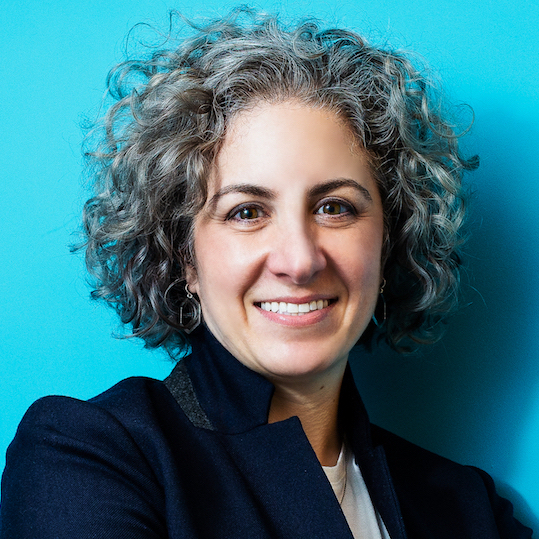
From taking the work to leading the work, with Shanna Hocking
With Shanna Hocking
Listen and subscribe
In this episode
Shanna Hocking came to me off the best year she'd had, and she was still in the place where a client brings her a problem and she feels like she has to solve it their way. In this episode she walks through what changed: what she says now when a client tells her what they want and she can tell it is not quite right, what she calls the jungle she sells into, and why she went looking for help at the exact moment everything was going well. If you have ever read an email from a potential client and felt something in your body say I am not sure about this, this one is for you.
What you'll take away
- If the work started with a client telling you what they wanted and you said sure, they are the one leading your business. They're deciding what work you do, what you get known for, and what your next year looks like, and they are not doing anything wrong at all. They asked for a thing, you said yes, and that is a normal transaction. Stack up fifty of those over the years and what you have is a business by default.
- There is a third option, and Shanna's is yes and. I hear that this is what you're telling me you need, and here's what I think you need, and here's where I can add the most value. She takes the ask seriously and then takes them somewhere better.
- You cannot be clear with a client until you are clear with yourself. Shanna knew what she does, what she doesn't do, what it costs and how she delivers it. That fluency is what lets you stay nimble in the room, rather than working it out while you're already doing the job.
- Being seen as a peer is a muscle, and like any muscle it weakens when you stop paying attention to it. Shanna spent 25 years earning peer status with billionaires, and starting her own business meant learning the whole thing over again.
- Go looking for help while things are good. She reached out off the best year she'd had, and that is the whole point: fix the roof when the sun is shining, because that's when you have the bandwidth, the examples, and the room to think.
In this conversation
The full transcript, in sections. Open any one to read it.
The email that's almost right, and the option nobody mentions
0:03
I had worked very hard to be considered a peer as a fundraiser. You know, I was working with billionaires, and I needed them to see me as an equal partner at that table. And that's what I taught all of my fundraisers that I led. That you know, we're not asking for a favor when we're asking for money. We're creating opportunity, and I knew that going into my business, but because I was new at doing this, I had to relearn that again.
Welcome to Smart Gets Paid with me, Leah Neaderthal. I help women run more profitable consulting businesses, getting more of the clients you want and getting paid way more for your work without sacrificing your time. But I've never been a salesperson. My background is in corporate marketing, and when I started my own consulting business, I learned pretty quickly that it's about 1000 times harder to sell your own stuff than it is to sell someone else's. So I taught myself how to do it. I turned it into a methodology, and now I teach that proven methodology to my clients. So whether your consulting contracts are $10,000, $100,000, or more. If you want more clients you love, more work you love, and they get paid more than you ever thought possible, then you're in the right place. Let's do it together. Thanks for tuning in, and don't forget to rate, review, and share. Hey there, Leah here, and thanks for tuning in. I hope wherever you're listening to this, wherever you are right now, I hope you're having a great week, making some good progress in your business, and taking some time for you. So picture it: a potential client reaches out to you, or you get an email from a potential client, and they say, "Here's what we need. Here's what we want you to do, and they've got it all laid out. They know exactly what they want, and you know this actually might not be hypothetical at all. You might have gotten an email like this recently, and your first reaction is "Yay! You know somebody wants to work with me, and then you read it again, and as you're reading it, it's like somewhere in your body you get the sense that like I'm not sure this is right. Maybe what they're asking you to do isn't exactly what you do, or maybe they think they understand how to solve the problem, but with your years of experience, you know that won't work. Or maybe it's possible they've misdiagnosed the problem entirely, or you know they need more help than they think. But also, you know, you want to help, so you have some conversations with them, and you end up saying, "Yeah, I can do that. But the whole time, you know that you can do it, but it's not exactly how you might solve the problem. And listen, I get it. Maybe you really want to work with this particular client. Maybe you have some room in your schedule, or maybe you just think it's not good form to say no to any potential income when you know you could actually help the client. But I also think that for a lot of women, it might not occur to you that there's a third option-that it's not just about saying yes or saying no, but that you're allowed to look at what the client asks for and say, I hear you, and here's what I actually think you need. And this is almost never about you know your expertise. I mean, the women I talk to can see what a client actually needs probably in the first 10 minutes of a call. That's not the problem. The problem is whether you feel like you can actually push back respectfully and tell them that you want to help, but you think they're kind of wrong. It's whether you feel like you're at the table with them or you feel like you're just doing what they ask for. That's a big difference, and it's the difference between just taking the work and leading the work. And that's what we're going to talk about today. So today I'm talking to Shawna Hocking. Shawna is a strategic advisor to university advancement executives and their teams, what we might call fundraising. If you're outside the university space, she runs Hawking Leadership, and she's the author of One Bold Move a Day. And she spent 25 years in university fundraising before she started her business. And when Shawna and I started working together. Things were actually going really well. She was coming off the best year she'd had, and she was still finding herself in that place where a client brings her a problem, and she feels like she has to solve it their way.
So, in this episode, you'll hear what changed when Shanna stopped taking client requests at face value, even though she truly wanted to help, she'll walk you through the exact things she says now when a client tells her what they want, and she knows it might not exactly be right. She'll describe what we call the jungle that she sells into, and it might be the most complicated one I've heard of. And she'll tell you why she went looking for help at the exact moment that everything was going great, and what she would tell you if that's where you are right now. So take a listen to my conversation with Shauna Hawking, and at the end I'll come back and share a lesson that you can apply in your business, and then hopefully someday soon you'll partner with us to help you build your consulting business, and you'll come back on the podcast and share your story. Enjoy.
Meet Shanna Hocking, and why universities
5:00
Shawna, I'm so glad you're here.
Thanks for being here, Leah. I'm so glad to be with you. Thank you.
Why don't we tell everyone who you are and what you do?
Great. I am a strategic advisor to university advancement executives and their teams. I spent 25 years in university fundraising and then saw the need to support more of the leaders and really investing in themselves and how they lead and who they lead, and that's where I spend all of my energy and time.
Awesome,
you know I've worked with a number of nonprofit fundraising consultants or consultants around fundraising of various types. What is it about universities that makes your work so meaningful, in particular, like why universities?
Well, I started my career in universities. I found university fundraising when I was 18, and for me, was an opportunity to create meaning out of money through philanthropy to create access to education. I got scholarships and financial aid to go to university, so it was connected to both my personal story, but also my why. And when I started my business, I actually thought I was going to work with all different kinds of companies and organizations, and I did. And then made the pivot back to universities because it's where my heart and home really is. And I just think that there's something so beautiful about every campus that I've ever been on, and I get to now be on millions of campuses every year through my work.
Yeah, I think it's so lovely the idea of when you solve a problem for yourself or a past version of you, you're probably solving it for a lot of people. I mean, I think that's actually like a well-worn sort of saying in the world, but it's so true, and so I love that. You know, who are you solving the problem for? You know, is this a past version of you when you were getting started, or maybe when you had risen up in university fundraising? That's a really thoughtful question about the past version of me, and
you know, our industry is so based on metrics. I mean, that's how it's built. You know, you have to raise a certain amount of money, have a certain number of visits, and you know, at june 30 or whenever the end of the fiscal year is, you start again at zero. And that isn't of itself not really motivating for me. What's motivating to me is the people that are contributing to that, both in terms of the donors, the faculty, and also the people who are doing the work alongside you, and so I think for me, what I'm trying to solve for now through my advisory work is to support those people who also believe that we are more than metrics, we're more than outcomes, and that when I first became a people leader, I didn't have enough of the leadership training or role models to be able to see that this was possible, and I think that this is something that the next generation of leaders is really focused on, but still needs resources in order to be able to
do it. Right, resources, training, the permission to see things in a different way. Yeah, right. And how long have you been running your business?
I've been running my business four and a half years. I started january 9, 2022.
january 9, 2020. A day that will live in infamy in a good way. Yes. Okay. So four and a half years in your business. And when we started working together, I mean, you know, what's the point at which you had found yourself, you know. I always like to ask, like,
you
came to me for a reason or reasons. You know, what were those reasons?
Niching down, the two hardest quarters, then the best year
8:28
So I mentioned that when I started my business, Leah, that I was everything to everybody. I think that's pretty normal when you're running a business. You want to make sure that you can actually successfully run your business and you're testing things out, and that's what I did, and then I niched down in summer of 2023 to focus specifically on universities. And then I had the hardest two quarters of my business that I'd had since I started it, and I actually worried, what have I done? The fall of 2023 was particularly hard on university campuses, and though I feel like I could have been an amazing resource for them to work through those challenges, they were in fight or flight, and they just froze. So, in January 2024, I then had the most successful year in my business, and as I was working through that and going into 2025, I realized that I was growing really successfully and loving what I was doing, but I needed more structure. I needed more support. I needed to make sure I was aligning my business goals and my business outcomes with my values and my priorities. And I knew that I needed to look externally to be able to find the people who could help me do that. Like I'm very good at knowing what my strengths are, and I'm very good at relying on other people's strengths and bringing them in people that I trust, you know, close to me to help me do that. And that was really where the point that I was in last summer of 2025 when I reached out to you.
What "more structure" really meant
9:52
And when you thought about more structure, like what do you mean by more structure? Because I think structure can mean a lot of things to a lot of people. What did. Mean to you, and what did you want it to do for you?
I knew I just didn't have the answers that I needed. I knew I needed trusted guidance to be thinking about how I was going to grow smartly and how I was going to serve clients, and so I was looking for a couple of different things at the same time, and I was figuring out where to find it. When I was thinking about the sales process in particular, I knew where I was getting stuck, and I'm really good at following processes, and I'm really good at following scripts that I create for myself and pathways. But I needed help in being able to create those in a way that felt authentic to me, both to my voice and to my business. And you know, having followed you and then talked to you right when I started my business, I knew that you had a voice that was both authentic that I respected and also respected everybody else's authentic voice. And I wanted to be able to have your attention specifically to me through one-on-one work, so that I could come away with this with something that felt really aligned for me and where my business was at the time.
Right. Yes. So I'm curious when you say I'm good at knowing my strengths, what are those strengths?
The strengths she had to get comfortable naming out loud
11:16
Well, I feel like I'm going to be a modest when I say this, but I think it's important that women are comfortable in talking about what their strengths are. So, one of my strengths is for sure in being able to reach out to someone I don't know and to build a genuine relationship. This is not something I knew was my strength, but has been pointed out to me, and I'm so I'm trying to embrace that. I think my other natural strength is being able to understand what motivates people and what's important to them by listening to what they're saying and what they're not saying, and I think that I am really good at connecting the dots, and that's how I made myself a successful career in university fundraising and academic. I was just going to
say that all of these things are like the skills that you develop from years of fundraising, you know, because they talk to women who come from other areas and they can't reach out to anybody. Right, that was me. That was me. I was like, I could do a whole brand campaign for millions of people, but I can't reach out to one person. So yeah, I mean, these have become your superpowers.
Yes, yes. What
else? What else? Am I? I interrupted you. No, I forget. No, I think those are. I don't want you to hide any of your other superpowers.
No, I think that those are superpowers that I would rely on most, and I think the other is in just being relatable. I have been told that I make people feel safe by saying the things that I'm still learning, the things that I've made mistakes on, and I think that we are taught that we have to position ourselves, particularly as you know, women advisors and consultants, as the perfect person, so that someone else will want to buy and trust you. And I think people buy from me and trust me because I'm willing to say what I made mistakes on, both to them individually and also publicly, because it creates a space where they know that they're going to be safe to make their own mistakes or say things that are not totally complete thoughts, or say things that maybe they couldn't say to someone else, and it's important that the clients that I work with believe that in me and feel that with me, so that we can really help them achieve their operational fundraising and leadership goals.
Establishing a peer relationship, and why it's a muscle
13:16
Yeah, and I think what you're sort of saying really eloquently is an application of something that is part of my methodology, which is about showing up as a peer, you know, and establishing a peer relationship. Because I think a lot of us, even women who have been in senior roles or you know have incredible expertise, when you get into your own business and now you're selling yourself, people feel like they've sort of lost their power in a way, you know, and they feel what we call like being in a one down position, like you're asking for something, or you are sort of below on some level the clients that you're trying to work with, and so the way we overcome that is we you know work to establish a peer relationship, which is actually quite easy and really rewarding because as you said, like you can't speak the truth about what's going on, where you can help, where you can't help, you know what you're seeing, what really needs to be done, and what's probably not even possible. You know, you can't say any of that if you are afraid or if you find yourself in a one-down position.
That didn't really happen for me at the beginning of my business, I just as you're talking, I think one of the things I was still working through when we started was that I had worked very hard to be considered a peer as a fundraiser. You know, I was working with billionaires, and I needed them to see me as an equal partner at that table, and that's what I taught all of my fundraisers that I led. That you know, we're not asking for a favor when we're asking for money. We're creating opportunity, and I knew that going into my business. But because I was new at doing this, I had to relearn that again that I was an equal peer and partner at that table instead of asking for a favor to get a meeting or to ask for whatever I was going to charge. And I hadn't really thought about that. That was still a learning process for me until you just highlighted that.
I think it's a learning process for everyone, including myself. You know, and it doesn't happen in the first, I'd say, two years of a business. And even as you start to see what a peer relationship is, or and understand the concept of one up, one down, and you know, you will still catch yourself. You know, maybe one downing yourself by accident is how we describe it, right? And I definitely remember talking to you about certain situations. You know, universities have complicated, sticky sales processes, right? And there were certain situations where I remember, like, the solution we landed on was for you to have a peer level conversation. You know, to sort of unstick this. And so, yeah, I it is a muscle. It is a muscle that has to be made and strengthened. And like any muscle, you know, if you don't pay attention to it, it will weaken. So I think that's a really big learning, you know, for anybody. And I see how it's played out for you. So you wanted more structure. You already knew where you were getting stuck in. Was that stuck in the sales process or just stuck yourself? Yes,
yes, it was stuck in the sales process. Yes, it was stuck in how I was pricing structure. Also, my business was growing, and I had other people who were working on projects with me, and I needed to make sure that I was thinking about how to be expansive, and what it was going to look like to thoughtfully scale, and that requires just a different level of the kind of work that I had been doing up until that point. And so I drew on multiple resources at the same time in the summer of 2025 to help me think through all of those aspects in order to get to the point where I am a year later,
Fix the roof when the sun is shining
16:42
well, and I think that's an important point. That when we first started working together, I think you had had the best year you had had in a long time. You know, you you had had the best year so far in your business. Like things were going really well, almost like too well in the sense of it was really impacting your bandwidth, right? And so I only want to call that out because you know I say that this work is kind of like therapy, you know, or like couples therapy, for example. You don't only go to therapy when things are bad; you go to therapy to keep things good, you know. And I think that like you've heard me say this 100 times: like fix the roof when the sun is shining, because then you have the bandwidth, the examples, the abundance mindset, and frankly, the money you know to actually like get the support you need. So, so I thought that was really wise. I mean, whether it had been me or anybody else, like that was the right time to solve these problems.
Thank you.
So, bring me up to like present day, and you know how things are going now as a result of our work and the structure that we sort of worked on, and then we're going to go backwards again and sort of talk about what helped you get there. So, what have been some of the results you've seen from the work we did? You know, what's changed for the better?
What changed: her offers, her pricing, and the jungle
17:55
I feel really confident in what I am offering to clients in order to serve them well and also align with my strengths. I feel really great about the way that things are structured and priced. I feel more able to handle the sales process and particularly the jungle. I spend a lot of time in the jungle, and how to be creative and nimble when I find myself there, and also being willing to say this isn't the jungle for me. I think that that has been really helpful too. And I wake up every day feeling like I'm doing exactly what I'm meant to be doing. And I was very very scared to niche down when I did this three years ago, and I'm so glad that I did.
Oh, that's so nice to hear. Talk about the jungle. For people who might not have heard me say, you know, navigate the jungle. What does the jungle and navigating the jungle mean to you?
"Here's what I think you need, and here's where I can add the most value"
18:53
Yeah, I mean, for me, what I felt like was happening was it was like starting really strong, and then it was going into this place where there's lots of buyers involved, and the funder is different than the buyer, and there's lots of decision makers, and timing is everything, and fiscal year budgets, and getting attention, you know, from the people that you need, and then oh, but can you do this? And oh, we might want this, and like just kind of going along with all of those whims, as opposed to saying no. Here's where we're going to go, and I know you're asking for this, but here's what I think you actually need. That's one of the things I took away the most, Leah, from our work together. Was I had a client come to me and say, "This is what I want from Hawking Leadership, and when I talked about it with you, you're like, "Well, that's not really what you do or want to do. You could do it, but it's not really what you do or want to do, Shawna. So, what are you going to do with that? And you helped me say, "Yes, I understand that this is what you're telling me you need, and here's what I think you need, and here's where I think I can add the most." Value, and that was like a complete shift for how I've engaged with clients as a result of what I learned from you. What would you have done before? Well, it depends on where I was probably in my financial outcomes for the year. I might have said, "Sure, let me do that. I've also been really creative about being like, "Yes, I can do that, and then outsourcing some of it, or you know, bringing on a subcontractor, or just saying no. But what I have been able to do more creatively, and how I've been able to grow my business in different ways, is to be able to say more of a yes and, which is authentic to who I am anyway. To say yes, that is what you're saying you want, and here's what I think you actually need, or yes, that's what you want, and I'm not going to be the one to offer that to you. But here's where it exists within the Hocking Leadership umbrella, and that is like super exciting for me to be able to do in 2026.
That's amazing. I mean, we all want to say yes, you know. Just to sort of flip that around, I think nobody wants to say no, right? I mean, think about how women are conditioned our whole lives, right? And so we either don't want to say no, or can't say no, or financially can't say no, right? And I think a lot of people struggle with like, how do I say yes in a way that's true to them, right? Helps my clients and is also true to me, and I think it does involve that like number one, knowing how to have these conversations, feeling like a peer-you know, being able to have these peer-level conversations, and being really fluent in your own offers and pricing and services. I talk to a lot of women who are kind of winging it, you know, and so I think the more fluent you are in what you actually do, what you don't do, what it costs, how to deliver it-you know-the more nimble you can be, because you know what you're working with.
Yeah,
does that feel true to you?
It does. I think the clearer that we can be with ourselves before we try to create clarity for someone else means that we can navigate this process more as a peer, more confidently, and be more creative because we're coming into it with a different understanding than trying to figure it out while we're doing it.
Totally, and I love this just this idea of being creative. It's like, how do I give the client what they want while staying true to myself? Right. Well, so you mentioned being able to navigate the jungle. What other things did we work on, or what are some other things that have been some game changers for you in this process,
Leah? One of the things I really appreciated about our work together was how I felt really supported and challenged at the same time. You would honor whatever I was bringing to the table, and you would help me see something different. And because I was doing one-on-one coaching with you and not with a group, which is really how I best function and learn, I know that about myself. I really felt like I was able to work on everything that was important to me at whatever the needs were at the time, so I can't think of a like a specific thing. I just felt like it was all wrapped up to support whatever I needed that we were working on, and that whatever we needed to work through, we were going to work through. And I think that that's a real gift.
I do remember, and thank you. I mean, I I remember lots of conversations where you know you would sort of bring a situation that was happening or had happened, and I would say, okay, well, can I offer a different way of thinking about that? And you were like, please, you know. And I think it's a real testament to your ability to integrate this up because you're so you were so open to, yeah, I want a new way to look at this, you know. I think that's for anyone you know who wants to be better or do better in their business. Like you have to be open and adopt almost like a beginner's mindset. I think that I think there's a lot of learning in this process, but there's also a lot of unlearning for some of the things that we might already have sort of in our like our beliefs like sort of lodged in there, right? That we need to sort of shake free.
I am definitely still unlearning everything I learned in my beloved profession, my beloved career, but it taught me some things that aren't serving me now in running my own firm. And I am pretty vocal about some of what I've learned and learned the hard way because I think when you start a business, it's really easy to look around and think, "Well, they all have it figured out. And finding other people who are willing to say to you, "Here's what I'm trying. Here's what I'm learning. Here's what I've made mistakes on, has been super important to my journey. I'm so grateful to have many other entrepreneur founders that I can rely on, who will you know be there in a moment's notice via text to just say, "Yeah, go do that, or "No, charge more, or whatever it is that you kind of need. I think that having a community is really valuable. None of us do this well alone.
You're so right. The echo chamber can be a real. Burden sometimes if you don't have people to just bounce things off of, and I think that's where navigating the jungle is a part of the process that we we really sort of underestimate how much you need like outside slash expert advice on that. You know, you can like I don't know ask ChatGPT like what's my messaging or whatever, right? But like when you get into navigating the jungle, which is part of every sales process, right? There's so much nuance there. Like I remember we were talking about how you knew these folks and how long you had been talking to them, and who is their boss, and who do they report to, and what is this funding thing, and blah blah blah, and there's like so many dimensions that you have to really bring a level of judgment to it, and especially when you're selling to universities, that navigating the jungle is most of the process. You know, such a long, yes, it's such a long sales cycle, our dear universities. So, yeah, I mean, I think that you can't underestimate having sort of this outside perspective. So I know from your work that you're not only helping university development leaders and their teams, but you're also working with women development leaders. Can you speak to that? You know, you touched on you know women should be able to say more about their strengths and all of that, and I think that could be a whole other podcast that we talk about around like the uniqueness of what women bring to this and all of that. Tell me a little bit about that work.
Advising women chief advancement executives
26:32
I have been very fortunate to advise and partner with many women chief advancement executives at universities and academic medical centers around the country, as they are bringing to life their vision and their values in how they lead their organizations and achieve ambitious fundraising goals, and this is particularly important to me because women represent fewer than 35% of the chief advancement executives at the top 100 U.S. News and World Report universities, and I would like to see that number higher. And for the women who are in those roles, they are experiencing unique challenges because they are women. In 2025, I conducted a research study on women chief advancement executives, and found that less than 70% of them were receiving any kind of onboarding support, and this is pretty broad. This could have been, you know, whether it's an executive coach or professional development. You know, it's not enough to just get someone at the table. You have to ensure that they're successful once they're there. So I take that mission very seriously in terms of how we're redefining leadership in our profession, but also in terms of the role that I can play in creating safe space for them, and frankly, an insurance policy for the university to set those women up for success in their roles in that first zero to three years, where being at the table is one thing, but creating context with that experience that they bring is another, and then also making sure that other women chief advancement executives can come together. So we have been hosting these private forums and gatherings, so that they don't feel alone either when they're on their journeys.
That's so important, and I mean, you know, you're you're talking about helping them in the first zero to three years, but if they don't get the support they need, they may not even last that long, right? And so, when you are able to work with those women, and I'm sure you know it's part of your methodology as well for you know just the general work you're doing. But like, what are they able to do that they couldn't do before?
I think it's everything that they envisioned doing, but then the systemic challenges got in their way, or the noise got too loud, or the many demands coming from every direction, whether it's the president, the team, the president's cabinet, the trustees, makes it such that it's really hard to feel confident in pursuing the vision that you bring. And I think that these women already have this within them. I'm never out there to change anyone. I'm helping them to lead in alignment with whatever their vision and values are, and to be able to speak about that to other people in a way that feels authentic for them, and for them to feel like it's okay to celebrate those successes and tell the world and you know their audiences about those successes, so that other people believe what's possible for themselves too.
Almost like what we talked about at the beginning of this conversation.
As I was saying it, I was like, "Oh yeah, there's that thing, Lissette.
Right. It's so amazing that they have you as a champion, as they really navigate their own jungle, which is quite a jungle.
It's so true,
Shawna. Fill in the blank for me, if you would, I almost didn't work with you because,
The hesitation is rarely about trusting me
29:44
ooh, I think making a significant investment in yourself when you are running a business and making lots of choices about where to invest and how to invest requires both a deep trust in yourself and also a deep trust in what will be. Created from that investment, and I really believe in myself. I think that's one of the greatest strengths that I bring. And so, for me to be successful, I knew that I needed other people around me. But you have to tell yourself that, such that you're willing to say, "I'm going to do this, and I'm going to make it successful.
Yeah, I love that, and I've said this before. Like I think that, you know, a lot of people come to me and they're evaluating like working with me or whatever. And the reason people like hesitate to work with me or really anyone actually is oftentimes not because they don't trust me; it's because they don't trust themselves. Totally. And I can't give that to somebody, unfortunately. But you have to trust yourself. You have to believe that you'll do it. You know, do the work, and then you'll believe that you'll be successful. You know, I just spoke to somebody, Abby McAdams, who is on another podcast, and she's like, "I made a bet on myself. And I think if we look at the bets that we make on ourselves over time, most of the time they work out. You know, it's hard to bet on something you can't control, but there's nothing you control more than your own actions.
Yes,
right. Well, so right before we were working together, things were going really well, but you needed more structure. What would you say to somebody who's in the position you were in back then? I mean, what advice would you give her?
I don't think that you're supposed to know all the answers. I think when you get to the point where things are going well, and you know that they could potentially be even better, that you don't have to figure that out by yourself. You have to find people who can help put a spotlight on that path for you and help you understand where you might be getting in your own way of that success. Because we often think, oh, when things are not well, that's when I'm going to reach out. But I think it's as important, if not more important, to say, you know, things are great, but they could be potentially even greater. And so that's where I'm going to make this investment now to help figure out what that pathway looks like. And we're not supposed to have to do that all on our own.
Yeah, how could we? If you think about it, you know. But no, you're you're absolutely right, Shawna. Where can people find you?
Well, I would love to connect with people on LinkedIn. I'm very active there. Shawna A. Hawking, and also my website is HawkingLeadership.com, and my book is One Bold move a day available anywhere you like to buy books.
I love it, Shawna. Thank you so much for being here.
Thank you so much for the invitation. All
My take: who's leading your business?
32:31
right, what a great conversation, right? I hope you got as much out of that as I did. And if something Shauna said landed for you, I hope you'll share it on LinkedIn and tag Shauna and me. We'd love to hear what helped you or got you thinking. So I always like to pull out one lesson that you can apply in your business. And today I want to ask you a question that might be a little uncomfortable. All right, ready? Who's leading your business? Not who's running your business, but who's leading your business? Because I talk to a lot of women who were in the situation that Shauna was in before. You know, a client would come to her with a problem or what they wanted to do, and she would do the work because she was capable of it, even if she didn't initially agree with how the client might understand the problem or how they might have come up with a solution, because she knows that in the end she'd get them great results and be able to use her skills, and the client would be happy in the end. But she would be taking the work instead of leading the work, and you can spend years running a business this way, and you can make good money doing it. But, and here's the but, if the projects or the contracts you're working on started with the client telling you what they wanted, and you said sure. Then the answer to the question of who's leading your business-that answer isn't you. It means that your clients are leading the business. They're deciding what work you do. They're deciding what you get known for. They're deciding what your next year looks like, and they're not doing it on purpose. They're not doing anything wrong. They ask for a thing. You said yes, like that's a normal transaction. But if you stack up like 10, 2050, of those over the years, and that's your business, then it's not a business by design. It's a business by default. And I want to be clear about something because I think this is where a lot of women get tripped up. This has nothing to do with how good you are. I mean, you can be the best in the country at what you do and still find yourself in this position. And in fact, you know, being good at a lot of things can actually make this harder because you can say yes to more, so you do. And Shauna gave us a way out of this, which is yes and, which I'm sure you've heard, yes, and before. It comes from improv, and it sort of entered the cultural lexicon as something we just sort of say now. But watch what she does with it in this context. A client tells her what they want. She says, "Yes, I understand that this is what you're telling me you need, and here's what I think you need." Here's where I think I can add the most value. She didn't say no, but she also didn't just take the order either. She took the ask seriously, and then she led them somewhere better, somewhere that would help them solve their problems better. And that's the move. That's how yes and can really work in consulting, because it gives you another option besides just saying sure, and then you know trying to make it work. Once you start doing the work, it gives you a way to solve the client's challenges and also be true to your business. And those two things are not in conflict. You know, serving the client well and helping them get results and being true to your business; those can be the same thing. And if you're not true to your business, you're not actually serving your clients. You're just sort of doing what you were told. But I will say, depending on where you are in your business, there may be you know some work to do before you can use this approach. Shauna could do this, you know, once she decided to, because she knew what her business was. She knew what she does and what she doesn't do? She had gotten clear on her strengths. She had done the inner work, and when you're that clear with yourself, you can be clear with your clients in real time.
And she said this on the call. I mean, that clarity has to come first before you try to create clarity for anyone else, and then you can stop just taking the work, and you can start leading the work. Because again, if you're just taking the work instead of leading the work, then you're not leading your business. And if you're not leading your business, then you're kind of like a sailboat without a rudder. You know, you'll just sort of go wherever the wind or your clients take you. So sit with that question this week: Who's leading your business right now? And if you look at everything on your plate, how much of it did you lead at the outset, and how much of it just sort of showed up and you said, "Sure, I could do that. And here's one thing you can actually do: Next time a client tells you what they want, and something in you says maybe there's a better way to do this. Don't just say sure, but also don't just say no. Say the first half out loud. I hear you, and here's what I think you actually need. And if you're not the best person to give them what they truly need, you know, tell them that, and tell them who is. That's how you start to do more of the work that you absolutely love, and less of the work that you're sort of making work, and that's how you start leading your business. If you know someone who'd appreciate hearing this, I hope you'll send this episode to her. Thanks so much for listening, and I'll see you next time.
Two ways I can help you
When you're ready to break through to the next revenue level in your consulting business, here are two ways I can help you.
1Join The Academy
For women consultants who've been in business 2+ years and are making $120k+. Build the two systems every consulting business needs to get more of the right clients, get paid more, and build a sustainable business:
- A marketing system to bring the right clients to you and fill your pipeline
- A sales system to help clients say yes and get you paid more
If you're ready to make your business and revenue more stable, secure, and sustainable, visit the Academy page to learn more and apply.
2Get Roadmap to Clients
Map out a simple sales process for your consulting business in less than an hour. Take potential clients smoothly from first contact to a signed proposal, so you can stop reinventing the wheel with every opportunity.
Get the free video course.