Episode 147 · August 2, 2026
The year I quit personal development – and the unexpected thing I found
Listen and subscribe
In this episode
I spent more than twenty years as a self-described personal development junkie, and two years ago I stopped cold. No business books, no personal growth books, nothing read to become better at anything. What I found on the other side wasn't what I expected, and it changed how I run my business and how I make decisions.
What you'll take away
- Twenty years of reading made me a better business owner, and then it started working against me. The inputs stopped sharpening my thinking and began drowning it out.
- The tell was that decisions got harder, not easier. With that many voices in my head, I could argue any side of anything, and I'd lost track of which side was mine.
- I'd been running someone else's playbook. Build a program, build the next one, wire a funnel between them. It worked on paper and something felt off the whole time, because I was solving pieces of a problem I knew needed solving whole.
- When the noise got quiet, the hard calls got obvious. Pausing payments for a member on maternity leave took no committee and no deliberating. I already knew the answer.
- Go deep instead of wide. One person you trust, one framework that feels true, and enough quiet to hear what you think about it.
In this conversation
The full transcript, in sections. Open any one to read it.
The Sunday night I put the book down
0:00
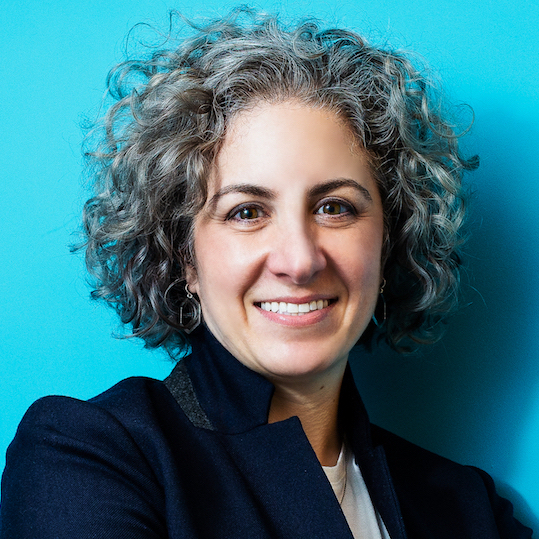
So it's two years ago, and it's a Sunday night around bedtime, and I'm in bed with a book. It's a new book for me. I'm just starting it called The 12 Week Year, something about organizing your time to grow your business or something like that. And it's maybe the I don't know fourth or fifth business book I'd read in a row because I was always reading something or listening to something about how to be better, you know, how to be a better business owner, how to know myself better, how to be a better person, you know, all the things, right? Because I was, and I say this with full self awareness, I was a personal development junkie. Now, maybe you're not a self-described, you know, personal development junkie like I was, and maybe this isn't your exact struggle. But if you're someone who's trying to learn, always trying to grow, maybe reaching for one more book or one more input to help you be a better business owner or a better person, then stay with me, because what happened next kicked off two years that really changed how I run my business and how I live my life, and so anyway, that night my wife gets in bed next to me and she looks at what I'm reading and she says, you know, just sort of like casually offhand, she says, you know, what if you just didn't like? What if you just took a break from all of this kind of gesturing at the book I was reading, and I looked at her and I felt, I don't know, indignant might be the word. I was like, but I like reading this stuff, you know. I like trying to be a better business owner. I like trying to be a better human. I mean, I admit I had like kind of an outsized reaction to her suggesting that I take a little break, and I sort of huffed, and I had this probably smug look on my face, and I went back to the book. But the next day, something happened. I was trying to work through something in my business, and I hit a major wall, and it really sort of stopped me in my tracks. And more on that in a minute. But so anyway, that night, that next night, I'm back in my room. I'm getting ready for bed, and I looked at the book on my nightstand, and I turned around and I walked back into the living room where my wife was, and I said to her, "Okay, fine. I'll give it a year. I'll go off all personal development and business books for a whole year. And I did. I went off all personal development and business books for a year. And what happened that year, and what I found on the other side were some things I really didn't expect, and that's what we're going to talk about today. Welcome to Smart Gets Paid with me, Leah Neaderthal. I help women run more profitable consulting businesses, getting more of the clients you want and getting paid way more for your work without sacrificing your time, but I've never been a salesperson. My background is in corporate marketing, and when I started my own consulting business, I learned pretty quickly that it's about 1000 times harder to sell your own stuff than it is to sell someone else's. So I taught myself how to do it. I turned it into a methodology, and now I teach that proven methodology to my clients. So whether your consulting contracts are $10,000, $100,000, or more, if you want more clients you love, more work you love, and they get paid more than you ever thought possible, then you're in the right place. Let's do it together. Thanks for tuning in, and don't forget to rate, review, and share. So maybe you're not a self-described personal development junkie, but I bet that if you're listening to this, you're at least intellectually curious. And if you're like the women I work with in my program, you're a natural learner. You have a list of books to read that's probably longer than you'll ever get through. You've saved articles. You probably have a running list of podcast episodes you want to listen to, you're always trying to get better and always growing.
How a 22-year-old in Chicago became a personal development junkie
3:44
And if that's you, and I'm guessing it's a lot of you because that's just sort of who's drawn to this work, then this episode is for you. And if you're someone who doesn't consume, you know, that much, or you're not sort of seeking those types of inputs, this episode might still surprise you because I think there's something in here that everyone needs to hear. So to understand why I quit being a personal development junkie, we have to go back to how I got into it in the first place, and it was right after college. I had moved to Chicago not knowing a single person, and I got really lucky. I sort of fell in with this really great group of people who they had also just moved there after college, and they sort of took me in and like welcomed me to the group, but even though they invited me to things all the time, I was still you know on the outside of the group. Like they had all gone to college together, and I was new, and so sometimes I wouldn't get invited to things. And I was young. I mean, picture like 22, and I was really insecure. And so when that happened, when I found out about something that had happened without me, it would just send me into a total like insecure, panic-inducing spiral. I mean, remember, I was like in this new city and didn't know anyone else, and so one day, and I remember this so clearly, it was. Weekend, and something had happened the night before where I didn't get invited, and I had found out about it, and it wasn't like malicious. I just like again wasn't in the crew, and so I I was really down. And the next day I was really just feeling kind of depressed, and I was living in a neighborhood called Boys Town at the time, and I was walking down Broadway, and it was this like gorgeous, you know, spring afternoon. And here I was, like feeling sad. And there was this used bookstore that I loved, and they had a table outside, you know, these like dollar books, just you know, in rows on the table. And I stopped to just sort of look around. And I swear, out of this whole table of books. One of them practically jumped into my hands. It was a book called "I'm Okay, You're Okay. It's a classic psychology book from 1967 that explains why people feel and behave the way they do and how to overcome personal challenges. And it was like groundbreaking at the time, but again, this is like 1967, and so I bought it that day. I bought it for $1, and I brought it home and I read it, and something just shifted because for the first time I had some language for what I was feeling, and I understood why I was spiraling when I felt left out, and I started to understand you know stuff about myself that I didn't know before, and I knew that if I could understand what I was feeling and my reactions, then maybe I wouldn't be controlled by them in the same way. And so that level of insight, you know, that feeling of like, oh, this is what's going on, I wanted more of that feeling. And so from there, from that book, I guess I was off to the races, and I started reading more. And here's the thing: you know, the more I read, the more it started helping. The more I understood myself or the people around me and how I was feeling this way, or you know, all of the things that you start to sort of uncover once your eyes are opened in this like personal development work. And then a few years later, in 2011, that's when I left my last corporate job and started my first consulting business. And so then, in addition to what I'd consider like you know strict air quotes personal development books, I also started picking up books that weren't just about my own development, but also my personal development as a business owner. You know, like strategies and mindsets and frameworks that would help me be a better business owner and grow my business, right?
Why I mixed business books with personal growth, and what it gave me
7:26
And I put these two together, you know, personal development and business books, because whether it's helping you with, say, like your mindset or with your mindset as a business owner, it's really all about becoming, you know, a stronger, more insightful, you know, better, smarter person, right? And again, with this mix of books, the more insight it gave me into myself and other people, and myself as a business owner, and it helped me. Like it really changed me. I mean, this is like 20 plus years ago that this started, right? And so there's no way that you spend nearly 20 plus years working on yourself and come out the same person. Right over time, I became a completely different version of myself. I became more secure, more confident. I learned to trust myself. I started to understand why I do the things I do right. Why I react a certain way, or why certain things send me into a tailspin and others don't. I started to understand my parents better and my family dynamic. I understood my wife better, like all of this sort of learning and you know growing and therapy and all of the things combined. And 20 plus years later, it sort of culminated in this one moment that really showed me like what this work had actually done. It was when my parents were visiting me a few summers ago. So around that time, my dad had recently retired, and even though they were fine financially, I mean they had spent years preparing for this. Still, when he retired, some unexplored money fears came up for both of them, and it started to surface some conflicts around their individual money narratives that had been sort of sitting underneath, like lying dormant in their marriage for the last, you know, 46 years, and these were things they had never talked about. I mean, listen. Like a lot of boomers, they're not exactly rushing to go to therapy, right? And so, despite never talking about them, or maybe because they never talked about them, all of these like fears and money story stuff was playing out in their marriage in real time. And these were their old, you know, ingrained beliefs about money, about security, about what money means. Again, this wasn't my money narrative. This was their narratives, and all those beliefs were like running up against each other in a way that they never had before. And it sort of came to a head one night where these things just needed to come out into the open and into the light, right? And so I sat my parents down, and we talked for about what turned into like two two plus hours. And in that conversation, I used what I knew, you know, all the tools I had picked up over 20 plus years of personal development to basically facilitate a conversation between the two of them and help them see what was actually happening, to help them actually understand each other's money stories and how that was affecting their own decisions and their feelings and how it was playing out in their relationship, and by the end of that evening, they had really rewritten their money story together as a couple, and so that night with my parents really changed our relationship for the better, and it made something very clear to me. You know, this work wasn't just to help me understand myself; it enabled me to help the people I love the most. And what's funny is, like, as just a little bit of backstory, you know, my parents and my sister-they always kind of like made fun of me for all this personal development work, right? And I was always encouraging them to read what I was reading, which they never did. But I hope that in that moment, that conversation with my parents, I showed them that this stuff isn't just you know woo woo. It really can help them, and I know it did. And like some of the things I read over the years were interesting, and some of them were truly transformative. I'm going to just list a few here, and then I can also add a list to the books in the show notes. So, like you know, The Power of Now by Eckhart Tolle. That was another one I read really early on.
The books that changed me, and the "but" that followed
11:30
You know, something like 2004 or so, and learning how to be present, how to observe your own thoughts instead of being ruled by them, like that really, really changed me. Another one is Mindset by Carol Dweck, where I learned that I had been raised with a fixed mindset, not a growth mindset. Great in school, but not so great when you're building a business and everything is, you know, uncertain. And Grit by Angela Duckworth, where I realized that I had book smarts, but I hadn't really developed grit yet, and that was, you know, helpful to know and also humbling at the same time. I've read so many books, and most of them gave me something real that I could take with me. So I'm grateful to have done this work. I mean, I really am. 20 plus years of this type of learning has made me a better business owner, a better parent, a more patient person, a healthier person. It's brought me to therapy. It's gave me tools I still use, but right there's always a but. But a couple years ago, something started to shift because here's the thing about spending you know 20 plus years soaking up everything you possibly can. At some point, it can become you know too much, and I didn't see it happening until it was too late. I mean, I thought that more learning, right, more inputs, if you will, meant more clarity. I mean, I've always been a learner, and on some level, I always felt that you know the answers were out there somewhere. I just had to keep adding to what I knew until I could find them, and so I kept reading. I worked with a lot of different coaches. I kept taking things in from as many places as I could, and I was collecting, you know, insights and tools and frameworks and strategies. And I had this huge, like, personal treasure trove of this stuff in my head. And then one day, a couple years ago, I was trying to work through something in my business. I can't even remember like what I was trying to figure out, but I sat down to think about it, and instead of clarity, I just heard a ton of noise. Like it was just noise. Like all these frameworks, all these voices, all these things I had learned from different books and different coaches and different programs. Like instead of the clarity that I was hoping for, it was like they were all competing in my head and like contradicting each other. It's kind of like I felt like I had been handed like 100 different maps to the same city, and each one of them had a different route, and each map like made sense on its own, but really together, it was just like a mess of lines, right? And I know this kind of sounds crazy, but the only way to describe it was that it was loud. It was loud in there, and I remember this so clearly. I literally put my hands over my ears, like physically, hands on my ears, sitting at my desk because the noise was so loud I couldn't think. And I thought to myself, I was like, "Why can't I figure this out? Like, I've done so much learning. I have so many tools. You know, what is the right answer here? And so finally, I closed my laptop and I took out a piece of paper and I started writing down just everything I knew about how to solve this problem. You know, every framework, every approach, every voice in my head that had an opinion about how to solve it. And when I was done, I looked at the list and I was like, "Oh my god! Like no wonder, no wonder this has been so hard, and no wonder I felt like I was going crazy. I hadn't built a well-oiled machine. I had accidentally done what I see." My own clients do sometimes. I had sort of piecemealed all this stuff together from too many places, like way too many places in my case. And it wasn't that any one tool or framework was wrong, or that like the coaches were bad or the books were bad.
Too many inputs, and the line from Mark Manson that named it
15:13
It's just that I had taken in so much from so many different places that I just had too many inputs, and the inputs had stopped enhancing my thinking and had started, you know, kind of drowning it out. And you know, I came across something a little while later that made me feel a lot less crazy about this. Mark Manson, who's written a lot about self improvement, so he's not exactly an outside critic, but Mark Manson said the constant desire to improve yourself can itself become a subtle form of addiction, right? Like when I read that, I thought, "Yeah, that's exactly what this was. And so later that night, when I looked at that book on my nightstand, yet another business book I was about to read, yet another input, that's when I went back out into the living room and said, "Okay, fine. No personal development or business books for a year. So I quit cold turkey. And actually, first I had to define what constituted personal development, and my rule was nothing read with the express purpose of getting better or being better or doing better. I mean, no business books, right? Nothing read expressly to improve. I mean, sadly, if Brene Brown wrote it, it was off the table, right? And so, for the first couple months, honestly, I did not know what to read. Like, I don't think I read anything for like two months. I just didn't know what to reach for. And then I came across this phrase. It was like a screenshot of a tweet or whatever that came across my feed, and it was from a woman who had just finished her PhD, and she declared that she was embarking on what she called, and I quote, a year of reading frivolously. And I thought, yes, that is exactly what I'm doing-a year of reading frivolously. I mean, one thing you should know about me, though, is that I do gravitate towards like nonfiction and more serious topics. So you know, this quote year of reading frivolously was not exactly beach reads. I mean, I'm still myself, right? But I did read. I read biographies. I did a whole series on the lives of Black women, you know Tina Turner's biography, Viola Davis, Sheila Johnson, the founder of BET, other women who'd push the envelope, like Kathleen Hannah of Bikini Kill and Latigra. I read about the Vanderbilts and the Astors. I read about shipwrecks and mountain climbers. I have this long-standing, like slightly quirky intellectual obsession with Russian history and life under communism. I mean, think like East Berlin, Cold War, fall of the Soviet Union type stuff. And so I read a lot about that. I mean, see, like not not light hearted stuff. And I did read some fiction here and there. I read what I was drawn to just because I was drawn to it, and then one day I looked up, and surprise, it was the year anniversary of when I started this hiatus. I had done it; I had gone a whole year, and you know what? I kind of liked it, and I just sort of kept going. And then a year became two years, and that point was probably six months ago now. And then when I did finally pick up something that felt like it was about you know becoming better, the first thing I reached for wasn't a business book or a personal development book; it was a book about leadership. But we'll get to that in a second. And so, two years later, as I look back and I remember that day where I couldn't solve that problem in my business because it was so loud in there, it's been amazing to look back and see what's changed, and that's what I want to share with you. So here's what's happened as a result of this break. More about what I learned when I quit personal development after this. The first thing that happened is I started to hear my own voice again. When you're constantly taking in other people's thinking, you know other people's frameworks or other people's opinions about how to do things or how to be or how to run your business, it gets loud in there, as I experienced firsthand. And the loudest voices aren't always yours.
The online business owner playbook I'd been following
19:17
So you know, as an example, during this, I guess, heavy personal development and business learning time. I'd been following what I'd call like the online business owner playbook. You might know what I'm talking about. It's like build a program and then build a next program and then the next program. You know, and create this like sophisticated funnel that moves people from one thing to the next so they can spend more money. Blah blah blah blah blah, and I actually did it. Like I had the pieces. I followed what the business gurus said, you know, to a T. I built signed, and then I made pack your pipeline. I had this like $47 thing you can buy. Like I had this whole funnel, and it was working in the sense that like people were getting results. But the whole time, something felt off to me because I was only solving pieces of the problem. Like I knew that to truly help a woman consultant build a sustainable business, you need to solve the whole thing. Like not just how to get leads, or not just how to do LinkedIn, not just how to close them, or how to lead a sales process, or how to charge more, but how to do all of it so that you can really build a business that is profitable and feels good to run? And I wasn't doing that. I was following that playbook that says basically like solve small parts of the problem for more money and then more money after that, etc. That's what I had made instead of listening to what I knew actually needed to happen, and I also got really burned out doing that. Like really burned out. I was running in circles, managing all these separate programs, doing launches all the time, and none of it felt like me. And so during that year, that first quiet year, I made a decision. I shut it all down, and I folded everything into one program that I knew would solve the entire problem-not pieces of it, just all of it. And I called it the Academy. And I talk about that decision in episode 31, called "The Biggest Decision in My Business. And the moment I made that decision, I felt something I hadn't felt in a long time. I felt like I was doing something that was true to me, like I was finally doing what I needed to do, not what the playbook said I should do, and that was my voice. And I had totally stopped being able to hear it because there were just too many other voices telling me what to do. And so when I went quiet, you know, so to speak, in that year of no personal development. I started hearing my own voice again. The second thing that happened is that it became easier to make decisions. When there are too many voices telling you the right way to do something, you spend all your energy trying to figure out whose right way is actually right, and that's exhausting because you're never really operating from a place of truth in yourself, you're operating from a composite of everyone else. But when I stopped trying to find the absolute right way to do things, it was easier for me to decide which way was right for me. And there's one moment when I could see how much that had shifted. So a little while into running the academy, our academy members started going through things like life things. They were taking care of aging parents, or they themselves got sick, or they had a new baby. And you know, when life happens like this, people naturally need to step back from a program and focus on you know what's important in their lives. And so the question came up internally: like, what do we do in these situations? What's our policy? And I didn't hesitate. I didn't go looking for what other programs would do, or what the online business playbook says about member retention, or what anybody else would recommend. I just thought, what would I want if I was in that situation? Like, what do these women? What do our members actually need? And the answer was so clear, and so we created the first family leave and maternity leave policies in the coaching industry.
The decision that took no deliberating at all
23:07
So when a member needs to step away for an illness or a family thing or a new baby, we pause their payments. For family leave, we pause it for two months, and for maternity leave, we pause for four months. And during that time, when you know your payments are paused, we don't just also turn off access to the community because when you're going through something hard or something life changing, what you need most isn't to be alone; it's to be with other people who understand. So I announced it. We updated the agreement, and that was it. There was like no deliberating, no committee, no second guessing what the right answer was supposed to be, and that's what it feels like when the noise is quiet enough to hear myself. Decisions stopped feeling hard; they felt obvious because I knew they were coming from me. All right, so the third thing that happened. This third one is harder to explain, but it might actually be the most important. So, when you're deep in personal development, like really deep, like I was, you spend a lot of time looking inward, like thinking about yourself, working on yourself, and that's you know valuable. I mean, that's kind of what personal development is all about. But there's also a point when you've been looking at your own shoes for so long that you've sort of forgotten to look up, and that's where I think I found myself. So at some point during that quiet year, I was talking with another business owner, and she mentioned a question that she asks her clients, and it goes like this: She said, "If aliens came down from outer space and watched you for a week, just watched you from the outside, what would they think is most important to you? All right, I'm going to ask it again. If aliens came down from outer space and watched you for a week, just sort of watched you from the outside, what would they think is most important to you? And I remember hearing that question and being like, "Oh no, because if an alien had watched you. They would have thought that I cared about exactly one thing: my business. And I mean, of course, like we work hard to make money, to support a good life, and give our kids opportunities, and take care of our health, and all of that. But aliens wouldn't have that context, and so if they only looked at what I was doing, they would think I only cared about my business, and that really sort of rocked me. And after sitting with it for a while, I shared that question with my best friend Courtney, who's also an ambitious business owner, and she had the same reaction, like, "Oh shoot! And so we started doing something that I just love. We made this pact, and every time one of us made a deliberate choice not to choose work, like in a moment where we might have otherwise, you know, chosen work. We chose something else instead. Every time we made a deliberate choice, we'd send each other a text, just an alien emoji and a note about what we did. Like I remember one that she sent me. She had this self-imposed deadline for something she wanted to work on, and the night before she could have spent the whole evening working, but instead she took her wife and son to a Lakers game, right? And so she sent me the alien emoji for that, and I started choosing things outside of work too. Like in a moment where I'd otherwise feel like I should be working, I would choose to you know be present with my kids or work out. And after a while, I started noticing how many times I was making these choices, these better choices-choosing my family or my body, or choosing to actually be present instead of halfway somewhere else in my head. That year, my wife and I started doing kettlebell training together, and we've been doing it together for a couple years now. And I'm probably the strongest I've been in years. I started really trying to, you know, turn my brain off when I was with my kids, just sort of be there, not optimizing, not improving, just be there, and I could feel my life getting richer.
Looking up instead of in
26:49
And so I'd like to think that if aliens came down today and watched me for a week, what they would intuit about what I value would look very different than it would have before all of this, and I think that's really the personal improvement that I needed. So those are the three things I found on the other side of that, you know, year plus. I started to hear my own voice again. It became easier to make decisions, and I looked up instead of in. So I said I would quit for a year, but really it was closer to two. And I'll tell you something funny: the one thing that I held onto, the one thing I said that my wife could not take from me in this year, was the Glennon Doyle podcast. Which, if you haven't heard it, it's called "We Can Do Hard Things. And at the time, I was listening to it a lot, and I loved it. So it was the one thing where I was like, "I won't give this up. Like I need this, but honestly, during that like year plus, like I barely listened to it. It's just funny what you think you can't live without, you know. So two years came and went, and when I finally felt ready to pick up something again, you know, something that wasn't a biography or wasn't history, the first thing I reached for was Wolfpack by Abby Wambach, and if you don't know Abby Wambach, she is a force. She is this legendary soccer player, like one of the greatest athletes in women's sports, maybe in any sport. And her book Wolfpack started actually as a commencement address that she gave, and then it became a book. And I read this, and you know, I have to be kind of honest. There wasn't a ton in it that was groundbreaking. I mean, it wasn't like blowing my mind. But I think what's more interesting is that the thing that I gravitated to wasn't about personal development or business per se. It was about leadership, and what it did was it got me thinking about leadership and like what it means to be a leader, and when I put the book down and I sort of sat with like what it means to be a leader, and really feeling how I felt after these two years without personal development, I realized something: I felt more like a leader because after these two years, like something had shifted. I went into this time as a doer, like a seeker, right? Somebody who was always seeking the next framework, seeking the next answer, or you know, the next person who could tell me the right way. And I came out as somebody with a clear vision who actually trusted her own judgment, who heard her own voice, and who wasn't following anybody else's playbook anymore. And you know, Mandy Ellison, who's a colleague of mine, and she's been a guest on this podcast, says that your business will grow in direct proportion to the degree to which you are a leader, and I believe that's true because since then, like since this shift, my business has grown. My team has grown. I have a clear five-year vision that we're actively working towards, and my sense of what this company actually is has changed entirely. It's not just like Leah's coaching business anymore. It's a real company, like going somewhere real. Solving real problems for the women who need it, and I don't think I would have gotten here if I didn't take those two years. So I went in as a seeker and I came out as a leader, and that's kind of the whole story, the whole journey in a nutshell. So I always like to leave you with something that you can use today, and for this topic, here it is. If you're someone who consumes a lot, right, like a lot of books, a lot of podcasts, a lot of programs, a lot of content, I'm not saying to stop, right? I did 20 plus years of that, and I'm grateful for all of it. What I'm saying is, at some point, more input stops giving you more clarity and just starts giving you more noise.
What to try instead: one person, one framework, go deep
30:43
So here's one thing I want you to try: pick one person you trust, one teacher, one framework, one approach that feels true to you, and then go deep instead of wide. Let it land. Let it integrate. Give yourself enough quiet to actually hear what you think about it, because that's what going deep instead of going wide really buys you. It's not about you know how many books on the shelf you have. It's about when the noise gets quiet enough, you can actually hear your own voice, and your own voice might be the one that you've been ignoring or discounting this whole time, and it's the most important one in the room. If there's a woman business owner in your world who you think might need to hear this episode or might benefit from it, I hope you'll share it with her. All right, thanks so much for listening, and I'll see you next time.
Two ways I can help you
When you're ready to break through to the next revenue level in your consulting business, here are two ways I can help you.
1Join The Academy
For women consultants who've been in business 2+ years and are making $120k+. Build the two systems every consulting business needs to get more of the right clients, get paid more, and build a sustainable business:
- A marketing system to bring the right clients to you and fill your pipeline
- A sales system to help clients say yes and get you paid more
If you're ready to make your business and revenue more stable, secure, and sustainable, visit the Academy page to learn more and apply.
2Get Roadmap to Clients
Map out a simple sales process for your consulting business in less than an hour. Take potential clients smoothly from first contact to a signed proposal, so you can stop reinventing the wheel with every opportunity.
Get the free video course.