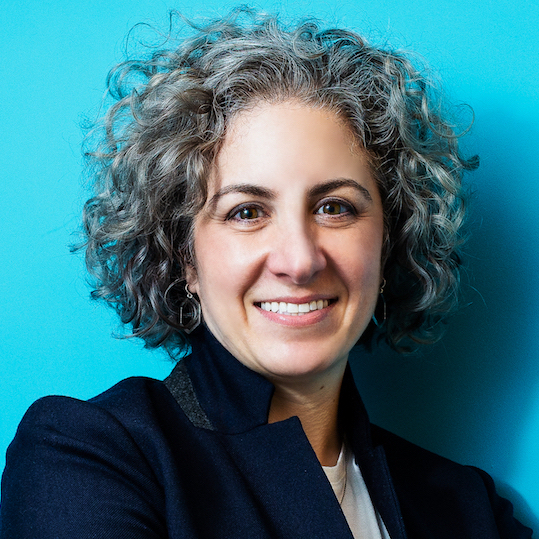
Episode 60 · March 5, 2023
My 3 biggest mistakes in my consulting business
Listen and subscribe
In this episode
Back in episode 58 I talked about toxic success in the coaching industry, and I haven't been able to stop thinking about it since. So here are three mistakes I made running my own consulting business, and I'm doing it now because I watch women make the same three today and pay for them the way I did. Getting clients felt like a distraction from the real work. I kept buying strategies built for selling to consumers and trying to make them work on companies. And I let being more comfortable behind the scenes turn into a crutch.
What you'll take away
- I treated getting clients as a distraction from the real work. My client work got all my best thinking and business development got the scraps. I'd even feel resentful about the time it took, right up until I worked out that without it there's no work to protect.
- One of my clients said it better than I ever have. She finally thinks of business development as part of the work that has to happen, like checking her email or paying her credit card. It isn't fun, and it's got to happen. She's been doing it more consistently ever since, and her revenue is growing like crazy.
- I spent years trying to solve a B2B problem with strategies built for selling to consumers. They all did exactly what they promised. I did learn how to start a blog. None of it helped me sign a single consulting client.
- Here's the rule of thumb I use now. Ask whether your main contact could buy in the way this strategy assumes. If they can't, it's built for consumers and it won't get you the companies you want.
- "I'm more comfortable behind the scenes" stopped being a thing I was saying and became my crutch. Facebook served me up a photo of a 300 person event I organized, and there I am in the back row, eighth from the right.
In this conversation
The full transcript, in sections. Open any one to read it.
Why I'm talking about mistakes at all
0:02
And I'm doing this now because I see women making the same mistakes today and paying for it dearly the way I did. And so I want to shine a light on these mistakes and share with you what to do instead, so that you can avoid the same pitfalls and hopefully grow your business with a lot less pain and grow it a lot faster. Welcome to the smart gets paid podcast with me. Leah Neaderthal, I help women land higher paying clients in their independent consulting businesses, but I've never been a salesperson. My background is in corporate marketing, and when I started my first consulting business, I learned pretty quickly that it's about 1000 times harder to sell your own stuff than it is to sell someone else's. So I taught myself how to do it, and I created the sales approach that I now share with my clients so they can feel more comfortable in the sales process, get more of the right clients and get paid way more for every client contract. So whether your client contracts are $5,000 $100,000 or more. If you want to work with more of the clients you love, do more of the work you love, and get paid more than you ever thought you could, then you're in the right place. Let's do it together. Thanks for tuning in, and don't forget to rate, review and share. Hey there, Leah here, and thanks for tuning in. I hope that wherever you're listening to this, wherever you are right now, you're having a great week, making some good progress on your business and taking time for you. So back in episode 58 I talked about this concept of toxic success in the coaching industry, and how we can't just talk about the things that we did right and the things that worked, we also have to talk about the things that didn't work and the mistakes that we made. And even though it's been a little bit since that episode, I can't stop thinking about this idea of sharing our mistakes, you know, the things that just didn't work out. And so I wanted to come back and talk just about mistakes, specifically the mistakes I made while I was running my consulting business, and there were a lot, but there are three in particular that I wanted to share with you. And I'm doing this now because I see women making the same mistakes today and paying for it dearly the way I did. And so I want to shine a light on these mistakes and share with you what to do instead, so that you can avoid the same pitfalls and hopefully grow your business with a lot less pain and grow it a lot faster. And there's this quote I came across a while back that I've held on to. It's from Chancellor Otto von Bismarck. You know, Chancellor of Germany from the 1800s you might remember him from such things as history class, but he said, Only a fool learns from his own mistakes. The wise man learns from the mistakes of others. So here I am sharing my biggest mistakes so that you can learn from them and avoid making the same ones. So as a quick background, I started my first consulting business. When I left corporate in 2010 I was traveling the world with my then partner, and as we were backpacking, we decided that instead of traveling the whole world in a year and then coming back to the states and spending the rest of our lives working for other people under fluorescent lights, we would create a business that would let us live anywhere. My background is in marketing. Her background was in nonprofits, and so we created a marketing and web design firm for nonprofits in social enterprises, and that's how the first consulting business was born. So we cut our trip short. After traveling for about eight months, we came back to the states so that we could get clients and then keep traveling after that, and as soon as we were back on US soil, and really our only job was to get more clients. That's when I sort of freaked out, like I could not do it. I ended up going back to get a job, and then six months later, I quit that and recommitted to the business and to learning how to actually sell. And that's how I started on the path that actually brought me here, because during that time, I read every single book I could get my hands on, which turned into 65 books. I tested every strategy with my own clients, and you know, anything that felt salesy, I ditched anything that felt good, I kept and I started listening to how clients made decisions. And I didn't know it then, but over that four year period, I was creating a selling methodology that really feels comfortable, gets you paid more, and it works, but also during that time, as I was learning those things and doing the work with our clients, that's when I made the mistakes that I want to share with you. All right, ready? Here we go. The first
Mistake one: getting clients felt like a distraction
4:35
mistake I made in running my consulting business was treating business development right? The process of getting new clients as something separate from the real work of the business, something that was taking me away from the real work. You know, I used to feel like the process of getting clients was like this annoyance, right? Kind of like a nuisance, really a distraction from the real work, which. Was the work we were doing for our clients. Because, you know, I'm a marketer. I came from marketing. I built my whole career in marketing, and the business we were running was that we were helping our clients solve their marketing challenges, right? And so anything outside of that felt like a distraction from that real work. And as a result, I gave all my best thinking energy and creativity to my client work and the selling part, the getting clients part, would get the scraps right, the crumbs, whatever was left over, and I would actually start to feel resentful of the time or the energy that I had to spend getting new clients, because that was detracting from what I considered the, you know, real work, air quotes of the business. But here's the truth that I learned, which really changed things for me. The time you spend getting consulting clients is just as important as the time you spend doing the work, if not more important, because without the clients, you have no business. I mean, I know it sounds obvious, right, but you'd be amazed at how many people are out there feeling like I did, and treating the getting clients part as something separate, something less important, and feeling like it's a nuisance. And the truth is that you can't treat your work as so precious that nothing can detract from it, not even the process of getting clients, because without focusing on that, and without a process to do that, you again, literally have no clients to bring that expertise to. It's like, imagine you're this amazing tennis player, right? And you know you're really good at tennis. And you tell people you're good at tennis and you like playing tennis, but you never play because the process of signing up for a tennis league feels like it's annoying and beneath you and like it's going to take time away from playing tennis. I mean, obviously you're not going to play much tennis. Then instead, think about business development, maybe not as more important, maybe not less important, but as the foundation of your business. It's the gas that you put into the car to make it go right. None of us, you know, if we wanted to drive a car, would think of the gas as less important than the car itself. The gas is necessary to make the car go so think about business development as the foundation of your business. Without it, you can be so good at what you do, but your business won't go anywhere. I was actually talking about this with a client of mine in the academy, and she said, and I wrote it down because it was so good, because we were talking about sort of where she is in her business after having sort of learned this methodology. And she said, I finally think of business development as just part of the work that has to happen. It's like checking my email or paying my credit card it's not fun, but it's got to happen. And since she's been thinking about it as something that just is a part of the business, she's been focusing on business development more. She's been doing it more consistently, and her business and her revenue are growing like crazy. So that's the first mistake, thinking about business development as something separate from the real work of the business. The second mistake I made was trying to solve a B to B problem using B to C strategies. So when you're offering your services to businesses, right? And they can be small businesses, mid size companies, startups, corporations, nonprofit organizations, you are business to business, right? You are B to B, as opposed to business to consumer, right, or B to C, which is when you're selling things like online courses, digital products, you have a community, you're selling physical products, whatever it is that's B to C, and the strategies that work to sell something that's $49 or $99 or $999 to someone who can pay online with a credit card are very different than the strategies that work to sell consulting services for 10s or hundreds of 1000s of dollars into a company or an organization, and you can't try to get B to B clients using B to C strategies. And again, when I say it here, it sounds kind of obvious, but when you're in the thick of it trying to figure out how to run your business and how to get clients, and you're looking around on the internet, it can get really murky and very easy to get sucked into these B to C tactics. And I know this for two reasons. I mean, first, obviously, because I made this mistake myself, right? This is what we're here talking about, right? The mistakes I made, this is one of them. And a
Mistake two: consumer strategies for a B2B problem
9:28
while back, I actually did a huge purge of my inbox, like huge way back into the way back machine of my inbox, including the years I started my business, and all the things I had archived because I wanted to hold on to them and you guys, I found emails, newsletters, things I had signed up for, things I had downloaded, things I had even purchased from everyone, like all the big names, Marie Forleo, Amy Porterfield, Danielle Laporte when. She was really focused on businesses. Ramit setsy, Derek, Halpern, Rachel Rogers, so many others, like pick any name that is really big out there. I have something from them, even stuff I had totally forgotten that I had signed up for or downloaded. And I tried all the things and they didn't work because they're all B to C. I mean, I should say they all worked to do what they said, right, like how to start a blog. And yes, I did learn how to start a blog, but it didn't do anything to help me get consulting clients, because all the gurus are B to C. And the second reason I know that this mistake, you know, trying to solve a B to B problem with B to C strategies. The second reason I know that this is a really easy mistake to make is because I have women coming to me today after they've gotten sucked into a strategy or a guru or a community, and they've tried doing what they said and it didn't work, and they realized, like, wait a minute, this isn't going to work to sell in the type of consulting that I want to do to The type of business clients I want, and unfortunately, they've wasted a lot of time and money trying strategies that just weren't going to work in the first place. So if you're in this spot right now, or you have this hunch that the group that you're in or the strategies you're trying aren't a fit for the companies that you want to work with, it's okay. You're not alone. A quick rule of thumb is to ask yourself, with whatever strategy or set of strategies that are being promoted, ask yourself, Could my main contact purchase in this way? All right, could my main contact say yes and purchase this thing using the strategy that's being taught to me as the way to, you know, get clients. If the answer is no, then it's a B to C strategy. And I'm actually going to do a whole other podcast episode about this, because I think this distinction is that important. But for now, suffice it to say it's one that I made. So what do you do instead? Instead, if you want B to B clients, you have to use strategies that work to sell into businesses, and again, small businesses, all the way up to corporations and also nonprofit organizations, because selling B to B requires different skills and different strategies. So you have to be able to say, position your work as a painkiller to the whole organization. You have to learn how to actually lead a sales process, which might include one decision maker or multiple decision makers and multiple stakeholders. You have to learn how to price your work for value and sell in work that's 25k 50k 100k or more. You have to be able to navigate the internal decision making process inside companies, what we call navigating the jungle, and you have to write proposals that clients are dying to say yes to, and they can get sold in in the organization. B to B is just a different beast. You're selling into a system, not a person, and 90% of that selling happens when you're not there. So getting to a yes takes a process. It takes know how, and it takes understanding the B to B selling environment. So you just can't get B to B clients using B to C strategies. So that's the second mistake I made. And the third mistake I made was really leaning on the fact that I'm more comfortable in the background, and letting that become a reason why I didn't put myself out there. So when we ran the consulting business, I was very much in the background doing the work with our clients. That's just where I felt more comfortable, sort of behind the scenes, and my former partner was much more out there, you know, being front and center later on, when we started an organization called Lean impact, where we helped nonprofits and social enterprises implement Lean Startup principles. I was in the background there too, really, making the trains run, but not out front. And then when we started the organization called lesbians who tech, it was the same thing. I was behind the scenes making the trains run
Eighth from the right, in the back row
13:50
while my former partner was in the spotlight. And actually, recently, I came across a picture on Facebook, you know how it'll be like, you know, on this day, six years ago or eight years ago, or whatever, and it'll show you a picture of what happened on that day. So recently, I got served up a picture. It said on this day, and it showed me a picture of an event that we had organized for Lean impact. Years ago. It was a live event at this theater in New York, and there were, maybe I don't know, 250 300 people. We had tons of speakers. We had a pitch contest. It was all over social. It was a ton of work, a ton of organizing, and we totally pulled it off. And actually, strangely enough, for that event, I actually did come out from behind the shadows, because I presented the award for the pitch competition. So it was on stage for like 90 seconds. So anyway, Facebook serves up this photo, and the photo is from that event, and it's from the very end, where we invited everyone to come on stage for a big group picture. Like everyone the speakers, the people who pitched in the pitch competition, everyone in the audience, like everyone came on stage for the picture. Yeah, and in the front were the organizers and the MC standing there in the front, in the middle, with their arms around each other, smiling for their camera. But in that group of organizers, I wasn't with them. I was in the back row, eighth from the right way in the background, even though I had organized this event, and when I saw this photo recently, that's what I was struck by, just how much I was embracing being comfortable behind the scenes, in the background, even when I needed to be out front. A couple of years later, when I started my own consulting and coaching business, I really kind of continued on with that same vibe, you know, just not wanting to put myself out there too much just being comfortable behind the scenes, just doing the work. And that's like what I would say, too. If people ask me, you know, I'm just more comfortable behind the scenes, doing the work, until it wasn't just a thing I was saying, it kind of became my crutch. It became the reason why I didn't want to put myself out there, or didn't have to put myself out there and be proactive about getting clients. But then I realized that clients can't find you if you're hidden. But inertia is really strong, and I was just continuing the way I'd operated for my whole life. So I decided that I wanted to stop leaning on this I didn't want being comfortable behind the scenes to define me, and I didn't want it to be part of my story anymore. And actually, I realize it might surprise you to hear that I'm a lot more comfortable behind the scenes, working in the background, right? I mean, I show up on LinkedIn all the time. I have this podcast, live webinars, videos, whatever, right? But it's true, and what you're seeing now is the result of a lot of work and a lot of practice just coming out from behind the scenes, but that first step was realizing that I couldn't let being more comfortable in the background be my crutch. I had to get out, and everything I have now is because I made that decision to stop using this as a crutch, not to just snap my fingers and be more comfortable being out there, showing up in the spotlight. Because, you know, you can't just snap your fingers and do that, and honestly, I don't know if I'll ever actually be more comfortable in the spotlight, but I stopped letting that dictate what I did. And showing up was uncomfortable, but I did it anyway, and I wanted to talk about it here as one of the mistakes
If you aren't visible, you're invisible
17:25
I made and made for a long time, because I think a lot of women out there do feel more comfortable in the background, but end up using it as a crutch. You might be using it as a crutch too. I mean, sometimes I'll go to the website for consulting businesses that are run by women, independent consultants, and on the about page there isn't even a picture of them, and in some cases, it doesn't even say their name. So here's the hard truth, if you want to run a profitable consulting business, you have to stop hiding. I totally understand that you might feel more comfortable in the background, and that may always be true for you, and nothing I say here is going to change that. And being comfortable in the background is fine when you're working for a big company, or you're working for somebody else, or just when there's somebody else who's out front, but it doesn't serve you when you're running your own business, because when you're running your own business and it's just you and you're not visible, then nobody's there to be visible. And if you're not visible, then you're just invisible. And clients can't work with you if they don't know you exist, so you have to feel uncomfortable and do it anyway. Get visible, start using LinkedIn, send a newsletter, reach out to people, get on stage. Whatever you need to do to be visible. Being more comfortable in the background might be part of your personality, but don't let it define your story. So that's it. Those are the three biggest mistakes I made, and what I would encourage you to do instead, number one, treating biz dev as separate from the work when it really actually makes the work possible. Number two, trying to solve a B to B problem, using B to C strategies, and number three, allowing feeling more comfortable in the background to become a crutch. I hope that something I've shared here has given you a new way of thinking about something and can help you in your business either avoid a mistake or course correct. And if there is something I've said here that really struck you or spoke to you. Tell me about it. Post about it on LinkedIn, and be sure to tag me, because I really do want to know how this has landed with you. But I want to take a quick pause here and just talk about this idea of mistakes. Because even though this episode is about mistakes, you know, the three biggest mistakes I made, etc, I have a funny relationship with that word mistakes, because for most of my life, I would think that everything that didn't go right was a mistake, as in, it was a mistake that I could have and should have prevented. Because I'm a total type, a overachiever and a recovering perfectionist. I. I kind of felt like on some subconscious level, that anything that didn't have the optimal outcome could have and should have been prevented. And the way this started to play out for me was, just as an example, you know, say my wife and I were going somewhere and we were driving and let's say we weren't using Google Maps, right? If we hit some sort of crazy traffic, or maybe there was construction or something, one of us would probably say, Well, that was a mistake. Or if we made an investment decision and it didn't work out, we're like, Well, that was a mistake. I mean, I know those aren't great examples, but basically the idea was that any sub optimal outcome could have and should have been prevented by me or my wife or by somebody. Bad things shouldn't happen if you are a responsible, you know, smart adult, right? I had this kind of ingrained belief and listen, I know exactly where it came from. I come from a long line of type A, overachievers, and my parents do this. And I love my parents. If you're listening to this, I love you. And as an adult, you just start to see how the way that you were raised starts to play out in your life as an adult now, and what I've come to understand through lots of conversations with my therapist is that idea that any sub optimal outcome is a mistake that should have been prevented is a form of perfectionism. It's one way that perfectionism shows up, that belief that things shouldn't turn out wrong if you could and should have prevented it. And so as part of my own growth process, I've been trying to just observe my perfectionism and get curious about it and rewrite it. So a while back, I decided to essentially look at mistakes differently, instead of reflexively calling something a mistake. Instead, I started saying I made the best decision I could with the information I had available. I'll say it again. I made the best decision I could, or given the context, we made the best decision we could with the information I had available. That one shift was huge for me, because instead of thinking that I should have made a different choice, or I should have known better, which is kind of a light version of beating yourself up, right? Instead of doing that, I can treat myself with compassion, because I did try my best. I wasn't trying to make a bad decision. I made the best decision I could with the information I had available. So back to these mistakes that I've shared with you today through the lens of this shift that I've made over the past few years, do I really think there's still mistakes, or did I make the best decision I could with the information I had available, with the skills I had at the time or the limiting beliefs I still had? I guess the question is, should I have done something different?
What I'd do differently now
22:51
I mean, yeah, probably knowing what I know now, but could I have done something different? I don't think so, because I made the best decision I could with the information I had, but you have different information. You now have more than I did. And the question then becomes, what choices will you make? Hey, everything we're talking about in this episode is part of the system. Women like you are learning in the academy. In the Academy, we help women consultants install the two systems. Every B to B consultant needs a marketing system to consistently attract the right clients and a sales system to lead a sales process to a yes and get paid more for every contract. So even if you've only gotten clients through referrals or word of mouth, in the academy, you'll learn how to attract and sign clients outside your network, how to lead a sales process with confidence, and how to get paid for your value, not your time, and there's no cold calling or cold emailing involved, no changing your services or making a course, and you won't use any pushy sales tactics. That's just not our vibe. So if you like what you've heard here, the academy may be your right next step to learn how you can get these two systems in your consulting business and make progress faster and with fewer roadblocks. Head to smart gets paid.com/academy and apply and we can chat about next steps. All right, see you over there. Transcribed by https://otter.ai
Two ways I can help you
When you're ready to break through to the next revenue level in your consulting business, here are two ways I can help you.
1Join The Academy
For women consultants who've been in business 2+ years and are making $120k+. Build the two systems every consulting business needs to get more of the right clients, get paid more, and build a sustainable business:
- A marketing system to bring the right clients to you and fill your pipeline
- A sales system to help clients say yes and get you paid more
If you're ready to make your business and revenue more stable, secure, and sustainable, visit the Academy page to learn more and apply.
2Get Roadmap to Clients
Map out a simple sales process for your consulting business in less than an hour. Take potential clients smoothly from first contact to a signed proposal, so you can stop reinventing the wheel with every opportunity.
Get the free video course.