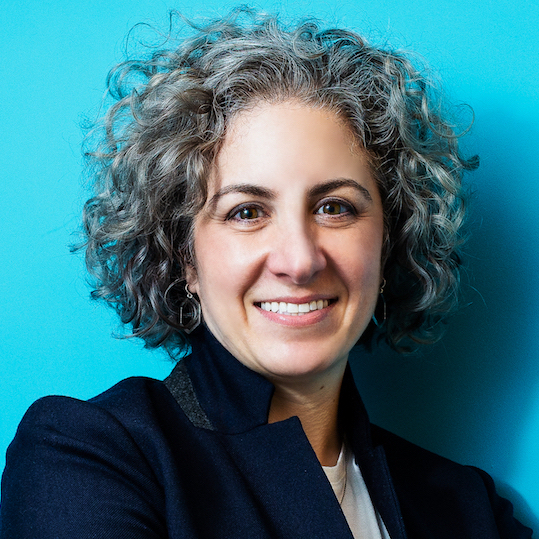
Episode 48 · September 4, 2022
The perks (and risks) of being an overachiever, with Lisa Hurwitz
With Lisa Hurwitz
Listen and subscribe
In this episode
Lisa Hurwitz was my boss in the agency world, and she was an executive vice president at 28. This is a conversation about what that cost her. We were both raised on the same script, good grades into a good college into a good job, and neither of us thought to question it for about twenty years. She talks about the run she came back from covered in hives, and about the lesson that took her longest to learn, which is that slowing down made her better at this.
What you'll take away
- She was an executive vice president at 28, one of the youngest at the agency. Almost always the only woman in the room, too. She says she didn't stop running at that pace until she was 40.
- Stress equaled success, and she believed it for twelve years. The more pressure on her, the more successful she assumed she was becoming. Nobody's counting what the late nights and the weekends add up to while it's happening.
- She'd never failed, and it isn't the flex it sounds like. When you never fail you never stop to ask what it's doing to you, and you stop trying anything you might be bad at. I've quit all the best instruments.
- Her body called it before she did. She went out for a run, which had always been how she cleared her head, and came back covered in hives. Mine was my hair falling out in the pandemic.
- The lesson that took her longest: slowing down made her more successful. She turned down C-suite roles and gave herself the time instead, and she says the thing she's proudest of now would never have happened otherwise.
In this conversation
The full transcript, in sections. Open any one to read it.
The people who taught me, and not only the books
0:02
Yeah, I had never really failed. I know that sounds crazy, but I had never really failed. And so when you don't fail, you just keep going, because you think that's the way it should be, and you don't question, or I didn't question. What is this doing to me?
Personally. Welcome to the smart gets paid podcast with me. Leah Neaderthal, I help women land higher paying clients in their independent consulting businesses, but I've never been a salesperson. My background is in corporate marketing, and when I started my first consulting business, I learned pretty quickly that it's about 1000 times harder to sell your own stuff than it is to sell someone else's so I taught myself how to do it, and I created the sales approach that I now share with my clients so they can feel more comfortable in the sales process. Get more of the right clients and get paid way more for every client contract. So whether your client contracts are $5,000 $100,000 or more, if you want to work with more of the clients you love, do more of the work you love and get paid more than you ever thought you could, then you're in the right place. Let's do it together. Thanks for tuning in, and don't forget to rate, review and share.
Hey there, Leah here, and thanks for tuning into this episode. I hope wherever you are, wherever you're listening to this, I hope you're having a great week, making some good progress on your business, and, of course, taking some time for yourself. So if you've ever sat in on a webinar of mine, or read anything of mine, or just been listening to this podcast, you've probably heard me say that when I was teaching myself how to sell I read 65 books, right? And I used what I was learning with my own clients, you know, anything that felt salesy, I just ditched, and anything that felt good, I used and sort of wove together with the other things that I was learning to create what became my selling approach and the approach I teach my students. And I often cite those books, you know, what I learned in them as the foundation for my selling approach. You heard me do that in the episode with Dr Deborah Tannen, whose concept about one up one down really changed the way I felt about myself in the sales process. But recently, I've also been kind of reflecting on another source of knowledge that I came across along the way, that might have been maybe at the time, a little quieter in its influence, but which really shaped me and taught me through our experiences together. And that is, you know, the people in my life. And so I've started reaching out to those people who have really influenced me and shaped me, and I've been inviting them here to the podcast so that I can share with them how they shaped me and how what I learned from them is showing up in my business today. So I actually reached out to one of my old bosses from the agency world. So from 2005 to 2009 I worked at a below the line ad agency called Arc worldwide, which, right after I got there, or kind of sometime around then, was purchased by Leo Burnett. So I went from sort of working for arc worldwide to working at Leo Burnett. I worked in new business, and we were responsible for pursuing and pitching new client opportunities for the agency. You know, we would assemble a team of strategists and creatives and media people and account people from across the agency and across the network, and we would work like crazy for six to eight weeks or so to prepare for a pitch. And the pitches would be these, like huge events, total dog and pony shows, where we would present full blown strategies and multiple creative campaigns. I mean, it was, it was insane, and it was also really intense. I mean, if you've ever worked in the ad agency world and you've been a part of a new business pitch, you know how crazy it is, right? That was my life all the time, and in that role, my boss was a woman named Lisa Hurwitz, and like, I thought Lisa was the shit, well, actually she was the shit. I don't think I realized it at the time, but she was the youngest VP in the company's history, and she was in the room leading the entire business development strategy for the flagship office of a multinational advertising agency, and she actually wasn't that much older than me. Coincidentally, we'd actually gone to the same college, and so I knew exactly how old she was, like we were there at the same time, she was a few years older than me. And so the fact that she was so accomplished, I mean, I was just in awe, and I learned so much from her. So when I thought about reconnecting with the people who shaped me, and, you know, made me who I am today, I thought of Lisa, and I left in 2009 and which is like, feels like ages ago, and since then, she's gone on to have this huge career in consumer packaged goods. And she started a cannabis beverage, which we're going to talk about in our conversation. But I reached out to ask her if she'd be on the podcast, and she wrote back the next day, saying, you know, of course, she'd be happy to come on and chat. And so that's the conversation that you're going to hear today, and it's really interesting, because what I thought we were going to talk about was, like what we had learned in the agency world and in new business, and what we did with that experience, and you know how that has shaped our careers and yada yada yada, right? But what we actually ended up talking about was something a lot more interesting, which is when you've been raised to be super smart, well educated, work hard and achieve success and just keep like driving, driving, driving, what happens? And we talked about the pressure we felt about being raised to succeed, and the pressure we put on ourselves, and how that affected us both in some really serious ways. And it reminds me of the conversations I have with my clients, who nearly all of them are Type A over achievers and perfectionists who work really hard and you're so hard on yourself, like, of course, we're all, all of us, so hard on ourselves. And at the moment when they reach out to me, all that drive has gotten them to a certain place, but it might not be serving them anymore, because it's like you're raised by people who, of course, love you and want the best for you, and you're imbued where you're like raised with a sense of wanting to achieve but it can have some serious effects, which you'll hear Lisa talk about. And a few episodes ago, I talked with the author, Rachel Simmons, whose most recent book called The Curse of the good girl is about this exact same thing, about the pressure that society puts on girls growing up, the pressure that people in our lives put on us, and how it affects girls in the moment and then adults later on. So this is a really timely and very real conversation, because that's kind of who we all are. All of us type A over achievers. We are what Rachel calls the good girls, and so part of us as business owners, and I've talked about this in a few episodes, but part of this is needing to start paying attention to how that's played out in our lives, and it's currently playing out in our businesses. So if you are a self proclaimed perfectionist, and I know many of you listening to this podcast, are you will really see yourself in this episode. So listen in on my conversation with my old boss, Lisa Hurwitz, after this, and at the end, I'll come back and share a lesson you can apply to your business.
Do you have an actual sales process? I'm talking about not a general sense of what you should be doing, but a real process where you know exactly what step comes next, who to follow up with, and when, and you can see at a glance where every potential client stands, if the answer is no, or if yours feels clunky, or you're reinventing the wheel, every single time I made something for you. It's called roadmap to clients. It's a free 20 minute video course, and in it, you'll map out your customized sales process step by step, from the very first contact with a potential client all the way to a signed proposal. It's the same foundational process we use with every Academy member, and it's completely free. Go to smart gets paid.com/roadmap to get started. Lisa, thank you so much for being here. It's so fun to see you again and be back in touch.
It's my pleasure. This is so exciting for me. I remember our time together in the agency days so fondly, and I'm just so excited to see how your career has taken off. And this is such a treat.
I love it. Yeah, and I remember you as such a, like, a force, I mean, as, like, I just, I when we work together, I was just like, in awe. And so it's so fun to, like, come back and, you know, be talking to you and be able to share a little bit of your perspective with with my folks, with my listeners. Well, I
appreciate that. I felt the same way about about working with you, and I knew, you know that all those years together, you know, you would go on to do awesome things. So this is, like, a full circle moment for me, and it's just, it's awesome to be here.
Oh my god, that is so nice, you know, like, because also, this is, I don't know, you know, certain people, you it's like, you'll always sound like, be my boss right in on some level. So to be here to like, hear you say that is just like, I don't know, I still I feel like I'm back in. What is it like the late the late fonts, right?
Yeah. I mean, I don't feel like we're that old, but maybe we are right. We both have kids, like, we've gone through a lot, but, yeah, I mean, it was probably around 2005 and it's 2022 so there you go.
Well, so in the years that have followed, I feel like I've sort of stayed loosely connected to your career, and it's taken some really cool turns just bring me up to speed, you know, walk me through those years and and what are you up to now?
An EVP at 28, and everything after
10:00
Yeah, so you and I worked together. Gosh, it was definitely 2005 to 2008 Leo Burnett. Year I was running new business, I was getting married, I was moving from the East Coast to Chicago. It was insanity, right? I think I, at the time, was one of the youngest executive vice presidents at Leo Burnett. So I just felt like this enormous pressure at 28 years old. And, you know, I did the agency thing for a long time. For almost 15 years, I went on to run the PNG business at Leo Burnett, with the arc side as well. And then went ahead and went into medium, which I quickly realized, after about a, you know, a year, year and a half, that the media agency space was very different than creative and I wanted to go back into a role that was more kind of creatively driven and brand oriented, but I felt like I had to keep growing my career, right? I didn't want to go just back into the agency side again and manage a big piece of business. So I went to the client side, and I became a global marketing VP at Kimberly Clark. I'd spent a lot of years working with Procter and Gamble, which I can talk to you more about. They were kind of like a mini MBA for me, which was pretty amazing. And then I went in house to Kimberly Clark, and spent three years there, traveling all over the world, getting a really fascinating kind of global perspective. And then I got sick, and we can talk about that kind of turning point in my career. And that drove me on a personal and then a professional level into cannabis, which is kind of consumer packaged goods category, kind of a retail category, definitely an emerging category, incredibly dynamic. And I spent two years at a big as the Chief Marketing Officer of a big multi state cannabis operator out of Chicago. It would the business was sold in the summer of 2020 and then I've been an entrepreneur since doing a bunch of different things. Most recently, I, starting in October, became the president of happy, which is a new cannabis infused beverage company out of Michigan. So the cannabis infused beverage space is absolutely exploding happy. One of the things I love about it is it's really aimed towards new consumers that like can a curious and women in particular. And so it's kind of a really special product for me, and a special brand in that way. So it's been a crazy 15 year ride, I would say,
yeah, absolutely. I mean, doing the hard charging CPG route and then the cannabis route. And now, you know how at the helm of this, of this new brand, I think that's that's amazing. And I want to talk about, you know, the things that you kind of picked up along the way. And now I didn't realize, like, I knew, you and I are not too far apart in age, but I didn't realize that you were in a up at 28 which, like, blows my mind. What was that like to sort of be in the rooms that that you were in at that time? I mean, we would spend hours in these, like, pitch meetings with, you know, the brainstorming or whatever. What was that like for you?
Stress equals success
12:56
Yeah, it's a great question. It's funny, because I was sort of always that, like, classic overachiever. I I thought that achieving meant, you know, sort of financial freedom. And I also thought, like, the more stress I had on me, the more successful I was going to be. Like, stress equaled success. Was sort of like an just a no brainer for me. That's how I kind of had grown my life. So I went into this and felt like, wow, I've got this big opportunity at 28 I'm leading new business for a global agency. And you know, I was really, to be honest with you, I was stressed and anxious like almost all the time, because I thought, hey, I'm only 28 I'm the youngest person in the room. And the other dynamic was I was almost always the only female there were a couple of very senior female executives at Leo Burnett, one I'll talk about who I really looked up to was Catherine Guthrie, who ran the P and G business. But there were very few mentors for me, and so I felt like the little sister, often to a lot of people in the room, and that forced me to, like, take on this sort of crazy drive that, frankly, Leah, I don't think I stopped until I was 40. So for 12 years, it was like this. And I think a lot of women are the same way. It's like you see that if you achieve you, especially at a young age, you know, you can lead to success. And you don't realize the toll it takes along the way, the little stresses accumulate, right? The late night hours, the, you know, the con, the weekends. I mean, you know, new business in the agency world is probably the most stressful job in the half, right? You're pitching, you're up against deadlines. You're working with multiple different teams of people, the creatives and the strategists and the producers, and so I just thought that's what life was supposed to be like, and that's how a job was supposed to go. You were supposed to be burned out. And I would say I loved it, but at the same time, I think it took a huge toll on me. And frankly, that job at 28 set me on a 12 year trajectory of just grinding until I turned
Calm on the surface
14:57
about 40. Yeah, well, and I always remember. One thing that I was so impressed by with you is like, you always seemed very like, cool and calm and serious, right? And like, you know, up to the task at hand, but you really had it together. And you might have been like, you know, like a duck, like, you know, under the surface your legs are like, going like crazy, but above the surface look very steady, but I think what I didn't know at the time, or realize at the time, was what was going on, how stressed you really were. And you know what I've come to find out in my whole you know, everybody knows, like, I'm a personal development junkie, but if you sort of tamp down stress, it will, if you sort of push it down, it will find other ways to pop out 100%
and, you know, I was always, I was a bit of an anxious kid. I always sort of had a little bit of anxiety, but you're 100% right, like I could, sort of, I learned over time. And I think part of it was honestly, you know, women get, and I don't want to stereotype women in business, but you can't be that emotional when you're the only one in the room, you know, both being really young and being female, like I was very, very conscious all the time, of like, how I appeared to other people and appearing calm. And then I would have, like, a breakdown at home. Later, I would just, you know, I would do all these things to try to overcompensate for the anxiety I felt. And then, of course, when I had kids a few years later, it just sort of snowballed, because then you have no time for yourself, as, you know, as a mother of young kids, and suddenly you're like, okay, all these, you know, like, I could go for a run, or I could do all these things, and you just don't have as much time to sort of manage stress. And you know what I learned, and honestly, what led me into cannabis, and we can talk about that in a few minutes, is that stress, like comes out in your body in weird ways, like you can't avoid it, like you can't. And when it's cumulative over so many years, you know, it, it just has its way. It's like a little genie in a bottle, right? Or like a bottle of, you know, Coca Cola. You take the lid off after shaking it, and it just, like, explodes everywhere. And so that's what happened to me. But it took a long time. I mean, you know, and don't get me wrong, like, I loved the thrill of new business. I love the thrill of pitching, of the agency world. You know, that job taught me, and I think this is really relevant to your, you know, audience here, how to sell, how to story tell, right? Like, I learned that, and I'm grateful for it. At the age of 28 right? I learned how to put a story together, and it served me very well, you know, as I built brands over the years, but also as I've, like, built my own story and and how to put my own story together. And I think, you know, telling a story to new perspective clients, and selling to new prospective clients, as I know you're so familiar with now, and maybe that's why you went in one direction, you know, from that experience, and we were linked in that and then I kind of went in a different direction. But I think there's nuggets of our experience together that feels, you know, very genuine in sort of that storytelling, selling, pitching space, which is really cool.
Yeah, well, it's so funny because I work with a lot of women who are like, I don't know how to pitch myself. Or I get on the phone and I pitch. And what's really ironic coming from new business where we did, like, literally pitch, and we had so many like, you know, the whole dog and pony show and all of that, it was a whole production to the the way that I work with women now is, I actually say you don't have to pitch because they come in a lot of and I work with a lot of women who have worked in agencies, and they assume that, like, they need to sort of present at someone and present their value or whatever. And I think that there are things that you can take from pitching right, like, how do you make something matter to the person on the other side? How do you tell a story? How do you keep people's attention? How do you demonstrate, you know, help them, like, fall in love with their future. But you know, so all of those are things I like, brought from new business or, you know, picked up and carried along with me, but teaching it now in a very different way, where you can use it in a conversation, and it doesn't have to be this like I am on stage pitching at you. It's more like I am selling with you instead of instead of at you. And that was really valuable experience from that time.
I love that insight, and I think it's very interesting, because when I made the move to the client side, from the agency side, I was in a global role, and I was in sort of this, like Central group. And so you're still pitching to a degree, but you're all on the same team. But I was pitching other groups within Kimberly Clark on new ideas, and it felt much more like similar to what you're describing, where we were together on that, like we're all at the same company, and we're all, we all have the same goals, right? And so I love that. I think that's a an awesome insight, and I felt definitely somewhat much more of that as I moved on to the on the client side,
Good grades, good college, good job
19:50
yeah, yeah. Well, let's talk about, I want to go back to something that you said around you know, like shaking a bot of stress. And actually, let's go back even further, because I feel like. You touched on a little bit about your upbringing, and you and I grew up in a little bit of a same environment in that, you know, the the ambition and the drive to succeed and drive to learn in service of success, what really entered our I don't know our our mental space at a really young age.
Totally agree. I mean, I grew up in Washington, DC. I'm the oldest of three. I was fortunate enough to go to a really great private school, and it wasn't even like I questioned. It was like, you're supposed to get good grades, you're supposed to get to a great college, then you're supposed to go to a great job, then you're supposed to get married. I mean, you know the drill we all do. And as women, especially, I was the oldest, you know, I'm like, of course, I'm gonna do all that. So by the time I got to this role at Leo Burnett, and at 28 I was like, and I was also, I also got married at 28 so that was, you know, exactly what I was supposed to do, right? And then I had kids around 30, like I was the cookie cutter. And honestly, Leah, I mean, we'll talk more about this, but until I turned 40, I didn't deviate much from that, right? I didn't really realize how inauthentic some of that was to me, like who I really was, until, like, later, and that's been the blessing of my 40s, I think, is, like this kind of gain this perspective, but, yeah, I just, I had never really failed. I know that sounds crazy, but I had never really failed. And so when you don't fail, you just keep going, because you think that's the way it should be, and you're like, you get a little bit of a high. You know, no pun intended. We're talking about cannabis, but you get a little bit of a high off of being successful and getting that next promotion and and you don't question, or I didn't question, what is this doing to me personally, right? Is this good for me personally? I just went, Wow, this is really cool. I this is what I'm supposed to do. I'm supposed to be successful like this, right? And I was getting these accolades, you know, both externally, from my family, from my friends, and I felt like I didn't even question jumping off this trajectory.
I quit all the best instruments
22:10
Yeah, it's and it's really funny. I mean, your your story really maps to my story as well. And it's funny in, in your telling of it, that's like, literally almost how I tell it, like, you know, private school, good grades, like, best college I could get into, get, you know, the best job you can and get the next best job, and, you know, on and on and on. And I think you you learn a couple things. I mean, what you said is just like, you're, you're so raised in that that it becomes just like, this is the norm, this is what I'm supposed to do. You don't really question it, and you also assume that success is linear, right? Like, you just keep going up and up and up, which means that, at least for me, like, any sort of setback really, you know, really hurt. And your point about having never failed, I mean, I know, you know, and it sounds like I'm, I'm being an asshole saying it, but like, hadn't. Like, I really hadn't. And a part of it is, like, self selecting, right? I really, I mean, I sort of learned from an early age not to do things that you don't succeed at. Because, yeah, like, I used to joke that I didn't like playing cards, because, like, in my mind, my Type A overachiever, Mark, like, if I try my best, I should win, right? And gambling is not, gambling is not about that, like that, you know, the house wins or the Deck Wins, or whatever. And so I never, I hated gambling, but like, and I have people like my mother in law asked me one time, she's like, Have you ever played an instrument? And I was like, oh, yeah, I've quit all the best instruments, you know. Like, I quit piano and I quit clarinet, because I think that if you are raised like that and and succeeding is either explicitly or implicitly just, you know, that's something that you are taught to value. You stop testing yourself. You certainly keep pushing yourself, but you don't ever let yourself fail. And if you're afraid of failure, you're going to push yourself really hard.
Learning to surf, and who gets in the water
23:59
It's it's a, it's a fascinating conversation, because I think it affects both your personal life and your professional life, right? Like, I, I didn't take any risks. I mean, I went from agency business. I ran P and G for a while. I loved P and G. I was super comfortable in the package goods space. I went to Kimberly Clark, which is a PNG competitor, you know, in house, like I didn't deviate, and in my personal life the same way, like we lived in Chicago for 15 years. It wasn't until and I have a crazy covid story, as you know, but it has pushed me so far out of my comfort zone, like we're living part time in Nicaragua, I've learned to surf, which is so humbling and scary and terrifying on a million levels. And what I watch, I will tell you this all the time, is the husbands or brothers or fathers get in the water and the women don't down here. It's amazing to me. I'm often, you know, it's funny, I thought of myself in the boardroom. I'd often be the only woman. Down here in the water. I'm often one of 10 in the water, and I'm the only female. Because I think, again, this point you made, and I think women are more conditioned to it than men, just by their upbringing. You know, of let's be risk averse, like, if you're not going to succeed at something, don't try it. If, if you're not going to become a great, amazing surfer, don't get in the water, and I'm like, but how do you know that you're going to be you know? Or, what if surfing brings up all these other amazing things for you, right? Like, what if you just get to clear your head and meditate in the water for an hour? Is that success or is that failure, you know? So I think it's a fascinating conversation, because I certainly felt it. And for you know, at least 15 years ran on a very comfortable track, putting myself in enough positions, career wise, where I knew I could succeed, but they were stretching me enough that I would also see them as success. And it wasn't until I went into cannabis that I was like a Whoa, a big left turn. And same with my life on my personal life, it wasn't until we moved to Nicaragua, and I was, you know, basically in a Spanish speaking country where I had to flex my muscles in Spanish, and I everybody surfed, so I felt like I needed to get in the water. You know, these things that just make you, you know, truly understand that if you take risks, there's just so much exciting stuff out there that you would, you know, you would never know if you don't put yourself in those positions.
Yeah, and I think you're so right, but I but you do have to have this moment of like, something has to shift for you to start to see it, because otherwise, you're just going to keep going as as you go, you know. And I think I had a little bit of that moment when I came out right, because, at least on the personal side, not on the business side, but on the personal side, I was like, Wait a minute. I think the way that the things I've just accepted to be true, like, might not be true, and you start to sort of see things a different way now that didn't really translate to business though, you know, like, I kept charging hard, and you're when you're talking about surfing, it's so funny, because I was thinking back, you know, I had mentioned that I had been to Nicaragua as well, and tried to surf there with, you know, a former partner of mine. And she was like, where you and I are? Like, academic upbringing, right? Like, by the book, you know, I like to, like, read all the instructions before I do it, so I know you know how to do it, right? And she was very she had a lot more grit, you know? She was like, just make it up as you go along. And I remember specifically about surfing, we had one of our biggest fights, because I was like, how do you surf? And she used to be a surf instructor, and she was like, well, just do it. Just get on the board, just do it. And I was like, no, no, but you have to tell me how to do it, so then I know how to do it right. And and we ended up having this, like, blowout, because it was such a a clash of two approaches, right, like two world views, like, I need to know how to do it right so I can do it perfectly, versus, like, I'm just going to make it up as I go along, and the making up, it up as I go along, is something I've really had to learn. I mean, really in the last, like, probably,
A run, and coming back with hives
28:12
probably five years. Yes, you and you and me both. I mean, I feel the same way. And it's actually fascinating, because my husband and my two boys, who are 11 and 13, we all learn to surf at the same time. And my kids, in particular, they're just fearless. Like, to your point, they don't, they don't practice. They don't care, you know, they don't know, oh, this is the perfect pop up technique. And, like, I overthink everything. I'm like, my pop ups, this, my, this, my, this, my husband's constantly, like, you're way overthinking this. Like, this is supposed to be fun, and my kids are much better than we are, and they just get up and do it right, because they don't overthink things. And so it's been this really interesting metaphor for me, you know, because I agonize about every career decision. And, you know, frankly, I wasn't a media person, and I went into a media agency for a year and a half, and it was brutal for me, because I just my brain. It was the first time in my whole career, my brain doesn't really think like that. I'm not about spreadsheets and flighting media. I'm a creatively minded person. And you know, when I went into cannabis in my I don't know if you want to talk about this now, but my my moment, I mean, you talked about coming out, and my moment was I got sick in the spring of 2017 and you know what the real turning point, and my kids remember this like is I went out for a run. Running for me had always sort of been this, like escape. It was like, I can clear my head, I throw on some music, I get to be by myself. And I came back with hives, and I was like, Oh my God. And I knew at that point that I was really run down. I knew that I was exhausted. I had been taking Ambien for the better part of seven years to sleep international flights. I was flying all over the world. My sleep was super screwed up. And I was like, This is it. I've got to go see a doctor. I've got to figure out what's going. On. And it turns out I had an autoimmune condition that was, you know, not extremely serious, but significantly exacerbated by my lifestyle and by stress and by everything I was doing. And so by the summer of 2017 so this was about five years ago, I had to go off ambient, off of every pharmaceutical. I had to change my diet, I had to change my lifestyle, and I was like, freaking out, because this is how I had lived for, you know, 12 to 15 years. I mean, I tried not to miss major milestones for my kids. I tried to be everywhere. I tried to make everybody happy. And, you know, I ended up looking at cannabis as a way to help me go to sleep, because it was medical in the state of Illinois at the time, I got a medical card, I threw myself like, you, and I just described like I researched every cannabinoid, I researched every strain, indica, sativa, like I threw myself into it. And I realized when I started going to these medical dispensaries, they didn't know any more than I did, and this was all going to be like trial and error. And I was floored, because I was like, wait a minute, this is available to people. There's no education out there. It's a plant based alternative to a lot of things, to alcohol, to pharmaceuticals. It's going to be federally legal at some point. You know, five years later, those conversations are obviously still happening. And yet, for women like me, there's zero education. There's at the time, there were no brands of any significance. Like, how is this possible? And so honestly, I, you know, spent a year just as a consumer and a patient in the cannabis category before I even it was on my radar that it could be a career. And in the, you know, end of the summer of 2018 I left to take a Chief Marketing Officer role. And I will tell you, Leah like, and I don't know if you experienced this when you came out and had some other major decisions, but there were the people that looked at me like I was insane. And then there were the ones in my life that were like, This is a fantastic move. You're You're a visionary, you know, you're seeing what's coming. And it was really interesting. It wasn't this, it wasn't always what I expected from people, but there was a lot of people. And I think because, you know, I had always been this, like straight and narrow for so long, and this type a high achieving that not only was I getting off that path to a degree. I mean, I was still becoming a CMO, but to a degree, but I was also going into an illegal drug market, which, for a quote, like, good girl like me was insane. I mean, I didn't even smoke weed growing up like it wasn't what just wasn't in my vernacular, you know, because I didn't want to be that out of control. So to go work in, like, an illegal industry where you can't get a 401, K, and you can't put it on, you know, like a mortgage application, because it's not recognized. I mean, there's so many things about that industry that are just not commonplace. It was really, it was really a turning point for me.
Yeah, I mean, how did you reconcile that with yourself? I mean, I know there are people in your world who was who were like, Are you sure you know this is not what we think of you, but how did you think about it on your own?
Agonizing over the decision
33:12
It's, I mean, you know, typical me, I like, agonized over the decision for a long time. I actually had another job with a CMO role offer with a much, much more kind of normal company, I will say, big, well recognized. And I agonized. I mean, months I agonized. And then finally I said, I think this is my opportunity, you know? I said, I think that, you know, the this is the first time in my career that my personal and professional life had overlapped in such a serendipitous way, like I was a consumer before I even had this opportunity, that if I don't take the risk now, then I don't know when I will, like I don't know how many of these opportunities are going to present themselves, and I just somehow garnered The strength, you know, and my my family was very supportive. My close friends were very supportive. Now they think they all want, now, they all want to get into the category and, you know, but it was difficult, and I feel very much the same way about living part time in Nicaragua. It's been the same for me, you know, I think some people think we're insane. They, I know they think we're insane, like, you don't have access to health care. There's a global pandemic going on, like, pandemic going on, like, but at some point you have, you have to. And I know it sounds cliche, and I know you read a lot of books, and, you know, I read them too, but you just sort of have to trust yourself and and you know, also tune out the noise sometimes, like, you're never going to make everybody happy. You know, everybody is not always going to think what you do is great. But I also, I know that they don't live in my body, they don't walk my shoes, they don't live my life. So at the end of the day, they they don't get to make the decisions I do.
Yeah, I think that, you know, listening to yourself. Self, tuning into your own body, you know, just sort of tuning out the noise. That's also something that I've had to learn, because I just going back to, I think it all sort of stems from how we how we're raised, but when you are this sort of type A overachiever, good girl, good grades, good school, good job, whatever, you sort of look outside for all of these markers of success, right? And like markers of achievement. And you don't have a really highly attuned sense of, Am I happy? How do I feel? How do I feel in my body? Does this feel right to me? And you know, what a gift, I mean, sadly, right? Like to sort of go for a run, come back with hives. I didn't know that wasn't the only thing that happened that just happened to be, like, the, you know, the critical moment. It's weird to sort of see that as a gift that started, starts, like, teaching you a lesson, you know, teaching you to, like, pay attention to that. You know, I shared with you that, like, I in the pandemic, like, I basically, like, my hair started falling out. Like, I'm, you know, type a super stressed out, like, especially in the pandemic, I wanted to, like, solve all the problems for all the people, and, you know, be just as much in control as when we weren't in a pandemic. And, and it really, I, then my hair started falling out. And, side note, this is sort of a widespread side effect of, like, pandemic related stress. But like, I think that, you know, the ways that which we're so, like, prone to this, you know, and, like, almost like, free, yeah, pre programmed for this. And, and it's really sadly, you do often have a moment where you're like, wait a minute, this this is not right. This is not, you know, this is not right for me
anymore, right? And to your point, and we talked about this a little earlier, it's, it's amazing how your body will get to a breaking point and show you it's not right. Right for You. It was your hair falling out for me, it was like breaking out in hives. I mean, I had tons of other symptoms. Like, I was getting sick a lot, getting sinus infections, getting, like, just for someone who's very healthy, right, I'm young. I mean, I was barely 40 at that time, and, you know, I had healthy kids like, this was, this was a crazy Why was this happening to me? And deep down inside, I think I knew, right? I knew that there were other things kind of out there, but it, you know, the other thing that always stuck with me was I never figured out, and you said this before, like, success will come later, I never figured out why everybody waits till they're retired to do what they really want. Like, that concept to me from when I was young, like I couldn't get it. I was like, but if I'm retired and I'm not, you know, I'm 65 or 70, I won't have the health I have now. I won't have the ability to travel or the ability to take risks or do things like it's and so that was always partly in my mind, for many years, I was like, What am I working towards? Like, I always wanted to be a chief marketing officer. I very bad, and I did. I I loved it. It was great. And there were things about it that were wonderful. But I kind of was like, Okay, now what you know? I it feel you know in you and I have talked about sort of a perfect career, and like, what is a perfect career? And I don't, you know, I don't know that working to the pinnacle of your career, C suite level, whatever you're in, and then retiring in your 60s. It just didn't that didn't feel authentic to me. That wasn't the life I wanted. Now, for some people, I think maybe that's great, and that's what they want to do. But this taught me kind of this whole experience over the past five years. And it's funny, because you and I both seem to have a five year time frame here how we've been reevaluating things. You know, it's really taught me that my body will often tell me things my mind won't, because I'll, you know, suppress it, and that I don't have the same view of my career and a success and what's important to me as maybe what others do, this sort of societal path that you and I have talked about and led for a long time. I i very, very clearly now don't feel like I want to retire at 65 and wait till then to do a lot of the things I want to do.
Yeah, definitely. It's really interesting. This is not something we talked about in advance, but I'm curious to know there my my family and I played this game like over Thanksgiving, where we started asking each other questions of this little box. It's called, we're not really strangers. And one of the questions was, what has been the lesson that's been the hardest for you to learn? And I'm curious, you know, in both riding and driving, in this hard charging career, and then, you know, having this experience where you realize it wasn't right and going in this other direction, it was unexpected. But. Has been really fulfilling, like what has been the hardest lesson, but the lesson that's taken you the longest to learn?
The hardest lesson she had to learn
40:08
Yeah, and I think it's an awesome question, I would say it seems counterintuitive, but slowing down working less, taking more time, not even just for myself, which I think is, you know, pretty cliche, but like, just to just in the pause, actually has made me more successful. Like it sounds, again, crazy. I thought, work hard, put the hours in. You know, meet all the right people, get all the right jobs, go to all the right schools like achieve, achieve, achieve. Honestly, I have slowed down tremendously in the past few years, like I have, I have taken a breath. I've moved to a warm, tropical climate. I've given myself the grace to try something as hard as surfing. And in all of that, I've put myself out there in ways that I'm I'm not comfortable with. I started a women's and cannabis executive group when I left my cmo role in the fall of 2020 that has given me more than I could have ever imagined, and so I would never have done it had I not slowed down. I had job offers coming out of the CMO the CMO role, I had several of them, and they, several of them were C suite roles again. And that would have been again. The next logical turning point for me would have been okay. Now you did the Chief Marketing Officer role at a at a multi state cannabis company. You had a great exit. Go take another Chief Marketing Officer role or take a and instead, I honestly, Leah, I gave myself time. I gave I was I gave myself the gift of, like, slowing down, which was so hard for me to do, because every time I would get an opportunity, or recruiter will call, I like, would freak out and be like, I gotta take this. I gotta take this. What if the next one doesn't come up? Like I was so programmed and the gifts I've been given by in that slow time, my my women's executive group, you know, meeting with a ton of different people that allowed me ultimately to land in starting a company with an incredible partner in happy that is, honestly, like, geared towards women. It is, it is a brand I'm passionate about. It's a micro dose beverage where, I think, you know, our vision is really to start, you know, having, bringing women into the cannabis conversation in a way that five years ago, in 2017 when I needed someone to bring me in and help me like that wasn't available. And so I never would have had these doors open, had I not slowed down? And I even now sometimes, like, I feel guilty. Like, okay, I'm gonna stop working when my kids are off at three o'clock and take two hours to go surfing. Like, that's selfish. I think, Oh, I'm being selfish by doing that. I'm not working hard enough. I'm not I should be doing all these other things. But I there's, there's a magic in it, right? I always come back with something that I sometimes I have a freedom of a thought in the water, or sometimes i i Get out on the board and I look back on the coast and I think, Oh my gosh. Like, wow, I didn't think about like, I have a new perspective. And I know that again, it sounds cliche, but by far, the hardest lesson for me has been slowing down and sometimes working less and taking more time to look around doesn't hold you back. It actually propels you forward.
Yeah, yeah. And I love this. I mean, I think it's such an important, such an important lesson, and especially, especially hard for people like you and me, and for people, the women who are listening, because we were, you know, conditioned to believe that, like you said it yourself, success equals stress, like those two things must go hand in hand, and if you're not, and also, you know, another belief that we that's often programmed is like to be successful, you have to work very, very hard. And so if you find yourself even purposely trying to slow down, trying to, you know, take your foot off the brakes. You will, this belief is so ingrained that you will, like, find ways to to fill that time back up with stress or thoughts or overthinking, or, you know, saying, or just like activity, pro, you know, business type activity. It's a very hard it's such a hard habit to break.
Success looks different now
44:25
It is, and I really admire the people that are just able to like to sit with it. And I know, I mean, I'm even too type A to try to meditate, like, I know, again, like it's funny, because meditation is like, such a gift. And I sometimes think that I find other ways, like surfing or taking walks or being in nature. I found other ways. But it all of that, the pause, the stillness, the taking, the just slowing down a little bit, I think, for women like you and I, 100% it's, it's so difficult and that and I didn't believe, I really didn't believe. That it would be, I would be able to be successful doing it that way. I didn't. I thought, you know, and in many ways, success, to me, looks different than it did. It certainly does than it did at 28 I mean, I have a president's title. I love running happy. But there's only, you know, it's a startup, there's, there's six, there's six of us. It's hard, it's it's a crazy category, but I feel it's a different kind of success. And I feel also incredibly passionate about, you know, I've always felt passionate about helping other women, and this is a great sweet spot. And then founding my women's and cannabis group, my Wink group, has been an amazing, amazing success. I mean, we have over 25 members now, but it's funny because I I don't even it's not classic success. I don't have the title, I don't have the so I don't always reflect on it. And even now that we're talking about it, maybe the first time I've reflected on it as being successful. It's just your view of success changes when you slow down a little bit. And I think that's another important piece to all of this, right? You? You know, for people like us, it isn't just the title and the salary and the recognition, the external recognition, it's that internal piece that I think you have to grow into.
Absolutely, absolutely. Well, talk to me about the brand, the beverage that you're working on now. I mean, I want to hear about it, but I also want to hear how you maybe are approaching this a bit differently than you might have in the past, with this newfound mindset.
Yeah, I love it. So happy. Hjppi is a microdose cannabis beverage, and one of the things that I was really passionate about. You'll find this funny. When I first went into a dispensary after I hadn't had gone off Ambien, was pretty desperate to be sleeping regularly. You know, many of they call them bud tenders in the dispensaries, the bud tenders will often they have very high tolerances. I never smoked weed. I was just trying to sleep right? So I didn't want something super strong. And they gave me, for those of your listeners that know, they gave me a an RSO, a Rick Simpson oil, which is a concentrate which is like the strongest, one of the strongest forms of cannabis. And it's often for, you know, cancer patients, medical patients. And I didn't get up for two days, like I couldn't get out of bed. I was so, which was kind of funny looking back on it. And I tell this story sometimes, but on the other hand, I was a little terrifying because, and, you know, luckily, I kept going and believed in it, knew I would get to a place, but So, so this is designed as, like a entry point. It's a two and a half milligram. It's a sparkling water, all natural, it's vegan. It's really super low in calories. So, you know, I think one of the things I've seen, and I know there's been a lot of press on this during the pandemic, is, you know, women are turning to alcohol to, like, numb, a lot of the feelings like we've been talking about, right and or prescription drugs, but certainly alcohol, I think, is a comfort and it's difficult. I think, you know, people are trying to drink less now they're recognizing this is maybe not great from a health standpoint. Alcohol made me more anxious. It disrupted my sleep more, you know. So for me, alcohol is is tricky and happy is amazing, because I get to still be social and be in those occasions and have a drink, and it's super you know, but I don't have that hangover the next day. It doesn't disrupt my sleep. It actually helps my sleep. So, you know, I think it's a it's been an awesome product from that standpoint. And then in terms of, you know, how I'm approaching it differently as a brand, I mean, one thing I will say is, like, we're testing and learning a lot. I have a great business partner. He's incredibly supportive of brands and marketing. And because I'm not working like big corporate companies, where there's benchmarks, like, we're just trying stuff, and I'm giving myself, like, the leeway and the grace to be like, this is new. Cannabis is new. It's not even federally legal, right? We're only on the market in one state, which is Michigan, which is a very big cannabis market. And, you know, I hope soon to be in more states like Massachusetts and Illinois. We're working on some of that, but just trying new things and not being afraid to fail. And I think those are the lessons we talked about. Like, in my personal life, I didn't fail when I went into cannabis. I didn't fail when I left the CMO role. Like, why would I think I would fail with happy, right? But I still think it. Trust me, this is like me still, you know, it's still in the back of my mind, but giving myself the the grace and also to put things out there and to try new things and to see what really breaks through. And I also love, I love that it, it is, you know, for women, I love that piece of it. It It feels very mission driven for me, and I feel like my personal story, I think, connects with a lot of women out there who maybe have taken ambient or on antidepressants or on, you know, anti anxiety medication, and really or drink a lot of alcohol, and really just want to turn to something else that's a little sort of less disruptive for their lives. So. I think not being as afraid to fail is a big piece of what I've carried into the happy and I think we're going to succeed. I'm really excited about it.
Yeah, oh, I'm sure. Well, where can people learn about you, about happy? Point us in the right direction here?
Yeah, absolutely. So definitely hit me up on LinkedIn. My mantra on there is from toilet paper to rolling papers. So there you go. I got a lot of feedback on that one. Just Lisa Hurwitz on LinkedIn. You'll see me there and then happy please. If any of your listeners are in Michigan, it's happy hour. Drink happy with an eye.com and we are in as of today, almost 50 dispensaries in the state of Michigan and climbing. So we'd love to hear your feedback, your thoughts on the product, what you'd like to see next from us as a brand, and we're also at happy hour drink again, happy with an i, H, A, P, P, I on Instagram as well. So send us a note. We'd love to hear from you try the product, and yeah, thanks for having me. Leah, I've loved this chat. It's it's been awesome. Me too.
My take: unlearning takes a long time
51:02
Thanks so much for joining me. All right, so there is so much we could talk about here, but I want to just kind of zoom out a bit and acknowledge that when you're raised with these expectations that a lot of us were, and you know, we carry those expectations of working hard achieving success. You know, all of us, we carry them with us into our careers and into our businesses. I just want to acknowledge how hard it is for us to deprogram. And I guess, reprogram this programming like how hard it is to unlearn the lessons that we learned super early in our lives from people who absolutely meant well and wanted the best for us and probably had no idea that, like encouraging us to get good grades would result in us, you know, down the line and like never being able to Try something new, right? So if you're like a lot of the women, listening and trying to practice a better way of doing things that serves you now as a business owner, maybe you're trying to be less of a perfectionist, or maybe you're trying to practice just taking the first step to do something before you see all the steps. Or maybe you're trying to practice taking a risk, or whatever you're working on, getting it to good enough and pressing publish, right? If you're trying to do all those things, or a version of those things for you and your business, and you're finding that the process is really frustrating. You're finding that, like this type of growth is really frustrating. Just have compassion for yourself. You learned this stuff a long time ago, you've been practicing it in one way or another, and the lessons you learned a long time ago, you've been doing them, using them for years, and they sort of calcified over the years. And so sadly, we can't just, like, undo it because we read a book or saw like an inspirational meme on social media, right? It takes lots of practice, but the work is worth it, because slowly but surely, we'll get closer to where we want to be. Hey, everything we're talking about in this episode is part of the system women like you are learning in the academy. In the Academy, we help women consultants install the two systems. Every B to B consultant needs a marketing system to consistently attract the right clients and a sales system to lead a sales process to a yes and get paid more for every contract. So even if you've only gotten clients through referrals or word of mouth, in the academy, you'll learn how to attract and sign clients outside your network, how to lead a sales process with confidence, and how to get paid for your value, not your time. And there's no cold calling or cold emailing involved, no changing your services or making a course, and you won't use any pushy sales tactics. That's just not our vibe. So if you like what you've heard here, the academy may be your right next step to learn how you can get these two systems in your consulting business and make progress faster and with fewer roadblocks. Head to smart gets paid.com/academy and apply, and we can chat about next steps. All right. See you over there. You Transcribed by https://otter.ai
Go deeper in the Playbook
Two ways I can help you
When you're ready to break through to the next revenue level in your consulting business, here are two ways I can help you.
1Join The Academy
For women consultants who've been in business 2+ years and are making $120k+. Build the two systems every consulting business needs to get more of the right clients, get paid more, and build a sustainable business:
- A marketing system to bring the right clients to you and fill your pipeline
- A sales system to help clients say yes and get you paid more
If you're ready to make your business and revenue more stable, secure, and sustainable, visit the Academy page to learn more and apply.
2Get Roadmap to Clients
Map out a simple sales process for your consulting business in less than an hour. Take potential clients smoothly from first contact to a signed proposal, so you can stop reinventing the wheel with every opportunity.
Get the free video course.