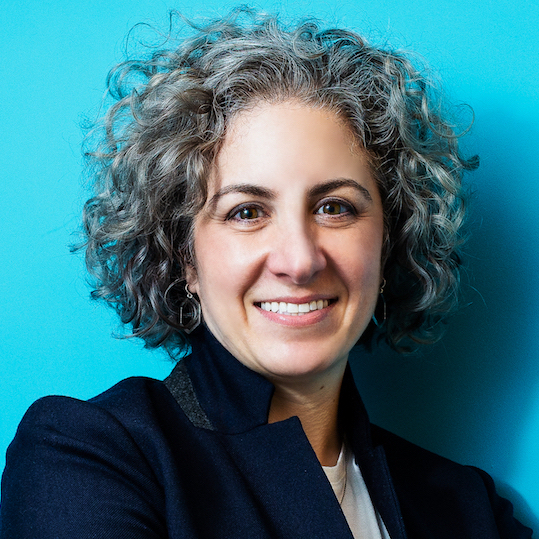
Episode 34 · February 20, 2022
SOLO: Two big moves for mental health
Listen and subscribe
In this episode
Two moves, one of them physical and one of them on my phone. We spent a year out of the city that was supposed to be a summer, and the isolation got to our mental health badly enough that coming back to Brooklyn stopped being something we wanted and became something we needed. The second move is that I took Facebook and Instagram off my phone about eighteen months ago, on a specific weekend I can still name, and I want to tell you what changed. I'm not telling you to do either one. I'm telling you what happened when I did.
What you'll take away
- A news feed is the digital expression of other people's emotions. You skim it and you take a micro dose of every one of them. That's how we're wired, and there's no reading past it.
- My mood is steady now, and I could never have predicted that. Before this I'd have said that's just how a day goes. I had no idea what was moving it up and down.
- Willpower wasn't going to do it, so I deleted the apps. Moving them to a folder was never going to work, and while they sat on my phone they were still taking data off it.
- This isn't the first thing I've quit cold. Women's magazines in my twenties, once I worked out the business model was to make me feel bad so I'd buy the fix. Notifications, on everything, forever.
- I'd thought hard about where my money goes. I hadn't thought about where my data goes. We host the Academy community on Slack for that reason, instead of handing my clients to a free tool that makes money on them.
In this conversation
The full transcript, in sections. Open any one to read it.
A summer on Long Island that turned into a year
0:00
If you're listening to the smart gets paid podcast with me. Leah Neaderthal, I help women land higher paying clients in their B2B consulting and coaching businesses. But I've never been a salesperson. My background is in corporate marketing, and when I started my first consulting business, I learned pretty quickly that it's about 1000 times harder to sell your own stuff than it is to sell someone else's so I taught myself how to do it, and I created a sales approach that feels comfortable, makes you feel confident, and that works consistently. And now I teach women how to land higher paying clients in their B2B consulting and coaching businesses. So whether your client contracts are $2,000 or $200,000 if you want to work with more of the clients you love, do more of the work you love, and get paid more than you ever imagined, then you're in the right place. Let's do it together. Welcome to Smart gets paid. Hey everyone, thanks for tuning in to this week's episode. I hope that wherever you are, you're having a great week. You are making some great progress in your business, and, you know, also taking some time for yourself. So it's been a crazy couple of weeks over here. A couple weeks ago, in one week, my wife and I found a new apartment in Brooklyn, signed a lease and moved in, like one week. It was nuts, but if you are familiar with the New York real estate and rental market, then you know how crazy that is, even in like, normal times. And right now, in the middle of winter, in a pandemic, it's definitely not normal times, even for the rental market. I mean, there's like, nothing on the market, and so when we found something that fit what we were looking for, we jumped on it, and that's how we moved in, like, one week. And so now we're back living in our old neighborhood in Brooklyn, just about a block and a half from where we used to live, and right near our favorite part of all of Brooklyn, which is this big park called Prospect Park. It's like the central park of Brooklyn. It has like this three and a quarter mile running loop, biking loop, totally car free, like when we lived here before, we were in the park almost every day. And now we get to be there again, like all the time. So if you've been following along for a little bit, you know that back in July of this past year, my wife and I moved out of Brooklyn and into a house that we had been renovating on Long Island in an area called the North Fork, which is like two and a half hours outside of the city. It's a pretty rural area. There's like, lots of farms, lots of vineyards, lots of farm stands, lots it's like, very, very rural. And if you're listening to this, you might be familiar with the Hamptons, right? You might have heard of that before. This sort of upscale, glamorous area. Well, this is not the Hamptons. This is like across the bay from the Hamptons, and it's much more of like a small town feel, just a lot more quaint. And we moved out there for two reasons. First, we had been going back and forth, like almost every weekend while we were renovating this house, and it was kind of at the point where it was just a lot to manage, you know. And the second thing that was going on around that time was that our landlord decided to sell the condo that we had been renting from them. So we were like, well, let's just move out to the house. We'll finish the renovation. We'll live there for a couple months, and then we'll move back to Brooklyn, you know, be there for like, Max, two months, right? So we packed up in like a weekend, which was also such a whirlwind, we packed up a third of our stuff, roughly to, you know, bring with us for a couple months, you know, like clothes and stuff for Noah, my son, and pantry items and stuff like that. And the other two thirds we put into storage for a couple months, you know. So that was like, all of our furniture, our kitchen stuff, like everything else. Well, we ended up living in this house on the North Fork for a lot longer than we expected. We were there for about eight months. It was a combination of the renovation and the tight real estate market in the city, and we just ended up being there for longer, which led to some, I guess, interesting outcomes, some of them, I guess, some good, some bad. On the good side, you know, we got a chance to slow down a little bit, catch our breath. We discovered that the little town libraries in this area had these morning play groups like almost every morning. So every morning, he and the nanny would go and he could, like, socialize, be around other kids, stuff like that. We also lived near farms, so he would go to these farms, like every day, and see chickens and goats and a peacock, which he loved to tell us about. And his nanny would take him on these long walks to see the farms, visit the animals like, you know, what city kid gets to see chickens every day, right? But there were also some negatives we discovered from living out there for longer than we had expected. Some of them were funny, like the fact that in the fall, we realized that all of our winter clothing had gone into storage. So like. All of our sweaters,
What the quiet did to us, and the thing I posted about
5:01
all of our boots, winter jacket, everything, you know, because we'd only planned to be out there for the summer. So, you know, Winter came and we had, like nothing, which was that was kind of hilarious. So there was some funny stuff like that, but some of it turned out to not be so funny, because once the summer crowds left, we were out there, what felt like by ourselves, and we felt really isolated. And being so isolated out there for so long, it really started to affect our mental health, because after so many people went back into the city for the school year, it just got quiet. Like really, really quiet. And there's very little to do, you know, like, almost nothing to do, and we didn't really know anyone, and we were far from our friends. We didn't really see or hang out with other people, you know, we had to, like, force ourselves to go to the grocery store to, you know, have somewhere to go, and we weren't totally sure how much to like invest out there, because after about two months, we felt like we could go back at any moment, and we just ended up feeling really isolated, okay? And it's also like a kind of a Trumpy area, so there's that, and it's like, I can't really even describe to you what that type of isolation feels like, because it's different than what I think your typical suburban life might feel like, you know, where there's, like, people around and you see folks, and you see your neighbors and all that stuff. Like, I grew up that way in Nashville, Tennessee, but this is really rural, and even though it's like popping in the summer, in the winter, it's it's pretty dead. And when you're isolated like that, and you're used to more of a city life, you start to feel a little dead inside. And I've lived in cities ever since I was 18. I grew up in Nashville, but after that, I lived in Philadelphia, that's where I went to college. Then I lived in Chicago, San Francisco, DC, and now New York. You know, I'm pretty much hitting all the major metros, but for a long time in my life, I've just been a city girl, and I am an introvert, you know, hardcore, but, like, even for an introverted person like me, it was just way too much quiet time. And towards the end, I started talking to some other moms in the play groups who had also moved out from the city with their kids, and they all felt the same way. You know, one mom was like, We are dying over here. And that kind of made me feel like, All right, we're not the only ones, so no knock to our town out there and the people who live there, but the change for us from city life to rural life. It just really affected our mental health. So moving back to Brooklyn wasn't just something that we wanted to do because, you know, we love the city and we love the park, and we missed our old hangouts or whatever, it became something that we needed to do for our mental health, because we missed seeing people. We missed seeing our friends, even just like seeing people on the sidewalk and feeling connected to a vibrant community, and, you know, getting energy from the city and the people who live there. So now we are back. We're, I'd say, like 80% unpacked, but, you know, we'll get there. The last 20% takes, like, a year, but even in these first couple weeks back, I can feel a total shift in my mental state. I'm happier, I feel more motivated, I feel more productive. I feel connected to this community. I'm spending more time in the park. I mean, we live really close to the park. We're there like every day. My wife is happier. My son is in heaven because his favorite things ever are excavators and bulldozers and dump trucks and all that stuff, and he sees a ton of those around here, and we're like a block away from three different playgrounds, so we're all feeling more just content. And I was thinking about this move and the things that we do for our mental health, because I posted something recently about one thing I did for my mental health that really helped me, and I wanted to share it with you. And what I posted was that a little while ago, I guess, like a year and a half ago now, I deleted Facebook and Instagram from my phone. So here I just wanted to share a little bit about why I did it and the changes I've felt since then, not to convince you of anything, but rather to just offer one thing I've done, and some of those changes were, you know, expected, but some changes were totally unexpected and really interesting to watch. So like a lot of people, and maybe like you, I've had a long standing love hate relationship with Facebook and Instagram to some degree. I mean, don't get me wrong, I am the child of the internet. My dad was super techy, and I was the first person I knew who had an email account. We had a service called prodigy, if anybody remembers that, and that was actually the service that came before AOL. And like, I was on forums and then Friendster, and then MySpace and Facebook and like, you know, all the things, and I've always been a big believer in the power of social media to bring people together, and all the benefits, all the good benefits that it can bring about. But that
The weekend I deleted them
9:53
optimism that I've always felt about the power of social media for good, it feels like from a different time, because we've all. Seen Facebook become this behemoth that uses data in shady ways and fosters the spread of misinformation and has become this like, really politically divisive tool all the while, you know, making money hand over fist from all of those things. And it's clear that while social media can be used for good, to me, Facebook as a social media platform is no longer doing good, and after a while, it didn't make me feel good to be on it. I mean, okay, so it did, to some extent, right? Like, it's always nice to see what people are doing and hear good news and who had a baby and all that stuff, right? But after the 2016 election and the following few years, I knew that spending time on Facebook was not good for my mental health, especially through the Trump years and the way that political discourse went, and the news dumpster fire and all of that like I just found that spending time on Facebook would really affect me. And over time, the highs became less high. And the lows, you know, like when I would read something that made me upset or angry at the world or whatever, the lows just became lower. And after a while, I just sort of wished I could get off it. And I know I'm not alone, like I've talked to so many women who are like, I wish I could get off Facebook. But, you know, something fill in the blank, right? Something keeps them on, and that's how it's been for me too. You know, I was like, I wish I could get off this or use this less, but I never did. And then I remember, it was a weekend in the fall of 2020, it was actually the weekend of Rosh Hashanah, which is the Jewish New Year. And my wife and I were out at my in laws house, and her sister and her brother were there, and we were making this dinner for Rosh Hashanah, because even though my wife's family isn't Jewish, they're like, super into celebrating the holidays and supporting Jewish stuff. It's great. So we're making this dinner for Rosh Hashanah, and we're having a great time in the kitchen, you know, like joking about whatever as we're all cooking together. And then my brother in law comes up from the garage into the kitchen and looks at us and goes, Oh, you haven't heard and we were like, no, what, like, what? And he goes, Ruth Bader Ginsburg died, and it just felt like the air sort of left the room. You know, it was just this flurry of emotions that I felt, and I know that we all felt as shock quickly turned to panic and fear of what that meant for our country. Because, you know, it already felt like democracy was holding on by a thread, and now with RBG not there to hold it together, it felt like it's just gone, and in the hours that followed her death, I went, you know, where everyone goes to experience a collective tragedy, which is Facebook. And I think we all had this like collective morning experience, right? At least all the people in my universe did. And then it was maybe 24 hours later, or 48 hours later. I can't remember exactly, but remember when Mitt Romney came out and said that he would not block a Supreme Court nominee, because at that time, you know, Mitt Romney had sort of emerged as, like, the only Republican with a conscience, and if he wasn't going to do something, then nobody was going to do something, and nobody was going to save us. And I think the collective panic just got worse, and we all went on to Facebook, right? I mean me included, to, I guess, mourn, but really also to experience the entire range of emotions together online. And for me, the lows just got lower, and I was just a mess on the inside. So as it relates to Facebook, like, those two things really broke me. I knew that whatever I needed from Facebook up to that point, and like from Instagram, to a lesser extent, whatever I had gotten from them, it was no longer serving me right. It was just making me feel worse, and it certainly wasn't improving my world and my day to day experience. So that day, Mitt Romney day, I deleted Facebook and Instagram for my phone. And I know what some people do, they, like, put them in a folder, you know, like, off the home screen or whatever. But I knew that that wouldn't work for me. Like, checking Facebook is a habit, and I needed more than willpower to just stop completely. And plus, you know, as long as they were there on my phone, they were still capturing data from my phone, both Facebook and Instagram were, and I had just gotten more and more uncomfortable with the fact that every action I took that involved my phone was being tracked. And listen, I gave myself a pep talk, right? I was like, if I ever want them back, I can download them again. You know, it only takes, like, a few taps to do it, but I needed to get them off my phone.
The first four days, and other things I've quit cold
14:36
So I did. And I have to say, the first few days were interesting. I found myself reaching for my phone so many times, like, an embarrassing amount of times, just out of habit, you know, to check Facebook or Instagram and get that dopamine hit right. And then I'd like, reach for it and pick up my phone and be like, Ooh, okay, wait, it's not there. That felt a little weird, just to observe that. Yeah. But after like, the fourth day, probably, I think I just stopped reaching I didn't need that dopamine hit anymore, and it felt like the transition was complete. And actually, this isn't the first time I've done just like, a hard stop on things that I recognized weren't good for my mental health. Back in the day. In my 20s, I went off women's magazines cold turkey. I mean, it's funny now, because, like, women's magazines, right? But back in the early 2000s they were still a thing. And I remembered I was, like, kind of recently, maybe a few years out of college, and I had studied persuasion and, like, all this stuff in college, and then I went into advertising, and I saw it in real life. So in my early 20s, I just kind of realized that women's magazines were designed to make you feel bad about parts of yourself, so that you would buy products that fix it like that's their entire business model. And I was like, but I don't want to feel bad about myself, and I don't want to buy products to fix parts of myself that I don't think are broken. So I went off women's magazines cold turkey, and I never looked back. And around that time, I also started unsubscribing from all the newsletters I was getting. And I know that's like kind of a commonplace thing now to unsubscribe, but back in the early 2000s it was kind of a new idea, and anything I wanted to stay up to speed on, I used a tool called Google Reader, which brought all your newsletters and blogs into one place. And I used that until Google sadly retired. It rest in peace Google Reader because I wanted to go and read things when I wanted to, versus whenever I got a notification that I got an email about it, because I just want to protect my attention, so I also turn off notifications on my phone and my laptop, because I just don't like what they do to my focus and where they pull my attention. Having my attention pulled in different directions throughout the day just by notifications, just like zaps my energy and literally, can make my brain hurt at the end of the day. I don't know about you, so I turn them off as soon as I can like, as soon as I downloaded something like onto my phone. I'm like, notifications off, and I leave them off forever. Like my wife, it's really funny, she leaves her slack audio notifications on. And I'm like, why? How can you work like that? I don't understand, but maybe that's just me. So this idea of turning off the things that don't serve my mental health isn't new to me, but this is definitely the biggest step I've taken. So back to present day, or I guess, 18 months ago, I deleted Facebook and Instagram for my phone, and I got to tell you, like, what's happened since then? I mean, long story short, it's probably the best thing I've ever done for my mental health. I've seen a lot of changes. Some of them were things I could have totally predicted, right? Like, I spend less time on social media as a whole. I read more news. I read more in general, I text people when I want to know how they're doing, and I'm much happier. But we're going to talk about that in a second. And it also actually made it really easy for me to decide whether or not I'm going to use a new social network as it pops up, because the answer is no. Remember when clubhouse came out and everyone was like, Are you going to join clubhouse? And everyone's trying to get on clubhouse? I was like, nope. I am not looking for a new social network to join same thing with Tiktok. So some of these changes were things I maybe could have anticipated, but then there were things that I thought would happen that didn't, or they weren't as bad as I thought. I was worried that I'd miss out on some important things, but it turns out that I don't miss out on anything, and if I do, I really didn't miss it at all. I thought I would feel super disconnected, but I really don't feel as disconnected as I thought I would, and I don't have FOMO like I thought I would. Remember, I still have a Facebook account. I didn't delete it entirely, and I go into Facebook on my desktop every now and then, because I'm still in some groups that are hosted on Facebook. I just don't have it on my phone anymore. So that part about feeling disconnected and missing out really isn't as bad as I thought, but the biggest change I've felt is that I'm just I'm just happier, or maybe not happier. I feel like happiness is something you experience temporarily, periodically, throughout your day, throughout your week, or whatever. It's kind of situational, but I'm
A steadier mood, and micro dosing on other people's feelings
19:20
definitely more content, and I'm more content more of the time. And listen, I'm a very curious person. I love personal development, so I've been trying to observe my contentment and thinking about why that is. And I've landed on Tim since I deleted Facebook and Instagram for my phone. First, my mood is steady throughout the day, and this is definitely one that I couldn't have predicted before I started this little experiment, because I didn't even realize how my mood was shifting up or down throughout the day based on, you know, whatever I was seeing on Facebook or Instagram. And you might all. Also be listening to this and being like, well, that doesn't happen to me, or that's not a problem for me. And I'm not surprised before this, I would not have even been aware that Facebook was actually affecting me in that way. Or I wouldn't have been aware to the degree that it was. I would have just been like, well, that's how it goes, or, you know, that's how my day goes, or that's how I am, or whatever. But when I stopped going to Facebook and Instagram on my phone, I started to notice, like, wow. Like, my mood is really steady throughout the day, like I can feel it. There are really no ups or downs, and it's actually really nice and very freeing. It's kind of hard to describe, but I know that if you listen to this and you choose to do the same thing I did, which I'm not telling you to do that, but if you end up making that choice, you'll experience the same thing. So the first big change is that my mood is just steadier. And a reason for that, or I guess what I've come to understand is point number two, is that my mood and how I'm feeling is based on how I'm actually feeling, and not how other people are feeling through what I'm seeing on Facebook. Because if you think about it, here's what I've come to understand. People come on Facebook to express an emotion. Maybe they're super happy and they want to share it, or they love someone and they want to share that. Maybe something is making them upset and they want to talk about it. Maybe they've seen something funny and they want to come on and share it. Maybe they feel proud of something and they want to share that. Or maybe they feel unsure and they want advice. So that's what a news feed is. It's like the digital expression of other people's emotions. And so we read that, or we, like, skim our news feed and just for a microsecond we experience other people's emotions. So we're, like, micro dosing on other people's emotions, and those emotions make us feel a certain way. You know, sometimes it's for a second, sometimes it's for much longer. And there's no way as humans that we can read these things and not experience just a teeny, micro dose of their emotion. That's just kind of how we're wired. And then when you layer on to that, what we've learned about how the Facebook algorithm works, it gets more eye opening on what it might be doing to people as they're scrolling, because what we've discovered through some internal documents and whistleblowers like Francis Haugen is that Facebook is more likely to put something in your feed that elicits a strong negative reaction than it is to put something in your feed that elicits a strong positive reaction, and that's just because the way that Facebook makes money is through clicks and engagement, and studies show that, on the whole, people are more likely to engage with something that elicits a strong negative reaction than they are to engage with something that elicits a strong positive reaction. So I know we're getting super wonky here, but my point is, if Facebook has a financial incentive to put something in your feed that's negative, then what does that mean for the micro dosing that we're doing by reading our news feed? Right? So when I stopped reading my news feed and I stopped micro dosing on other people's emotions, then my emotions and how I'm feeling really just get to come from me and how I'm actually feeling. And it's not that I don't care how my friends are feeling, it's just that I'm much more in control of when and how often the emotions of my friends or people in my broader circle are allowed to enter my sphere of attention. So that's the second thing I've observed, that my emotional state reflects how I feel, not how other people feel, because I'm not micro dosing on other people's emotions. And the third thing, which I suppose is like loosely related to mental health, is that I feel better because meta, you know, the parent company of Facebook and Instagram, is making less money on me. So over the past few years, my wife and I have become a lot more conscientious about where we spend our money. We've really decreased our spending on Amazon. I mean, if we want to buy something online, we'll buy it. We'll just buy it through the website of the actual company. And when we want to order delivery or takeout, we'll call the restaurant directly or use their own online ordering system, instead of using DoorDash
Where the money goes, and where the data goes
24:17
or GrubHub, which take a huge percentage from restaurants. And many restaurants are already operating on razor thin margins. And you know, we're buying local and going to a food Co Op to get our groceries, all of that stuff. So we're really being very purposeful about where we're giving our money directly. But in this experiment, I started to think about where we're giving our money indirectly, which is to say, Who are we enabling to make money on us? And Facebook and Instagram make money on our clicks and eyeballs, right? Which means they make money on the data that we give back to them, on the websites we visit and the things we buy and the videos we watch and the physical places we go, and the data that they're continually gathering on us and so in. Being a conscious consumer, I can withhold my money, but I also want to withhold my data that helps them make money on me. And I know that there's a ton of data being collected on probably all the things and in a million ways that I'm not even aware of, but I guess I just want to withhold as much data as I have the ability to. And the same thing goes for my business and my clients in terms of supporting Facebook, I'm not advertising on Facebook anymore. I haven't done that for a long time, and we moved all of our groups off of Facebook a few years ago, and we host the community for the Academy on Slack. And that was a really purposeful decision, because I don't want to serve up my clients and students to Facebook so Facebook can make money on them, just so that I can use a free tool to host a community. It just doesn't feel right to me. So you know, these days, when it can feel like the world is going to shit for all the reasons, at least in this one way, I feel like I can hold on to a little bit more control and at least not participate in this part of the problem. So that's the last change that's been a total surprise. You know that I just feel better about my role in helping, or, I guess, not helping Facebook. And listen, it's not like I'm some sort of social media Saint by any means. I'm still on LinkedIn a ton. I mean, that's where I spend my social media time. But I just find LinkedIn to be a nicer and a happier place and not to get super wonky again. But like a lot of that's due to its business model, because their business model is based on revenue from paid subscription products, not based on advertising through clicks and likes. So most of their money isn't made when you engage with content. They make money by creating products that they want you to buy and creating a nice environment for you to use those products. So, you know, you'll still find me on LinkedIn like almost every day. And also, that's not to say that I won't be posting on Facebook ever again. You know, I'm still on it, just on my laptop, and a whole lot less. So what's the purpose of me writing this or doing this whole podcast episode about it? It's not to tell you what to do. That is not my goal. I can tell you how to write a proposal to get paid a whole lot more, but I'm not going to tell you how to spend your time online. I can only tell you what I've done and how it's impacted me. But if you've been following along, there's kind of a thread that's been weaving through these episodes as we talk about things like focus and burnout, and how we spend our time and what we're giving our attention to, and who's in control and reclaiming that control. And so as part of that, I want to invite you to explore for yourself whether the things that you're allowing into your sphere of attention are having a positive impact or a negative impact. And I want to remind you, and hopefully serve as an example, that you're always in control of how you are in your business, and you're always in control of where you spend your time online, and I hope that where you're giving your attention makes you a better business owner and a happier person. Hey, everything we're talking about in this episode is part of the system. Women like you are learning in the academy. In the Academy, we help women consultants install the two systems every B to B consultant needs a marketing system to consistently attract the right clients and a sales system to lead a sales process to a yes and get paid more for every contract. So even if you've only gotten clients through referrals or word of mouth in the academy, you'll learn how to attract and sign clients outside your network, how to lead a sales process with confidence, and how to get paid for your value, not your time. And there's no cold calling or cold emailing involved, no changing your services or making a course, and you won't use any pushy sales tactics. That's just not our vibe. So if you like what you've heard here, the academy may be your right next step to learn how you can get these two systems in your consulting business and make progress faster and with fewer roadblocks. Head to smart gets paid.com/academy and apply, and we can chat about next steps. All right. See you over there. Transcribed by https://otter.ai
Two ways I can help you
When you're ready to break through to the next revenue level in your consulting business, here are two ways I can help you.
1Join The Academy
For women consultants who've been in business 2+ years and are making $120k+. Build the two systems every consulting business needs to get more of the right clients, get paid more, and build a sustainable business:
- A marketing system to bring the right clients to you and fill your pipeline
- A sales system to help clients say yes and get you paid more
If you're ready to make your business and revenue more stable, secure, and sustainable, visit the Academy page to learn more and apply.
2Get Roadmap to Clients
Map out a simple sales process for your consulting business in less than an hour. Take potential clients smoothly from first contact to a signed proposal, so you can stop reinventing the wheel with every opportunity.
Get the free video course.